
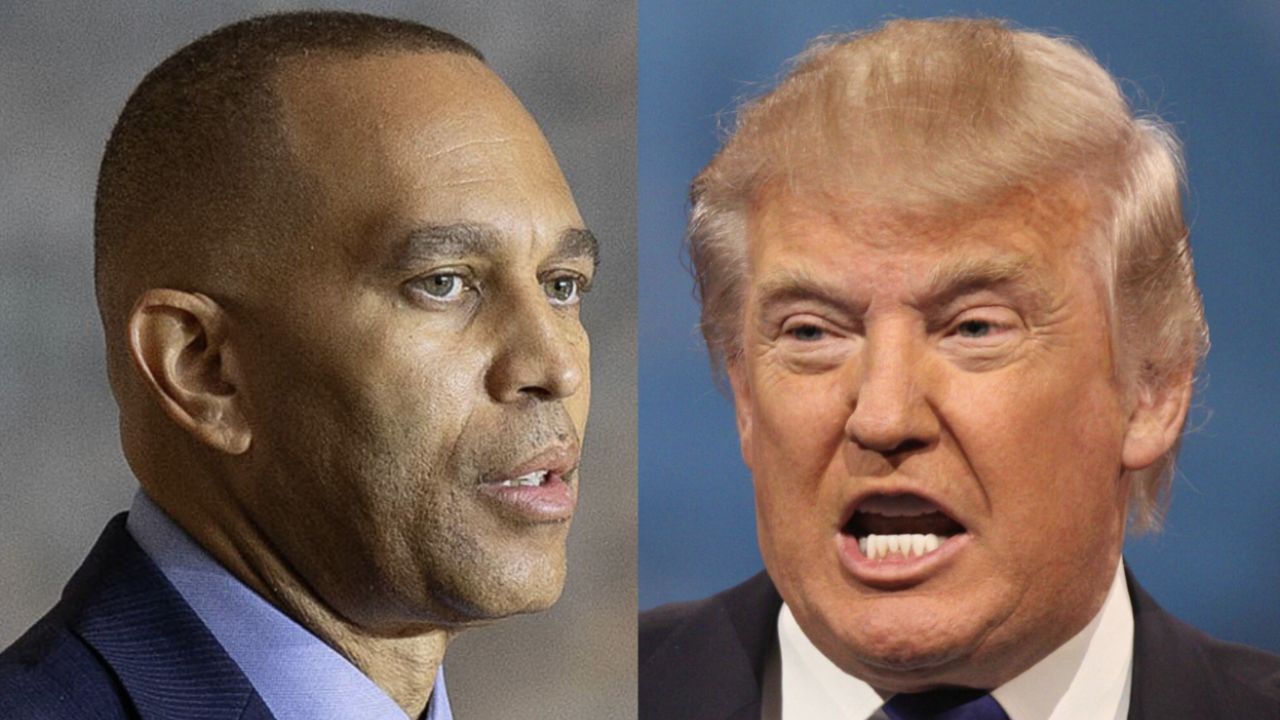
House Minority Leader Hakeem Jeffries (D-NY) stated on X that hunger is on the rise in America, attributing higher grocery prices to Trump tariffs and cuts to SNAP benefits under the legislation he calls the “One Big Ugly Bill,” and concluding with the single word “ENOUGH.”
The full post reads:
“Hunger is on the rise in America.
The Trump Tariffs raised grocery prices and the One Big Ugly Bill cut SNAP benefits.
ENOUGH.”
9:15 AM · Oct 26, 2026
Jeffries’ post advances three distinct claims. First, that hunger is increasing across the United States. Second, that tariffs imposed under the Trump administration have driven up grocery prices. Third, that the 2025 reconciliation law—referred to by Democrats as the One Big Ugly Bill and by Republicans as the One Big Beautiful Bill—reduced Supplemental Nutrition Assistance Program benefits.
The 2025 reconciliation law made the largest reductions to SNAP in the program’s history. The Congressional Budget Office projected roughly $186 billion to $187 billion in SNAP cuts over a decade. Provisions included expanded work requirements that raised the age limit and narrowed exemptions, new restrictions on eligibility for certain lawfully present immigrants, and a shift of a greater share of administrative costs and, eventually, benefit costs onto the states.
USDA data show SNAP enrollment fell from approximately 41.6 million people in mid-2025, before the law took full effect, to about 36.5 million by mid-2026. That represents a decline of roughly 5 million participants, or 13 percent, including an estimated 2 million children. Participation reached its lowest level in 17 years even as economic conditions did not show corresponding broad improvement in household food security.
Jeffries has described these changes consistently as the largest cut to nutritional assistance in American history. In multiple leadership press conferences and floor statements throughout 2025 and 2026, he has said Republicans “ripped food from the mouths of children, seniors, veterans and families” in order to finance tax cuts that primarily benefited higher-income households and corporations. During government funding disputes he accused the administration of seeking to “weaponize hunger.”
On the tariff claim, Jeffries has repeatedly linked Trump administration tariffs to higher prices for imported goods that feed into grocery costs. Analyses from multiple sources have attributed portions of food-price inflation to tariffs on agricultural inputs, packaging, and certain finished food products, though the exact contribution varies by category and interacts with energy prices, labor costs, and supply-chain effects from the Iran conflict. Jeffries’ public statements treat the tariffs as a direct driver of elevated grocery bills for working families.
Jeffries’ official record as House Democratic Leader shows sustained focus on SNAP and food security. His office and the House Democratic Caucus have issued repeated statements documenting the enrollment drop, the CBO score, and the human impact on children, seniors, and veterans. He has used leadership news conferences to highlight state-level data showing sharper declines in certain regions and to call for reversal or delay of the cost-shift provisions scheduled for later implementation.
The October 26 post continues a messaging pattern Jeffries has maintained since the reconciliation law’s passage. He frames rising hunger as the predictable result of specific policy choices—tariffs that raise prices and SNAP reductions that reduce purchasing power—and uses the single-word close “ENOUGH” to signal that Democrats consider the cumulative effect unacceptable. Primary government documents, CBO estimates, and USDA enrollment figures form the factual backbone of the claims he advances.