
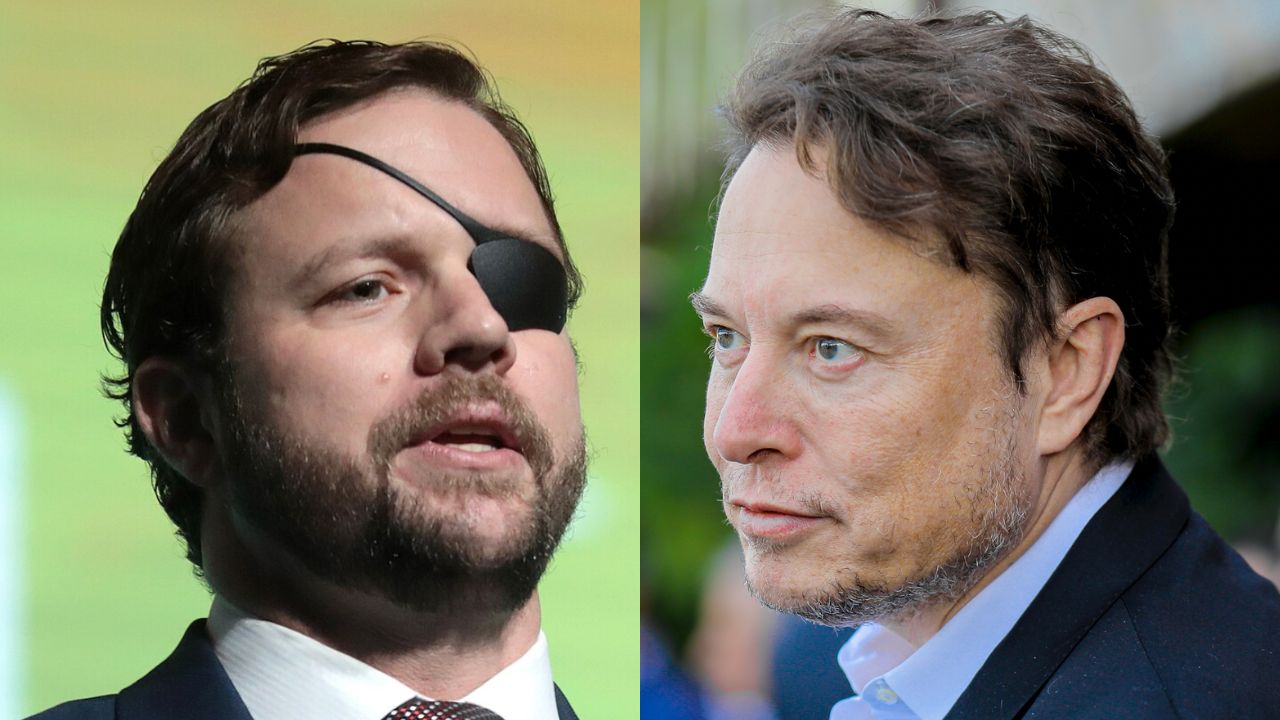
Rep. Dan Crenshaw, a Texas Republican and former Navy SEAL, publicly challenged Elon Musk on Sunday to activate SpaceX’s Starlink satellite network over Russia so Ukraine can strike Russian ballistic missile launchers. He argued that doing so would save children’s lives “every day.” The post, published on X, came hours after Musk endorsed the idea that Ukraine should replace its president, and two days after Crenshaw told Ukrainian officials in Kyiv that he supports persuading Musk to make that change.
Crenshaw posted the message at 3:34 PM on October 11, 2026. It reads in full:
“Here’s the real question: Why don’t you turn on Starlink over Russia so the Ukrainians can take out Russian ballistic missile launchers? One small action and you immediately save children from dying every day. Refusing to do so is like watching your friend die while you hold his EpiPen over him. It’s that simple.”
The Exchange With Musk
Crenshaw’s post was a response to Musk, who had written on X at 12:01 AM the same day: “I agree, time for Ukraine to get a new leader.” Musk was reacting to coverage of remarks by U.S. President Donald Trump, who said on Saturday that Ukraine should replace Volodymyr Zelenskiy.
Reuters reported that Trump made the call at the White House on October 10, a day after announcing a diesel supply deal with Russia that drew a sharp rebuke from Zelenskiy. “I think it’s time for Ukraine to get a new president,” Trump told reporters, saying Zelenskiy had hurt global diesel supplies with strikes on Russian refineries. Trump also said: “I suggest they get a new leader who can make a deal.”
Zelenskiy, in some of his harshest criticism of the White House yet, linked the lifting of U.S. sanctions on Russian diesel to a Russian attack on Zaporizhzhia that killed 20 people, including three children. “Today, Russia said thank you for the lifting of sanctions on diesel exports by dropping five glide bombs on residential buildings in Zaporizhzhia,” he said. Among the dead was a 6-year-old girl whose grandfather, Anatoliy Chumniy, stood over her body, saying through tears that her birthday would have been at the end of the month. It was the third mass-casualty attack on Ukraine that week.
Crenshaw in Kyiv
Crenshaw’s challenge to Musk followed a trip to Ukraine. On October 9, he joined a bipartisan congressional delegation that met Zelenskiy in Kyiv, alongside Senators Roger Wicker and Kevin Cramer and Rep. Marc Veasey, the Presidential Office of Ukraine said. The meeting took place under an air-raid alert over the threat of jet-powered Shahed drones, and Zelenskiy briefed the group on Russian strikes that had damaged two Kyiv schools since the start of the month.
During the visit, Crenshaw spoke for himself on Starlink, saying he believed the others present agreed. “I fully support the idea of trying to convince Elon Musk to activate Starlink,” he said, according to remarks reported from the meeting. He argued that broader Starlink use, combined with the Graham sanctions law signed on September 18, would give Washington more leverage over Moscow. Addressing Musk directly, he acknowledged the billionaire’s fear of escalation but said escalation is sometimes unavoidable and can even be necessary to reduce further tensions. Three other delegation members voiced agreement, and Wicker, who chairs the Senate Armed Services Committee, said he hoped an agreement could be reached with Musk.
Crenshaw’s Record on Russia and Ukraine
No earlier public statement by Crenshaw aimed directly at Musk or Starlink was identified. His position on Russia and Ukraine is longer-standing. In spring 2024, as Speaker Mike Johnson moved to bring a Ukraine aid package to the floor, Crenshaw said hardliners seeking to oust Johnson over it seemed to “want Russia to win so badly.” In February 2025, asked about the cost of aid, he said that “you can walk and chew bubble gum at the same time.” He has also urged European leaders to be “uncomfortably aggressive” toward Russia.
Starlink’s Role in the War
Musk’s involvement began in the war’s first days. After Ukraine’s digital minister, Mykhailo Fedorov, appealed publicly for help in February 2022, Musk replied within hours that “Starlink service is now active in Ukraine,” and terminals arrived days later. Ukraine said in 2024 that about 42,000 terminals were in use by the military, hospitals and other organizations. Starlink has since become central to front-line communications and some drone missions.
Musk has also set limits. He has said he refused a 2022 Ukrainian request to enable Starlink near Crimea ahead of a planned attack on Russia’s navy, fearing it would make SpaceX “explicitly complicit in a major act of war.” In February 2026, after Ukraine reported finding Starlink terminals on Russian long-range drones, Reuters reported that Musk said steps taken to stop Russia’s unauthorized use “have worked.” SpaceX introduced a whitelist so that only approved terminals work in Ukraine.
The Request Crenshaw Is Backing
SpaceX currently allows Starlink on Ukrainian-controlled territory, including occupied areas such as Crimea, but the service is blocked inside Russia. At a July 28 White House meeting, Zelenskiy asked Trump to speak to Musk about allowing Starlink on long-range strike drones up to 200 kilometers (124 miles) inside Russia. The request covered ballistic missile launch sites, command systems and other assets. Trump made no firm commitment, and reports in August said Musk had declined. Later reporting said Musk had told Fedorov the decision was political and would have to come from the White House.
Would It Help? The Logistics
Ukraine’s long-range drones currently use other navigation, including AI-based systems, for strikes across the border. Starlink would give them a stable, secure connection, which Ukrainian officials argue would improve targeting of mobile launchers. Those launchers typically operate far behind the front, move into position, fire and relocate quickly. Such drones have already proven effective inside Ukraine. The goal is to hit launchers before they fire, which would ease pressure on Ukraine’s scarce Patriot interceptors. Denys Shtilerman, co-owner of drone maker Fire Point, has argued that Starlink-guided drones could neutralize the missile threat more effectively than interceptors.
The limits are significant. A satellite link improves communications and guidance but does not by itself find a launcher that has already moved. The 200-kilometer cap would leave deeper positions outside the proposal. No public estimate exists of how many launchers could be reached, and Russia is building its own satellite network, Rassvet, with a reported target of 292 satellites by 2027. An alternative would be SpaceX’s military-grade Starshield network, which Ukrainian officials have said would cost more and be harder to integrate into existing drone systems. Ukraine’s Stetman plans to begin deploying a national constellation in 2027 to reduce reliance on foreign networks.
What Comes Next
The central obstacle remains Musk’s fear of escalation, a concern that has not eased as Moscow has recently warned NATO over Kaliningrad. In his post, Crenshaw framed it as a moral question rather than a strategic one. Neither Trump nor Musk had publicly responded to the post at the time of writing. Putin said after a call with Trump on Friday that an immediate resumption of peace talks was unlikely, and Russian state media reported that U.S. negotiators Steve Witkoff and Jared Kushner may visit Moscow within two weeks. Britain said it would strengthen its Russia sanctions, and Rep. Don Bacon, a fellow Republican, has said Congress should apply recently passed sanctions rather than lift them.