
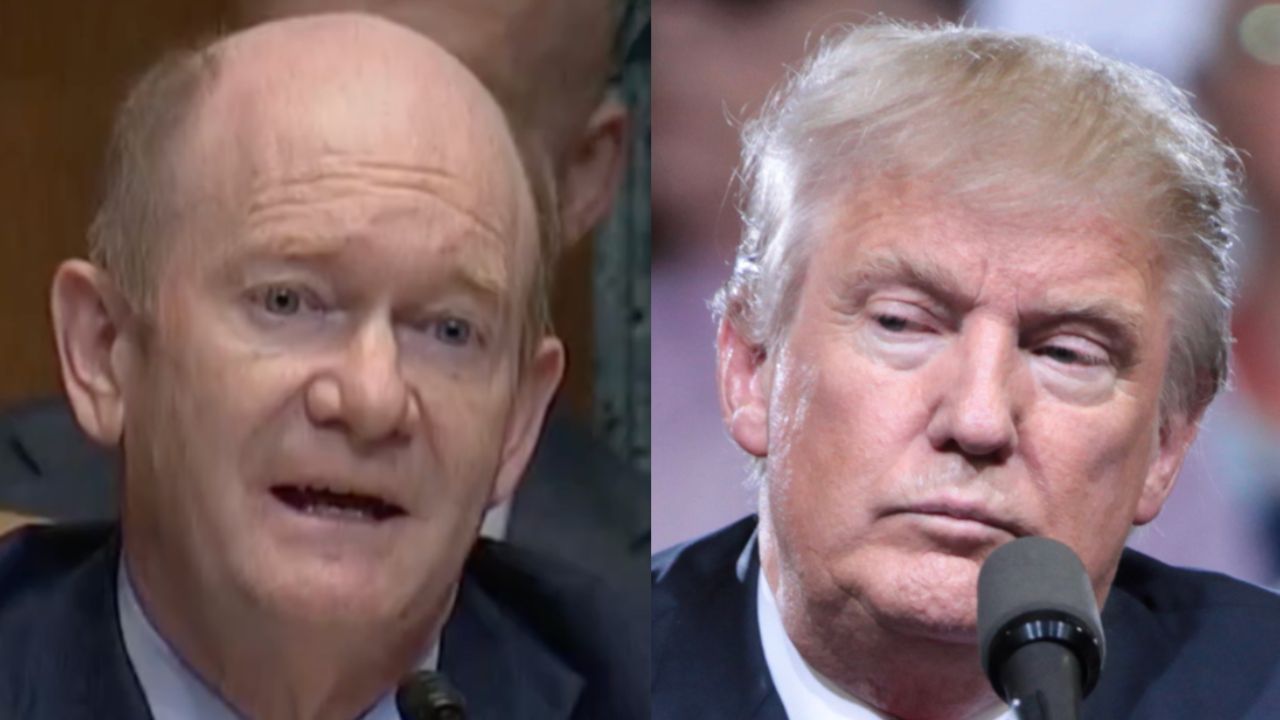
U.S. Senator Chris Coons, the Delaware Democrat who serves as ranking member of the Senate Appropriations Subcommittee on Defense, delivered a sharp rebuke of President Donald Trump’s Ukraine policy on Sunday. He did it in a post on X, just hours after a report said Washington is threatening to cut off weapons procurement and intelligence sharing unless Kyiv halts its deep strikes on Russian oil refineries.
The Post
Coons posted the message at 4:15 PM on Sunday, October 11, 2026. It read in full:
“Pay attention to the appalling pattern of weakness from Trump. If Putin wrote a wishlist, this is what it would look like.”
The post did not name a specific action, but it came in response to a Financial Times report on U.S. pressure over Ukraine’s attacks on Russian energy infrastructure.
The Report Behind the Post
The Financial Times reported that the United States is threatening to stop the procurement system that supplies Ukraine with weapons. The aim, per European officials who received calls or were briefed on them, is to pressure Kyiv to end its deep strikes on Russian energy infrastructure. The officials said U.S. representatives are lobbying European capitals and Kyiv to stop the attacks on Russian oil refineries.
The message from Washington reportedly included threats to cut off intelligence sharing and the Prioritised Ukraine Requirements List, known as PURL. PURL is the mechanism through which European allies purchase U.S. weapons for Ukraine. “They are calling Kyiv… They are calling everyone [in Europe],” an official who received a call from a U.S. defense official said, according to the report.
The White House did not immediately respond to a request for comment on the report.
An “Energy Ceasefire” Announced the Same Day
The report followed a surprise announcement by Trump on Sunday of an energy ceasefire between Russia and Ukraine, which he said was “effective immediately.” Ukrainian President Volodymyr Zelenskiy said he was still waiting to see the details of the deal.
It was not the first time Trump had announced such an arrangement. On September 14, he said Russia and Ukraine had agreed to refrain from attacking each other’s energy facilities. That announcement was followed by further strikes on both sides, including Russian attacks on petrol stations in Kyiv and a Ukrainian strike on a Russian refinery.
The Diesel Dispute
The day before the September 14 announcement, Trump had told reporters in Doonbeg, Ireland, that Zelenskiy must stop crippling Russia’s diesel supply. He tied Ukraine’s refinery campaign to a global shortage of diesel fuel. Ukraine’s drone strikes over recent months have caused fuel shortages inside Russia, and Moscow has responded with strikes on Ukrainian energy sites.
When Zelenskiy met Trump in late September on the sidelines of the U.N. General Assembly in New York, he said Kyiv was prepared to halt strikes on Russian refineries if Moscow stopped attacking Ukraine’s power grid, heating and water infrastructure. “We are ready for an energy ceasefire,” Zelenskiy said. He also asked for help obtaining more Patriot air defense missiles ahead of winter.
Coons’s Record on Ukraine
Coons’s Sunday post is consistent with months of public statements. In February, he traveled to Odesa with Senators Jeanne Shaheen, Sheldon Whitehouse and Richard Blumenthal. It was the first Senate delegation to visit the city since Russia’s full-scale invasion in 2022. “The Ukrainian people deserve our support for a just and lasting peace that will ensure their sovereignty and security, not a temporary deal that will allow Russia to rearm and come back for Kyiv a few years down the road,” Coons said in a statement from his office. He added that he was there “to pledge our continued support in Congress for robust intelligence, military, and financial support to their cause.”
On February 24, the fourth anniversary of the invasion, Coons issued a statement that directly criticized the administration’s approach:
“Four years ago, Vladmir [sic] Putin launched his brutal, unprovoked, full-spectrum invasion of Ukraine. Against a larger, stronger adversary, Ukraine has held its ground, redefining modern warfare and imposing a great toll on the invaders. Our partners and allies in Europe and around the world have stepped up and taken on much of the burden of funding Ukraine’s defense. Russia has failed to defeat Ukraine on the battlefield. We cannot now betray Ukraine’s trust and hand over a victory to the Russian aggressors at the negotiating table. The Trump administration is making a tragic mistake in bowing to Russian interests instead of putting more pressure on Russia and those who help fund Russia’s war machine. Failing to defend freedom in Ukraine will embolden our other adversaries and put American security in danger. Instead, Congress and the administration must provide additional aid, stronger sanctions, and closer cooperation with our allies to show Putin that he cannot outlast us. We need swift, bipartisan action, or we will come to deeply regret this abandonment of Ukraine.”
The Sanctions Push
Coons later became a lead sponsor of the legislation that now carries the name of the late Senator Lindsey Graham, who died on July 11. In a statement the next day, Coons called for the bill’s passage. “We should promptly pass his bill with Senator Blumenthal to impose greater sanctions and tariffs on the buyers of Russian oil and gas in his memory,” he said.
On July 23, Coons, Blumenthal and Graham’s successor, Sen. Darline Graham, introduced the Senator Lindsey O. Graham Sanctioning Russia Act of 2026 with more than 60 cosponsors. “Curbing Russian revenue by sanctioning the foreign buyers of their oil that are keeping Russia’s economy and military afloat will strengthen Ukraine, weaken Moscow, and hasten a just and lasting end to this war,” Coons said.
From Senate Vote to Law
The Senate passed the measure, renamed the Lindsey O. Graham Sanctioning Russia and Iran Act of 2026, by 86 to 11 on August 7. The House followed with a 262-159 vote on September 16, after Trump had waited until July to allow Republican leaders to schedule a vote. Trump signed it on September 18. The White House said the law authorizes and expands sanctions, tariffs and prohibitions on Russia and extends existing sanctions on Iran. It targets Russia’s energy and defense industries and its “shadow fleet” of tankers, and it lets the president impose tariffs of up to 100 percent on major buyers of Russian oil and gas.
The Iran War and the Fuel Crisis
Coons has also been among the Senate’s critics of the Iran war. On March 3, he said of the launch of military action, “I don’t think this is the right way for a democracy to go to war.” The Senate voted 47-53 on March 4 against a war powers resolution led by Sen. Tim Kaine, with Coons voting in favor. In floor remarks that followed, he said: “I voted to rein in this reckless war of choice. At the very least, what we owe our service members is a debate – a public briefing, an explanation, an accounting of why this war and what its ends are.” Coons represents Dover Air Force Base, where the remains of fallen service members return to the United States.
The war disrupted shipping through the Strait of Hormuz, and fuel prices rose sharply. AAA recorded national average prices of $4.46 per gallon for regular gasoline and $5.64 for diesel on April 28. Reuters reported that Trump has urged Americans to accept somewhat higher gasoline prices while the conflict continues. That energy backdrop frames the current dispute over Ukraine’s strikes on Russian refineries.
What Comes Next
The report of a possible cutoff in weapons procurement and intelligence sharing has not been confirmed by the White House. If the threats are carried out, they would affect the channel European allies use to buy U.S.-made weapons for Ukraine ahead of what Kyiv expects to be another winter of Russian missile and drone strikes. Coons, who sits on both the Defense Appropriations Subcommittee and the Foreign Relations Committee, has said Congress should be backing Ukraine with more aid, not less. The details of Trump’s announced energy ceasefire, which Zelenskiy said he was still waiting to see, will determine how the issue develops in the coming days.