
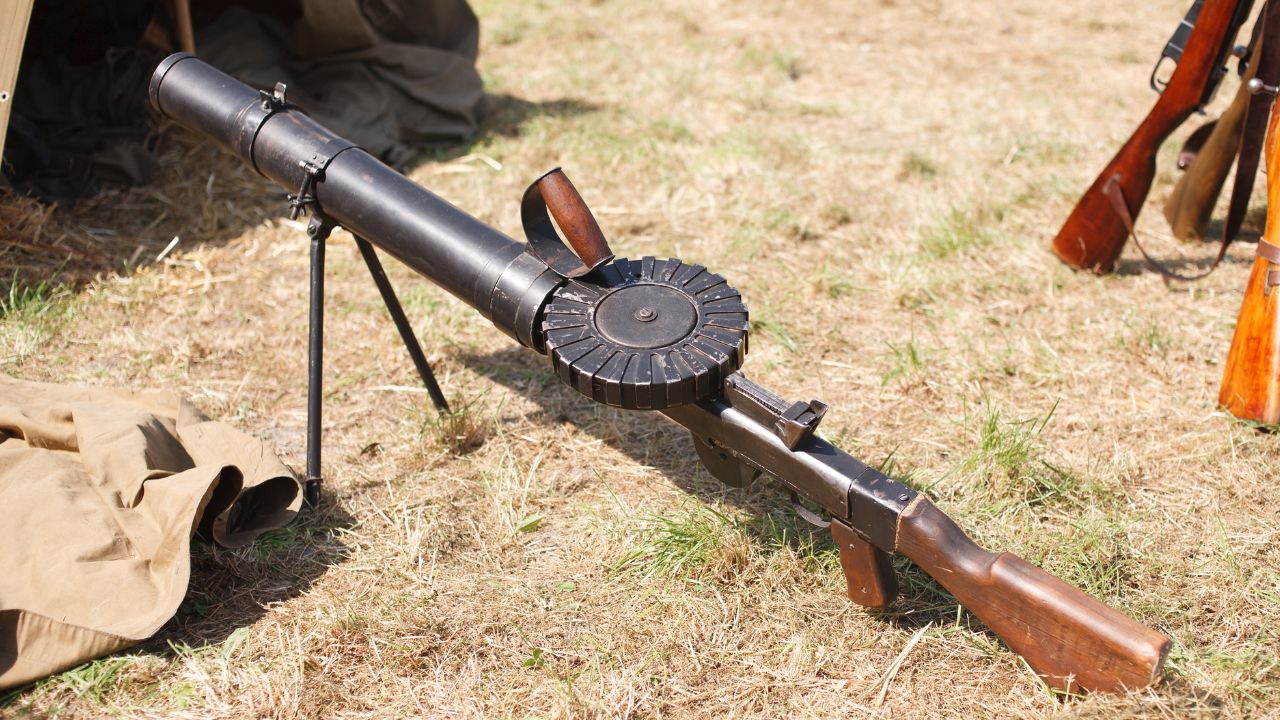
Machine guns didn’t just raise battlefield lethality; they forced armies to rethink how to move, concentrate forces, supply units, and survive under sustained fire. The designs that mattered most weren’t necessarily the most iconic later on—they were the ones adopted widely enough, dependable enough, and influential enough to shape doctrine. Below are six machine guns—limited to the examples supported by the sourcing provided—that trace key shifts from the first true fully automatic gun to WWII-era systems that continued to influence later belt-fed thinking.
Maxim gun (Hiram Maxim’s “Maxim Gun”)
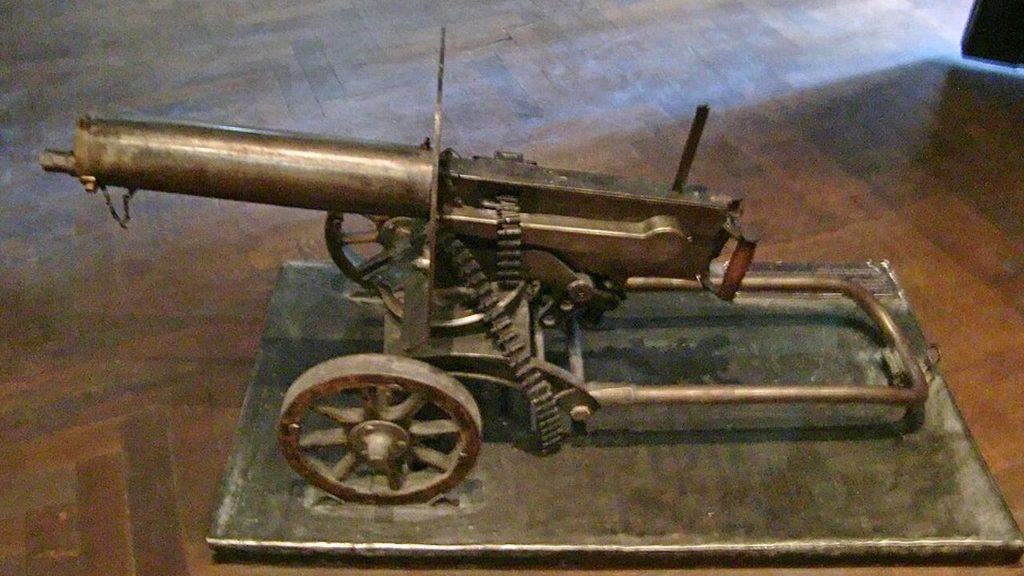
The Maxim gun is the starting point: the first fully automatic machine gun, and a turning point where sustained automatic fire stops being an experiment and becomes something armies can plan around. Once continuous fire is available and repeatable, open ground, fixed positions, and even basic movement take on a different level of risk—and tactics have to adjust accordingly.
PBS notes that Hiram Maxim sold his machine guns to European countries on the eve of World War I, “changing the nature of combat.” Framed carefully, the significance is adoption and consequence rather than a single decisive moment: when multiple armies enter a major war with widely fielded automatic weapons, the effects show up in how positions are defended, how advances are attempted, and what casualty expectations look like under sustained fire.
Vickers machine gun (Vickers Mark I / .303 “Class C”)
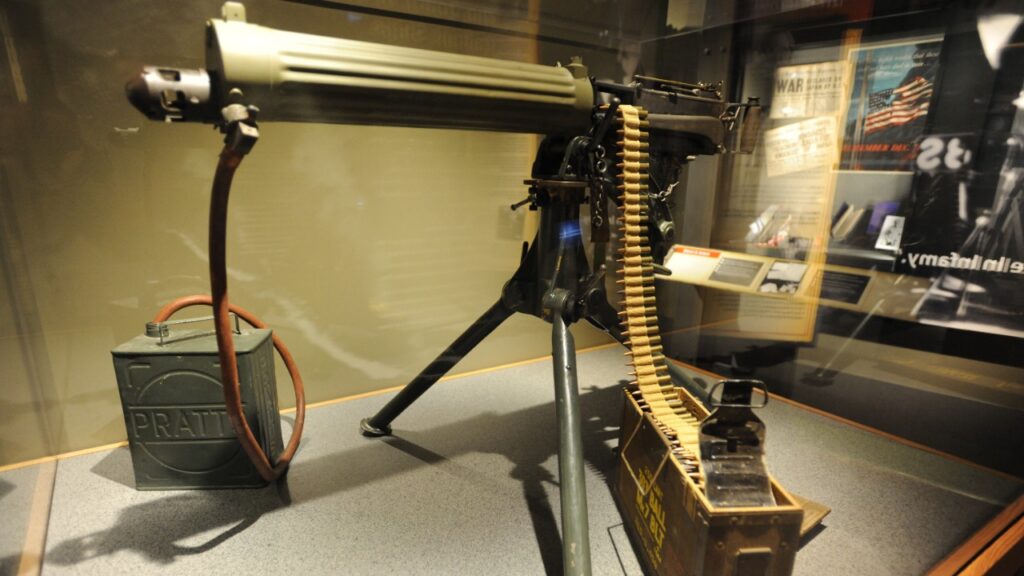
The Vickers represents the entrenched, crew-served heavy machine gun as a system: a weapon built around sustained fire and supported by organization, supply, and planning. It matters because it reflects a stage where machine guns aren’t just issued—they become a dependable foundation for how units are expected to fight and hold ground.
The UK’s National Army Museum records that the Vickers was adopted by the British Army in 1912 and became the standard machine gun of British and Commonwealth forces, famed for reliability. Those two points—standardization and a reputation for being reliable—help explain why it could shape doctrine and logistics: armies tend to build routines around equipment they can consistently count on. This discussion is about the ground Vickers in its infantry-support role, not the separate story of aircraft use.
Lewis Gun
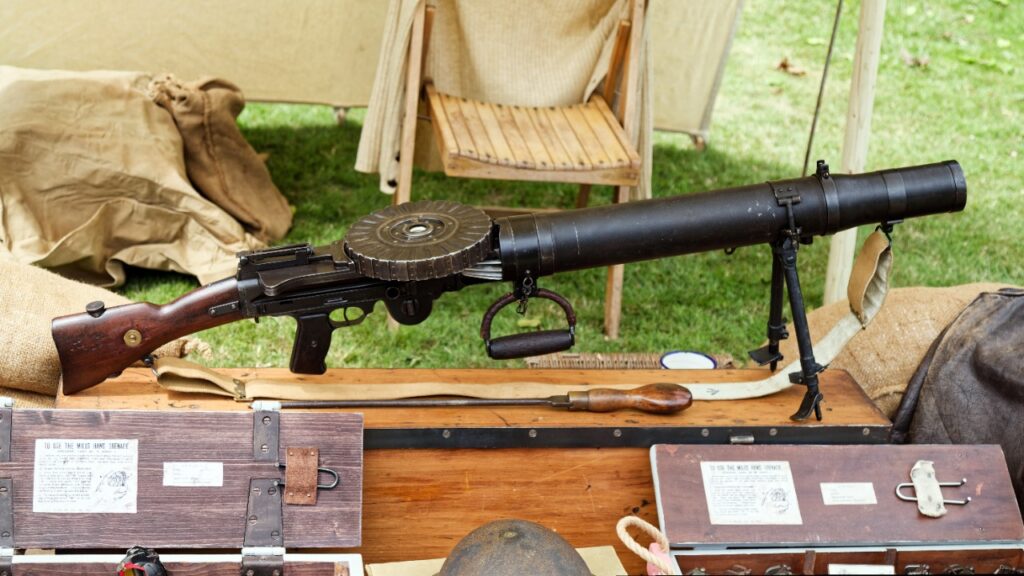
The Lewis Gun highlights a different pressure: pushing automatic fire closer to the infantryman rather than keeping it concentrated only in heavier, more static machine-gun positions. It matters because it points toward a battlefield need for automatic fire that can accompany movement, not just defend fixed lines.
The National Army Museum states the Lewis Gun was the British Army’s most widely used machine gun during World War One. Taken at face value, that level of use signals practicality at scale—something that could be issued broadly and employed often. The battlefield implication is straightforward: when more units have access to organic automatic fire, suppression and local defense become more readily available even when heavier guns are not.
Hotchkiss Mle 1914 machine gun

The Hotchkiss Mle 1914 is a reminder that major wars are also equipment and standardization stories. It matters here as an example of a heavy machine gun becoming a national baseline late in a conflict—an outcome that tends to follow hard lessons about production, training, and supply.
Wikipedia summarizes that the Hotchkiss Mle 1914 became the standard machine gun of the French Army in the latter half of World War I. Keeping the claim scoped to that summary, the key point is what “standard” implies in wartime: institutional commitment to a common weapon that can be fielded and supported broadly. While the gun’s cross-national relevance is often part of how it’s discussed, specific allied procurement details should not be assumed without additional sourcing.
MG 34
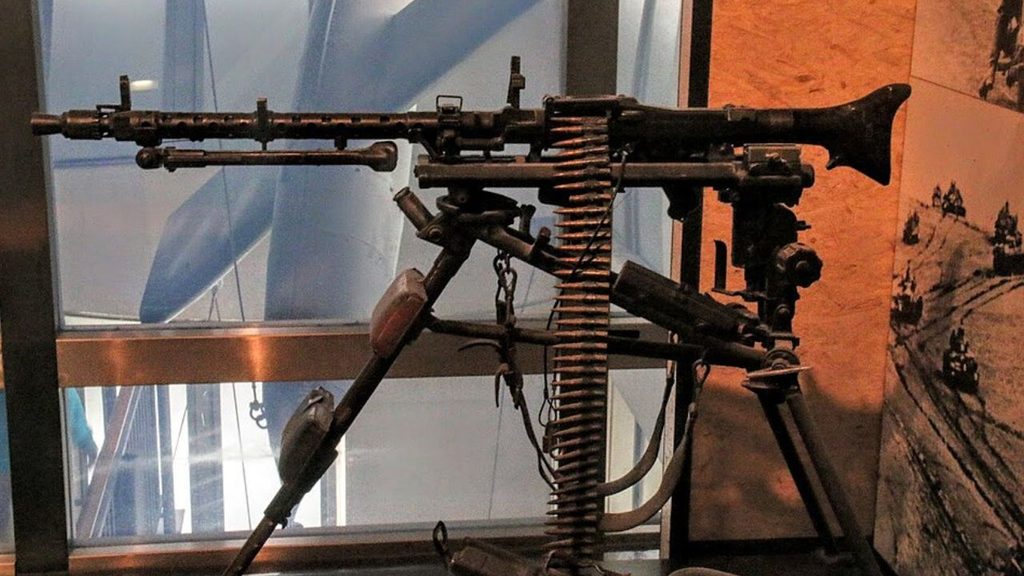
The MG 34 marks a conceptual shift: the move toward a single machine gun intended to serve multiple roles rather than relying on separate families for different jobs. That matters because equipment design can pull organization and training in its wake—one platform with multiple configurations encourages a more unified approach to automatic fire within a force.
Osprey states that with the MG 34, the German Wehrmacht introduced an entirely new concept in automatic firepower: the general-purpose machine gun (GPMG). It’s best read as Osprey’s framing of the idea and its significance rather than an absolute claim about being the “first” in all history. The practical takeaway remains clear: once a military embraces a multi-role machine-gun concept, it can shape how that force thinks about roles, employment, and standardization.
MG 42
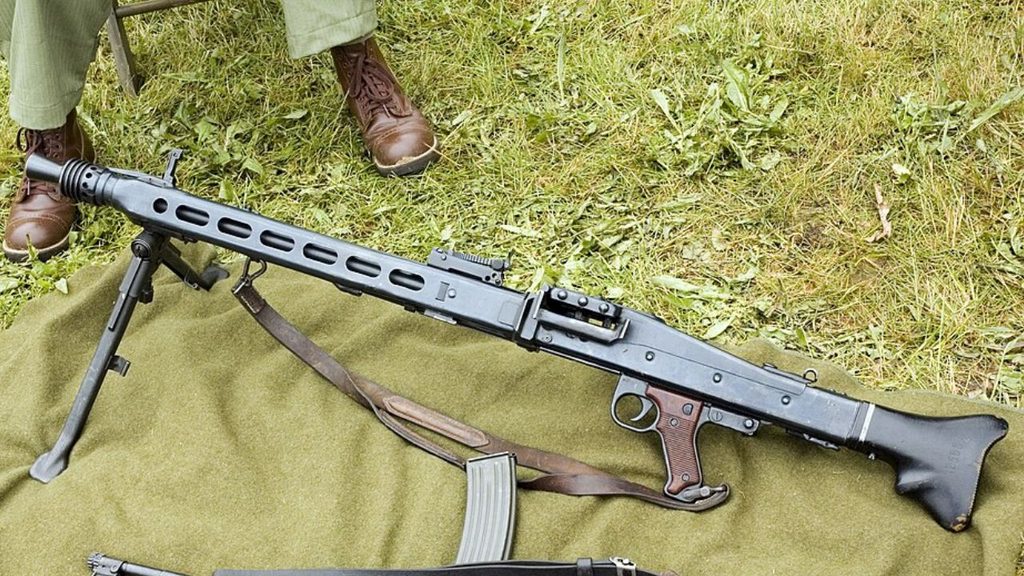
The MG 42 is the WWII-era entry defined less by novelty than by what it represented: a machine gun optimized for high-rate-of-fire performance and suited to mass production. It matters because those priorities—battlefield effect paired with the ability to produce at scale—are exactly the kind that echo forward in how later forces evaluate belt-fed automatic weapons.
Within that frame, the MG 42’s influence is best described as a reference point. It helped set expectations for what dense, sustained automatic fire could look like when a system is both effective and buildable. In turn, that kind of capability affects planning on both sides: as something to deliver reliably, and as a threat that tactics and protection have to account for.
Across these six systems, the connecting theme is institutional adoption and the ripple effects that follow. PBS’s note that Maxim’s pre-WWI sales “changed the nature of combat,” the National Army Museum’s documentation of the Vickers as a 1912-adopted, reliability-famous standard, and its description of the Lewis Gun as the British Army’s most widely used WWI machine gun all point to the same lesson: machine guns reshape warfare when armies field them broadly and build methods around them. Wikipedia’s summary of the Hotchkiss Mle 1914 becoming France’s standard late in WWI, Osprey’s framing of the MG 34 as introducing the GPMG concept, and the MG 42’s continuing influence together show how design choices can drive lasting changes in doctrine, organization, and expectations about automatic fire on the battlefield.