
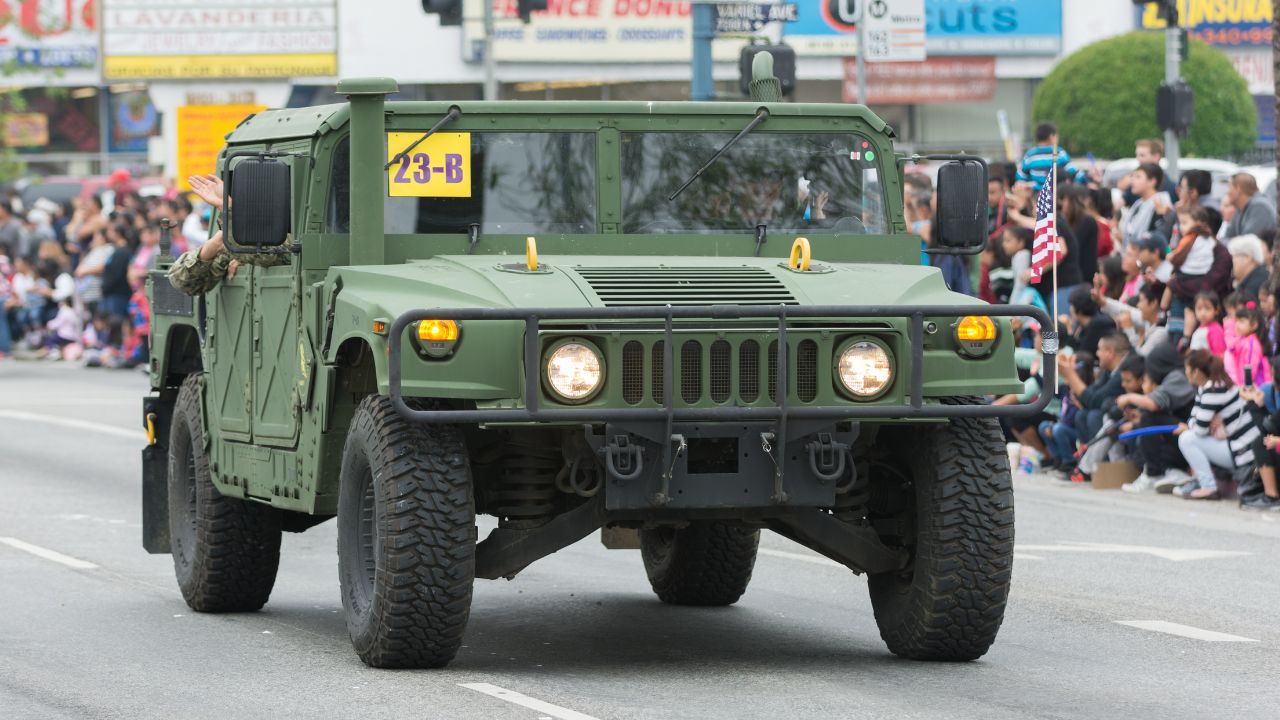
The Humvee didn’t become an American military icon because it was the toughest vehicle on the battlefield. It became iconic because it was everywhere—across branches, across missions, and across decades—and its boxy, unmistakable profile became visual shorthand for U.S. military presence at a time when wars were widely televised and deployments were frequent. Developed out of the U.S. Army’s 1980s light tactical vehicle program and most closely associated with AM General, the High Mobility Multipurpose Wheeled Vehicle (HMMWV) started as a utility platform and ended up carrying an outsized cultural and operational identity.
That evolution still matters. The Humvee’s long service life reflects familiar procurement tradeoffs: mobility versus protection, standardization versus specialization, and the reality that widely fielded vehicles tend to stay in use long after their original assumptions change. Even as newer platforms—most notably the Joint Light Tactical Vehicle (JLTV)—take on a larger share of demanding roles, Humvees remain in service across U.S. forces and in partner militaries through foreign military sales and transfers. The icon hasn’t vanished; its job has shifted.
From a 1980s utility requirement to a joint-force workhorse
The HMMWV was conceived as a high-mobility, multipurpose wheeled vehicle: a way to move people, gear, and small units; support command-and-control; and handle the daily transport tasks that keep formations functioning. It was not designed as a dedicated armored combat vehicle, and that distinction becomes important when judging what came later.
Once fielded, the Humvee’s appeal was practical. A common vehicle family used by the U.S. Army, Marine Corps, and other services simplified planning and sustainment. That kind of standardization is rarely dramatic, but it helps explain why the platform spread so widely and became a default answer for “we need a vehicle” across many units and mission types.
The silhouette that became familiar on television
Procurement and logistics explain how the Humvee proliferated. Media visibility helps explain how it became mythic. During the Gulf War era, televised footage repeatedly showed the same light tactical vehicle moving with U.S. forces, supporting convoys, and operating around fast-paced maneuver and sustainment. Over time, the Humvee’s low, wide shape became instantly recognizable.
That repetition matters. In modern conflicts, “icon” status is driven as much by what the public sees as by what a platform can do. The Humvee appeared so often in theater imagery that it became a visual stand-in for the U.S. military itself—long before civilian culture fully formalized the association.
Why a multipurpose vehicle became operationally indispensable
The Humvee became the baseline image of U.S. ground forces because it became a baseline tool. It could carry troops, haul equipment, host communications gear, and serve as a weapons carrier depending on configuration and need. For commanders, it offered a straightforward promise: one platform that could be adapted to many everyday requirements and redeployed quickly as tasks changed.
That promise was reinforced during the long years of operations in Iraq and Afghanistan. The Humvee was a constant presence on bases, on routes, and in the routine movement that defined much of those deployments. Few vehicles become iconic without becoming familiar, and for many service members the Humvee was the vehicle they rode in, worked from, and depended on. That’s one reason it features so heavily in veteran anecdotes and maintenance lore.
The survivability reckoning: IEDs, add-on armor, and shifting expectations
The same environments that made the Humvee ubiquitous also exposed the limits of a general-purpose vehicle in high-threat conditions, especially in IED-heavy fights. Assumptions shaped in earlier planning—where light vehicles were often expected to operate in lower-threat or supporting roles—were tested by a reality in which patrols and convoys regularly faced serious risk.
The response included add-on armor and upgraded variants, a familiar pattern when an existing fleet must be adapted quickly. Those measures helped address urgent survivability needs, but they also highlighted the core tradeoff: bolting on protection can change mobility, maintenance demands, and overall vehicle behavior. In effect, the Humvee was being asked to do more than it had been built to do.
Those pressures helped drive the use of MRAPs in specific threat environments and accelerated the push toward vehicles with more built-in protection, including the JLTV for missions that demanded it. The point is not that the Humvee “failed,” but that its story illustrates how quickly a broadly useful platform can become the default solution for a changing problem set—and what that can cost in weight, complexity, and risk.
Pop culture and the civilian spillover
Relatively few military vehicles become widely recognizable outside defense circles, but the Humvee did, aided by the civilian “Hummer” brand that drew directly from military imagery. That spillover reinforced recognition: even people with no military background could identify the shape and associate it with U.S. power and presence.
Once a platform becomes a cultural object, it carries a narrative beyond its technical role. In the Humvee’s case, the narrative emphasized mobility, reach, and expeditionary capability—ideas that can persist even as a vehicle’s frontline role changes.
Why the Humvee still matters in 2026
Humvees remain relevant for a simple reason: large fleets do not disappear on a clean schedule. Legacy platforms persist where they still meet requirements, where budgets prioritize other needs, and where missions don’t demand the newest solution. For many utility roles—base support, movement inside secured areas, training, and general logistics—the Humvee’s core value proposition remains intact.
There is also a geopolitical dimension. Humvees continue to appear worldwide through foreign military sales and transfers to allies and partners. That can support interoperability and simplify training and sustainment, but it also means U.S.-origin vehicles can show up in complex ways over time, including through capture or secondary movement. The Humvee’s global visibility is part of the long tail of security assistance and surplus distribution.
What the Humvee teaches: mobility, modular upgrades, and the limits of “good enough”
The Humvee’s strategic significance is less about being the best at any single role and more about enabling a style of operations built on tactical mobility and flexible, widely supported platforms. Put plainly, the U.S. could move people and equipment quickly and at scale because units had a vehicle that was broadly useful, familiar, and supported throughout the system. That contributes to readiness in ways that rarely make headlines but shape how a force deploys and sustains itself.
At the same time, the Humvee demonstrates the risk of leaning too heavily on a general-purpose vehicle when threats evolve faster than replacement timelines. When that happens, militaries end up balancing three imperfect options: accept risk, bolt on fixes, and field specialized or newer systems—often all at once. Each path has tradeoffs in cost, logistics, and readiness.
What changes next is less about the Humvee disappearing and more about its mission profile narrowing. As JLTVs and other systems assume more of the highest-risk tasks, the Humvee increasingly fills utility missions and continues serving in partner forces where familiarity and supportability still matter. Its icon status is likely to endure regardless, because the image was built over decades of constant presence—first on television, then across the long routine of modern deployments.