
Stealth aircraft are often photographed from a distance, behind ropes, under museum lighting—or not at all. That’s partly because low-observable design lives in the details: edges, inlets, seams, and surface treatments. Those are exactly the features governments and contractors work hardest to protect. The result is a strange reality: some of the most historically important aircraft of the past 50 years are also the hardest to see “up close,” even when their existence is no longer secret.
This isn’t a list of the most famous stealth jets. It’s a look at rarer demonstrators and proof-of-concepts that answered focused questions—can faceting work, can you operate sensors without giving yourself away, can a tailless fighter remain controllable, can an unmanned stealth aircraft fit into carrier operations—and in doing so shaped what came next.
Lockheed Have Blue (DARPA “Experimental Stealth Testbed”)
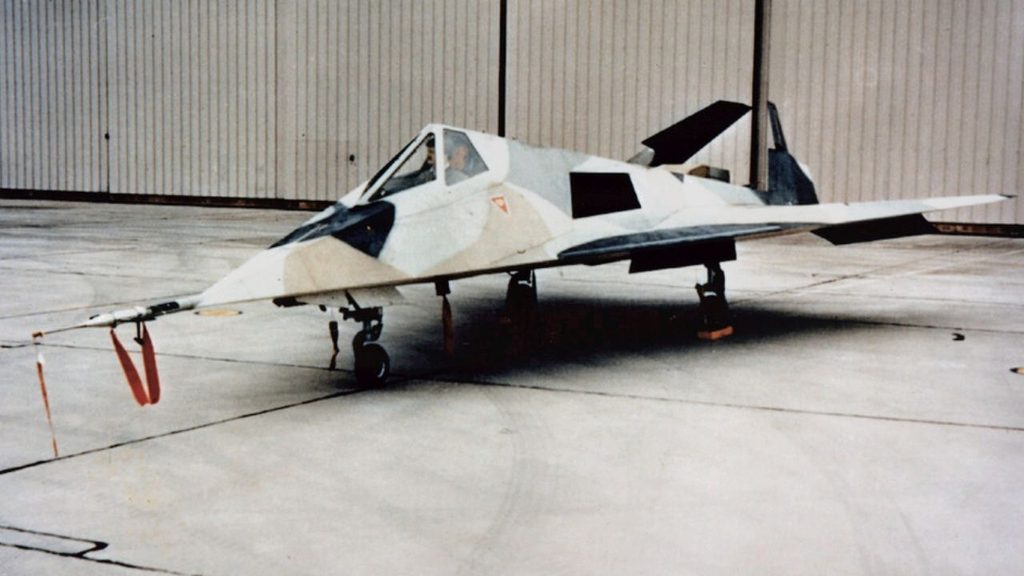
Lockheed Have Blue was a real, crewed proof-of-concept stealth fighter demonstrator from the 1970s. Wikipedia’s overview of Lockheed Have Blue describes it as a DARPA-backed experimental testbed that directly paved the way to the F‑117. Only a couple airframes existed, and the program’s deep classification is a big reason it remains rarely seen up close.
The key idea worth remembering is the design logic behind its unusual look. The faceted, angular shaping wasn’t style—it reflected a heavy focus on radar cross-section shaping. Have Blue helped validate an approach that could be turned into an operational low-observable strike aircraft, even if the path from demonstrator to fielded system is only partly documented in public sources.
Northrop Tacit Blue (BSAX)
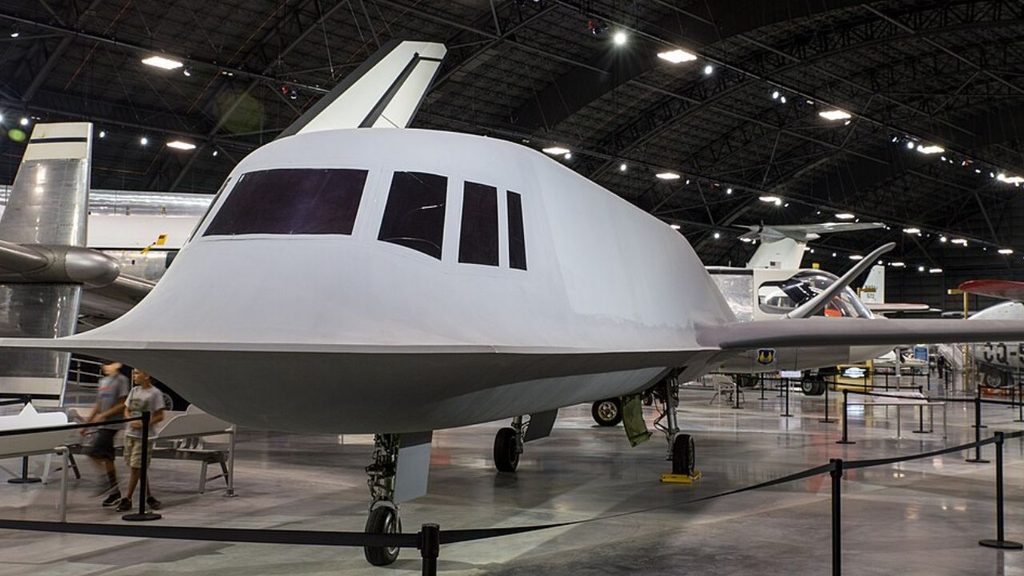
Northrop’s Tacit Blue is the stealth aircraft that earned the “flying bathtub” nickname—and its shape is part of the story. DARPA’s Tacit Blue timeline page describes it as a stealth/surveillance technology demonstrator built to show an aircraft could operate radar and sensors while staying low observable, with first flight in 1982. That framing matters because it highlights a common misunderstanding: stealth can be about managing signatures while still using active sensors.
Tacit Blue’s broader legacy is conceptual rather than photographic: it represents a design mindset where survivability and sensing are pursued together, not treated as separate problems. Many program specifics remain unclear in open sources, so the safest takeaway is the one DARPA emphasizes—Tacit Blue demonstrated key concepts later designers could build on.
Boeing Bird of Prey (stealth technology demonstrator)

The Boeing Bird of Prey is one of the rare “black program” aircraft you can name, largely because Boeing eventually unveiled it. In Boeing’s official 2002 media release, the company says the aircraft was part of a classified program run from 1992–1999, with first flight in 1996. That places it in a period when stealth was proven in principle, but still being refined in how it could be built and sustained.
Bird of Prey’s value, as Boeing framed it, wasn’t limited to an exotic shape. It was also a testbed for low-observable shaping, materials, and manufacturing methods—practical work that can determine whether an advanced design is feasible to produce and maintain. That’s a quieter kind of progress, but it’s the kind that can reduce risk for whatever follows.
McDonnell Douglas / NASA X‑36 Tailless Fighter Agility Research Aircraft

The X‑36 looked like a miniature future fighter for a reason: it was built to explore tailless “stealthy fighter design” ideas, but at 28% scale and flown as a remotely piloted research aircraft. Aviation Week’s reporting on the X‑36 tailless design describes the effort as a NASA/McDonnell Douglas program aimed at understanding what happens when you remove vertical and horizontal tails—features that can increase signatures but also contribute to stability and control.
The point isn’t that the X‑36 was “stealth” in the operational sense; it was a research tool for the trade-off. By using modern flight-control approaches to study a tailless configuration, the program helped explore whether lower-signature shapes could be compatible with agility and controllability—questions designers still have to answer long before any operational aircraft exists.
Northrop Grumman X‑47B (UCAS‑D)
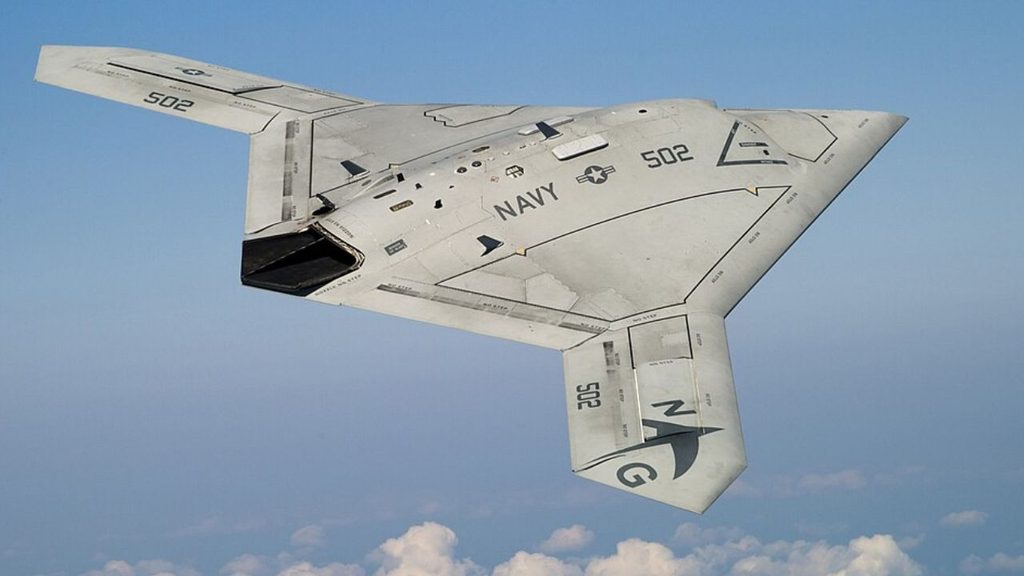
Northrop Grumman’s X‑47B is the cranked‑kite silhouette many people recognize from official photos, even if few have seen it up close. NAVAIR’s official release notes the X‑47B’s first flight at Edwards AFB on Feb. 4, 2011 (NAVAIR). As with many low-observable programs, the public gets milestones, but close access tends to remain controlled.
The aircraft’s significance is tied to what it represented: a stealthy unmanned system aimed at functioning inside the carrier-aviation world, where procedures and integration matter as much as airframe design. Put simply, demonstrating that an unmanned low-observable aircraft could be taken seriously in that environment reshaped assumptions about what carrier airpower could include.
Boeing Phantom Ray (stealth UCAV demonstrator)
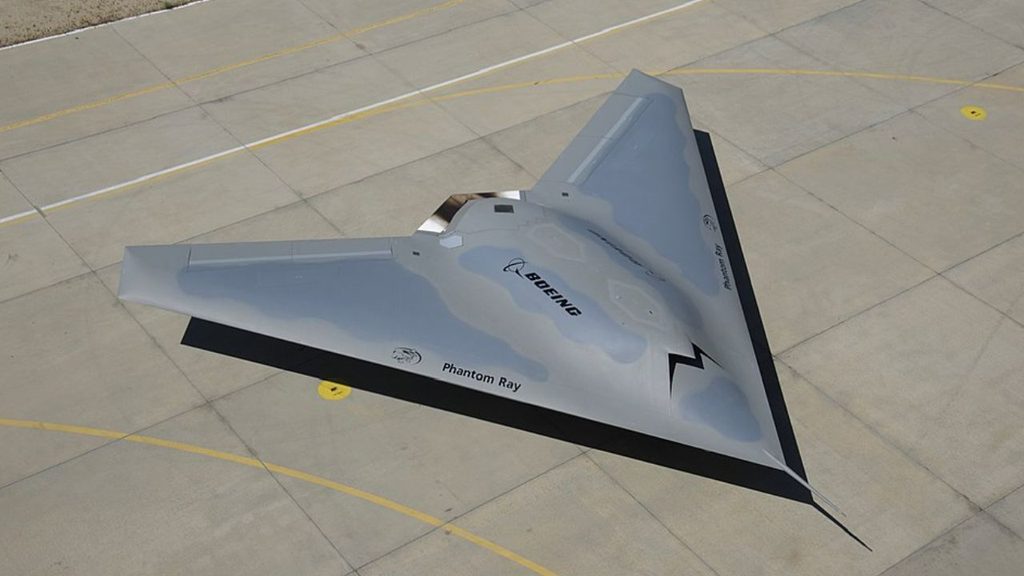
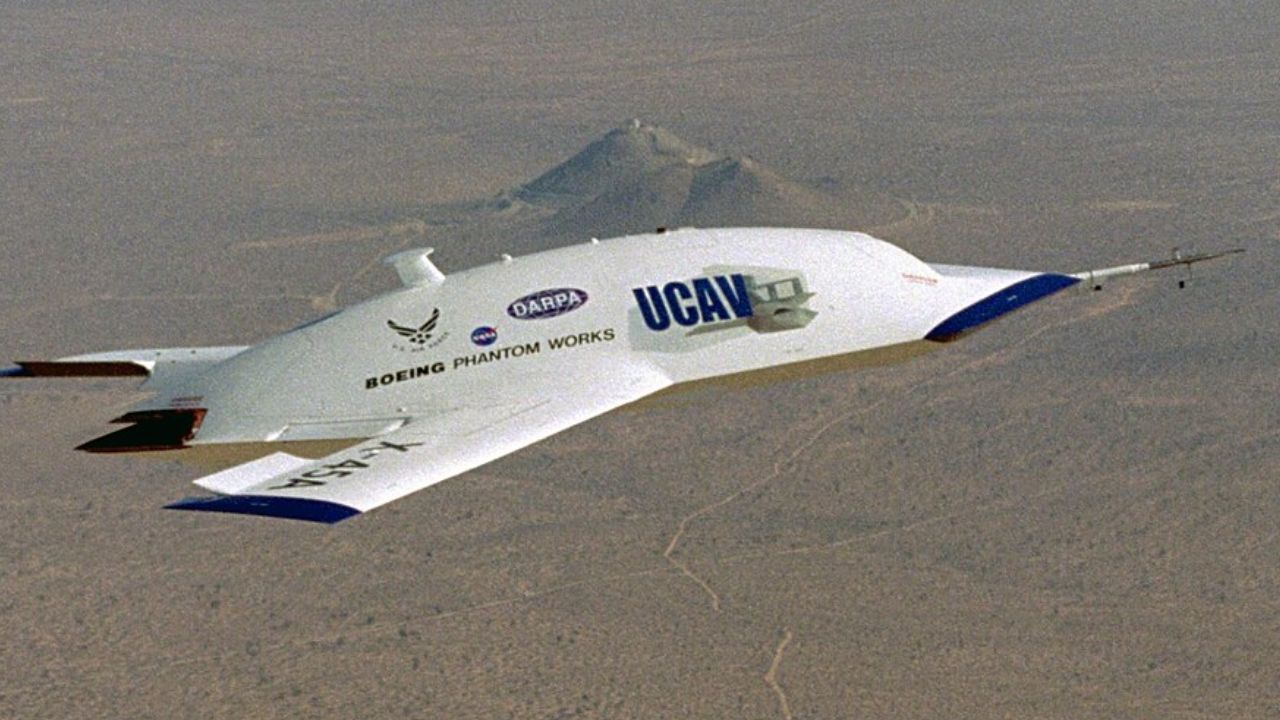
Boeing’s Phantom Ray is another stealth UCAV demonstrator most readers know from a limited set of rollout and test imagery. In Boeing’s official media release, the company states Phantom Ray is an unmanned aircraft system whose first flight occurred April 27, 2011, at Edwards AFB. It’s an example of how multiple teams pursued unmanned low-observable concepts in parallel, often with different test goals.
Phantom Ray is best understood on its own terms: a technology demonstrator, not an operational system. Its importance is the learning it can generate—flight test experience and design maturation—without implying it was intended to become a fielded aircraft.
Boeing X‑45A (J‑UCAS) unmanned combat air vehicle demonstrator
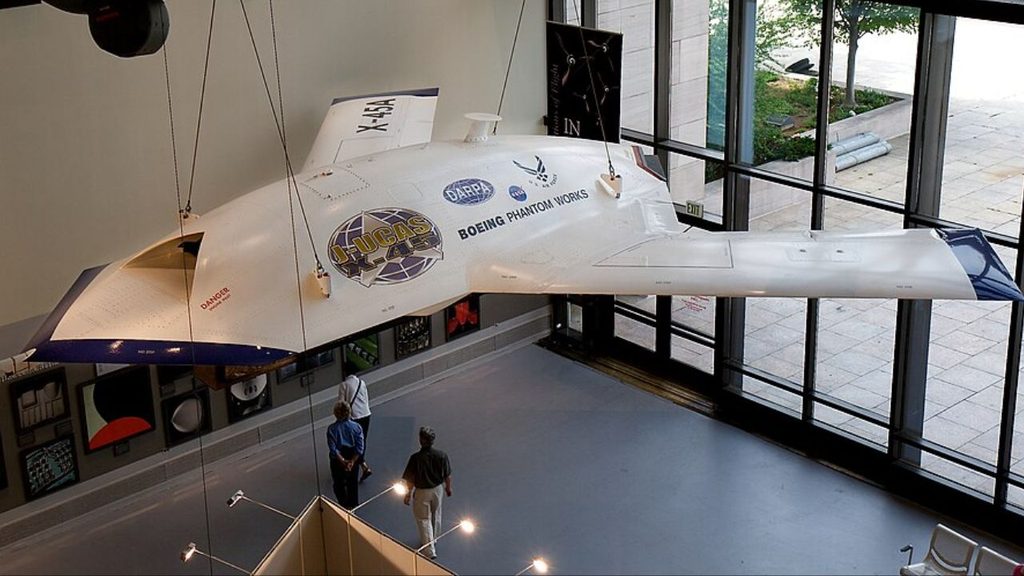
The Boeing X‑45A belongs to an early chapter of modern UCAV development, when autonomy and survivability were increasingly treated as linked design challenges. NASA’s X‑45 page describes it as an X‑45A UCAV technology demonstrator flown under DARPA/USAF/Navy J‑UCAS efforts, with first flight at Edwards AFB. That makes it more than a conceptual ancestor—it was a real, flown demonstrator tied to joint experimentation.
Even at this stage, the program’s framing points to a durable idea: low observability can’t be bolted on late. It pushes mission systems and airframe decisions toward internal carriage and integrated design choices from the beginning. Because J‑UCAS history and variant naming can be muddled in secondary accounts, sticking to NASA’s X‑45A description keeps the discussion grounded.
BAE Systems Taranis (stealth UCAV demonstrator)
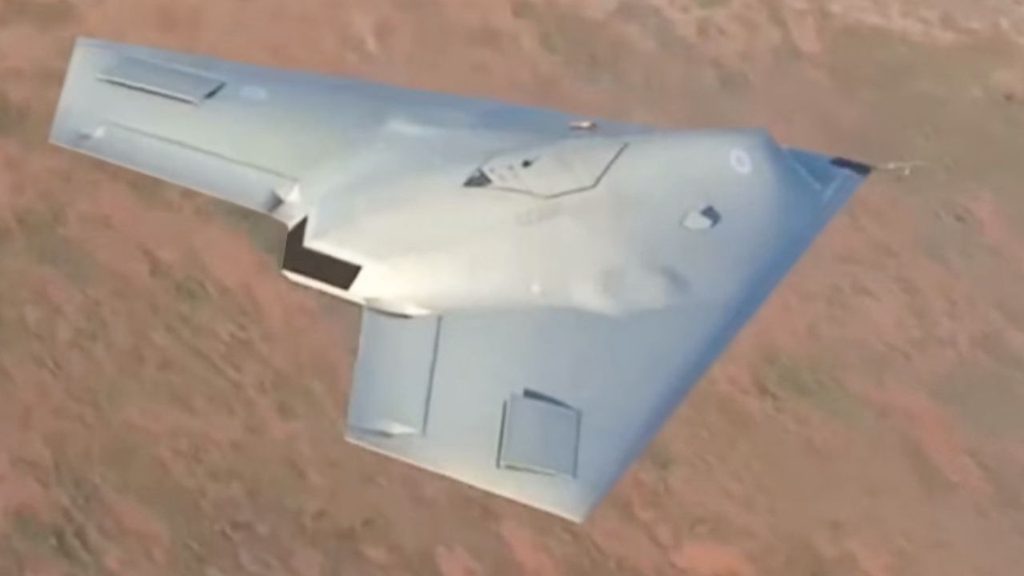
BAE Systems’ Taranis is a UCAV demonstrator that still feels hard to access, even after public acknowledgment. BAE Systems has described Taranis as a top‑secret UCAV demonstrator with restricted visibility, and has publicly discussed its unveiling (as characterized in the context provided). That mix—recognizable name, limited proximity—helps explain why many readers have never seen it up close beyond official images.
What stands out is the handling: “demonstrator,” but treated with unusually tight control. In practical terms, it underlines how carefully stealthy unmanned design work is guarded, even when the basic airframe outline is no longer the secret. As a result, Taranis is less an aircraft the public can inspect and more a signal that serious UCAV development can proceed while many details remain deliberately opaque.