

“Iconic” is subjective, but in U.S. military culture it usually means a truck you can pick out in wartime photos, disaster-response footage, or a movie scene—and one that kept returning because it solved real problems for soldiers and Marines. This ranking isn’t a verdict on what’s “best” or most lethal. It’s about recognizability, longevity, battlefield usefulness, and the way these vehicles shaped how America moves people, fuel, ammunition, and food. Those routine runs underpin operational tempo and keep units going when supply lines are stretched.
Across eras—from WWII convoys to IED-threatened routes in Iraq and Afghanistan—U.S. truck fleets reflect constant tradeoffs: payload versus mobility, protection versus weight, and capability versus cost and sustainment. They also show how the Army and Marine Corps, along with the National Guard and some Air Force users, have relied on major vehicle families rather than a single, continuous “truck program.” Below are America’s most iconic military trucks, ranked by cultural imprint and operational impact.
1) The HMMWV (“Humvee”)
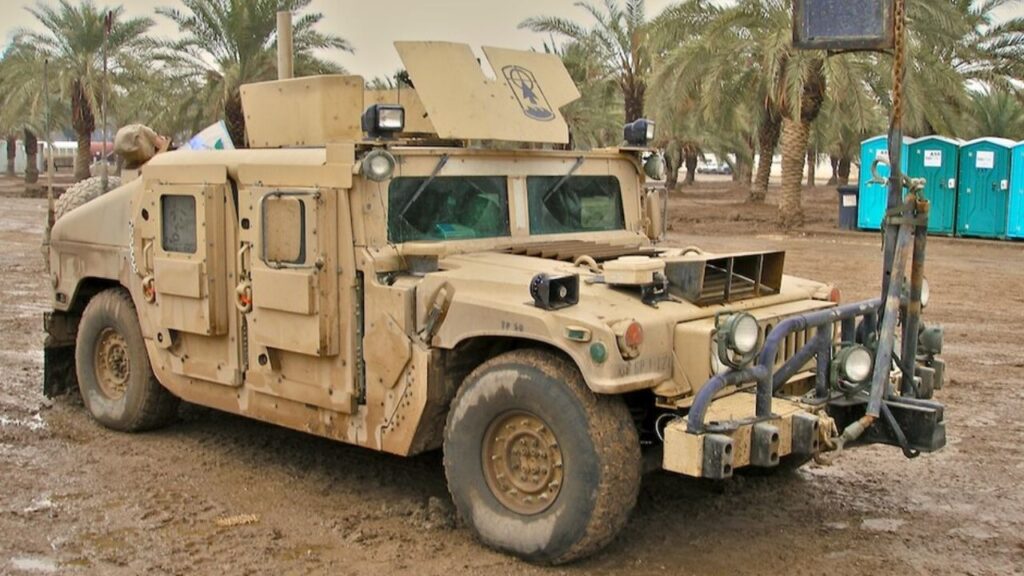
If one vehicle defines the late Cold War through the post-9/11 era in the public imagination, it’s the Humvee. It became visual shorthand for U.S. forces—seen in convoy footage, at checkpoints, and in films and games—because it filled so many light tactical roles. Broad use across Army and Marine Corps formations, plus visible presence in National Guard and other missions, cemented it as a symbol of modern American operations.
The Humvee’s story also carries a clear lesson: a light, utility-focused vehicle can be pushed into missions where protection becomes the deciding factor. As the IED threat grew, the U.S. adapted with add-on protection and alternative platforms, sparking debates that still shape modernization—survivability versus weight, deployability, and cost. Even as it is supplemented and replaced in many roles, the Humvee’s silhouette remains instantly recognizable.
2) The WWII “deuce-and-a-half” family

Few vehicles capture industrial-scale logistics like the “deuce-and-a-half,” the mid-size cargo truck family associated with WWII and continuing service afterward. It’s remembered as convoy backbone—moving troops, rations, and materiel—at a time when large-scale throughput was as decisive as tactics. In defense culture, long lines of cargo trucks are inseparable from the idea of American sustainment.
Its iconic status comes less from any single specification than from what it represented: standardization and reliability at scale. This class of truck helped turn U.S. production into front-line combat power by keeping formations supplied and advances supported. It also reinforced a pattern that continued in later decades: versatile cargo platforms that can be adapted into multiple specialized variants.
3) Jeep-derived light trucks (WWII lineage)

When Americans picture a WWII vehicle, the Jeep lineage is often the first image—even though it’s a light utility platform rather than a cargo hauler. Its cultural weight comes from ubiquity in period photography and storytelling: staff runs, messenger tasks, reconnaissance duties, and the daily movement that keeps units connected. That constant visibility turned it into a durable symbol of American mobility and improvisation.
Operationally, Jeep-derived light trucks highlight a principle that still holds: commanders need small, simple vehicles to move people and small loads quickly, especially when heavier trucks are tied to main routes or longer hauls. “Light” didn’t mean optional; it often meant indispensable. The Jeep’s imprint also shows how a vehicle can become iconic through familiarity and usefulness rather than firepower.
4) Oshkosh HEMTT and Palletized Load System (PLS)
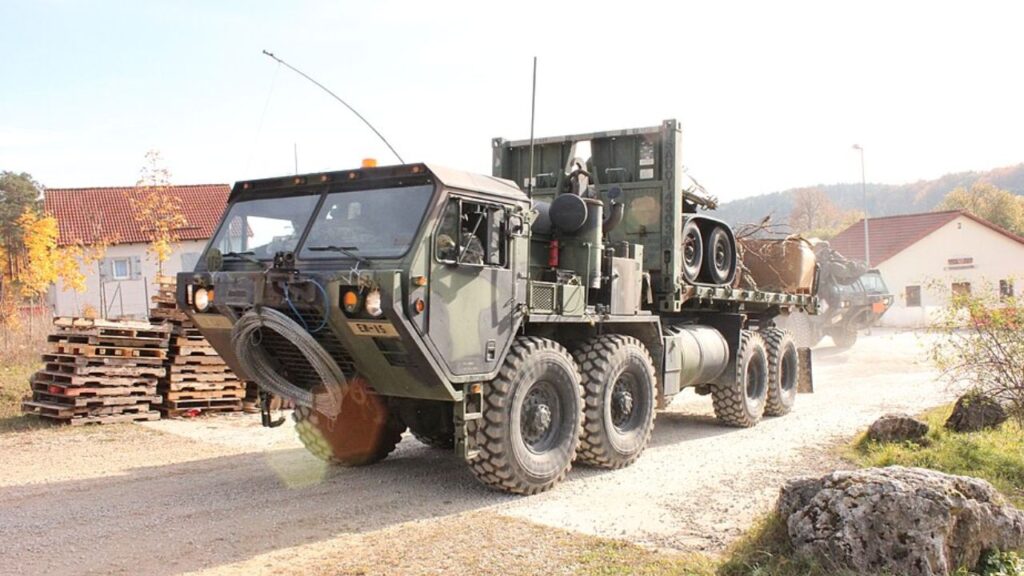
For modern heavy logistics, the Oshkosh Defense heavy truck families—commonly associated with the Heavy Expanded Mobility Tactical Truck (HEMTT) and the Palletized Load System (PLS)—are iconic within the force, even if they’re less recognizable to casual observers. These are the trucks that make everything else possible: hauling bulk fuel and ammunition, moving palletized loads, and sustaining units forward.
In strategic terms, heavy trucks sit at the center of logistics under pressure because they connect stockpiles, ports, depots, and dispersed forces. When heavy transport capacity is strained, the effects ripple outward—fuel distribution slows, parts arrive late, and plans shrink to what can actually be sustained. That’s why these platforms remain central as the U.S. thinks about operating where supply lines and rear areas may face greater risk.
5) MRAP-style vehicles (the IED-era icon)
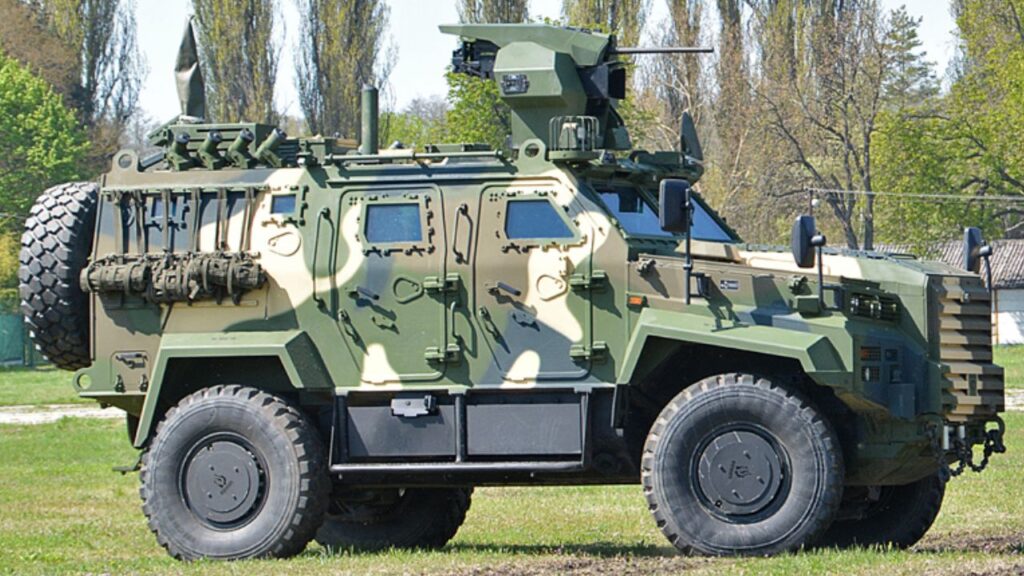
MRAP-style vehicles—often referred to as “trucks” in public conversation even when fielded as protected patrol and transport platforms—became emblematic of the Iraq and Afghanistan years. Their recognizability is tied to a specific problem: roadside bombs and ambushes that forced a different balance between protection and mobility. In news coverage, the tall, armored profile became shorthand for the counter-IED fight and the realities of convoy security and route operations.
What made MRAPs strategically significant was what they signaled about adaptation: when threats shift, vehicle requirements can change quickly, but the answer brings tradeoffs in weight, transportability, maintenance burden, and operating cost. MRAPs were not a one-size-fits-all replacement for light tactical vehicles, and they were not a standalone solution to road threats. Their “iconic” status comes from how clearly they represent the era’s hard choices about survivability and mobility.
6) The JLTV (modern replacement and the “old vs new” debate)
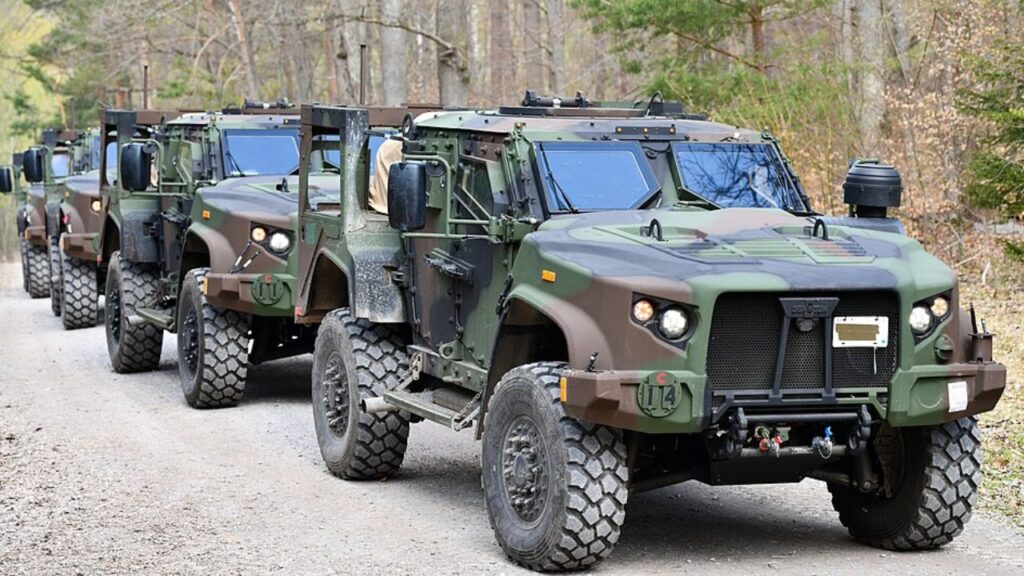
The Joint Light Tactical Vehicle (JLTV) ranks high not because it has decades of nostalgia, but because it represents a visible shift in modernization: fielding a light tactical vehicle designed with more current threat expectations in mind. For many readers, it has become the face of the “Humvee versus JLTV” debate—how much protection is enough, and what that choice costs in weight, complexity, and procurement tradeoffs.
The larger implication is straightforward: planners increasingly assume threats can appear well beyond a traditional front line, pushing light fleets toward designs that prioritize crew protection while staying mission-capable. That comes with second-order effects—training maintainers, adjusting parts pipelines, and deciding how many variants the services can afford to support over time. Modernization is as much a sustainment challenge as it is a buying decision.
7) The enduring work trucks of the force

Beyond the famous names, U.S. forces rely on a wide mix of trucks that become most visible in public-service moments: hurricane relief, wildfire response, and National Guard support missions. Those domestic scenes reinforce a lesson that wartime logistics also teaches: the vehicles that carry water, generators, supplies, and equipment are often the first to show up and the last to leave.
This is where “iconic” becomes bigger than a single model. A truck’s cultural footprint grows when people repeatedly see it doing real work across missions and over many years. It also helps explain why fleet changes can be contentious: replacing familiar vehicles affects readiness, training time, and parts inventories as much as it affects performance on a given day.
What this ranking suggests about the next decade
The through-line from WWII to today is that trucks are not background equipment. They set the limits for sustained operations: if vehicles can’t move, can’t be kept running, or can’t operate under threat, everything else slows down. When the U.S. talks about dispersion and operating in environments where supply lines are stressed, it’s also talking about whether truck fleets can deliver at scale.
The list of “iconic” vehicles will keep evolving as modernization continues and as the services test new approaches to mobility, protection, and efficiency, including limited experimentation that could touch electrification or hybrid concepts. But the criteria for lasting recognition won’t change much. A military truck becomes iconic when it’s widely seen, repeatedly useful, and closely associated with how America fights—or how it responds when it matters.