
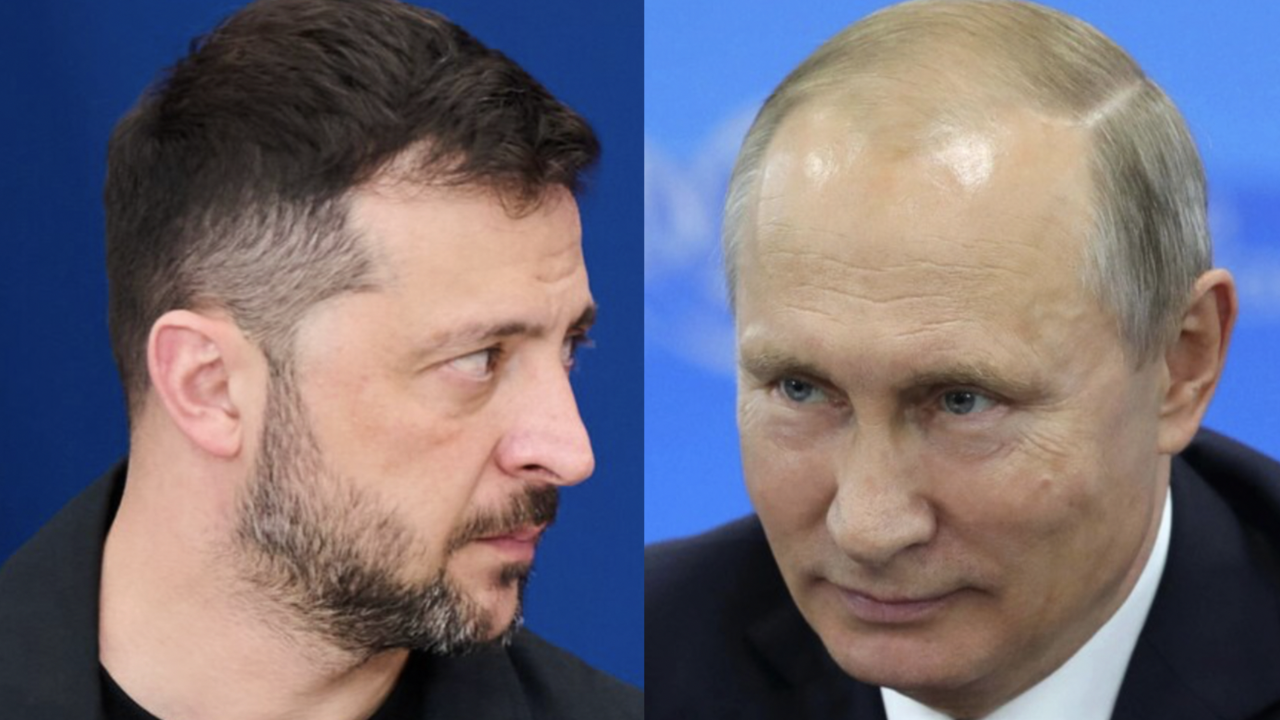
Ukrainian President Volodymyr Zelenskyy said Ukraine will intensify its attacks on Russian oil refineries, answering what he described as a new Kremlin policy of airstrikes aimed at forcing civilians out of Kyiv and other cities. The vow, delivered in an interview with Reuters in the Ukrainian capital on Saturday, came just weeks after U.S. President Donald Trump publicly blamed Kyiv’s refinery campaign for record-high diesel prices and told Zelenskyy to stop.
Intelligence Documents Point to a Broader Target List
Zelenskyy said Ukrainian intelligence services have obtained documents showing that Russian President Vladimir Putin approved a “new doctrine” ahead of this winter. According to the Ukrainian leader, the order widens the range of permissible targets to include infrastructure, logistics networks, roads, schools and hospitals, in cities and villages alike. The purpose, he said, is to pressure residents into abandoning the capital and other urban centers.
Zelenskyy tied the shift to Putin’s need to project strength while Russian forces lose ground in a key frontline region and absorb heavier casualties. The Kremlin was unavailable for comment on Saturday. Russia’s Foreign Ministry, in a statement urging foreign nationals to leave Kyiv, said Moscow would keep hitting targets systematically in what it described as retaliation for Ukrainian attacks inside Russia. Both sides deny deliberately targeting civilians.
Kyiv Under Sustained Fire
The past week has brought persistent Russian drone and missile attacks on the Ukrainian capital, with energy and telecommunications assets, along with road and rail infrastructure, among the targets. For the first time, Russia also struck the bridges across the Dnipro River that link the eastern and western halves of Kyiv. Air raid sirens sounded outside the presidential offices as Zelenskyy spoke.
The Russian warning to foreigners is not new. Moscow first told diplomats and foreign nationals to leave Kyiv on May 25, announcing “systematic strikes” on military-linked targets and decision-making centers a day after one of its heaviest bombardments of the city of the war. Russian Foreign Ministry spokeswoman Maria Zakharova said in September that the May recommendation remained in force.
Ukraine’s Answer: Hit the Money
Zelenskyy said Ukraine would respond in kind to the attacks on its power grid. “With their attacks on our energy, we have to respond on their energy,” he said in English, naming oil refineries as the first priority because they fund Russia’s war effort. He drew a line at civilian targets, saying Ukraine would not mirror Russia by striking civilian objects.
The pledge puts Kyiv on a collision course with Washington’s stated wishes. Ukraine’s long-range drone campaign has hit refineries hundreds of kilometers from the border, cutting Russian fuel output and causing gasoline shortages inside the country. Kyiv maintains that refineries are legitimate military targets.
Trump’s Diesel Demand
Trump raised the issue on September 13 while visiting his golf club in Doonbeg, Ireland. “He has to stop knocking out diesel fuel in Russia,” he told reporters, adding that Zelenskyy could pursue other targets instead. He also said the diesel shortage “isn’t done by the Middle East” and was instead the result of the Russia-Ukraine war, even as conflict in the Middle East has pushed oil prices higher.
The numbers behind the complaint are stark. The U.S. national average for diesel rose above $6 a gallon for the first time, a record, a figure that stood at $3.71 a year earlier. Brent crude traded above $100 a barrel, and Russia banned diesel exports in July as the strikes squeezed its supply.
A Shift in Washington’s Position
Trump’s stance marks a turn from earlier this year. At a NATO summit in Ankara on July 8, he stood beside Zelenskyy and described the refinery strikes as an escalation that could help end the war. By mid-September he was demanding they stop, and he reportedly repeated the request during a September 20 phone call with Zelenskyy, when the two leaders agreed to meet in New York.
Peace Talks and the Miami G20
The Trump administration has recently tried to revive negotiations to end the four-year war, Europe’s bloodiest conflict since World War Two. It has also invited Putin to a G20 summit in Miami in December and held business discussions with Russian envoys. Zelenskyy urged Washington not to normalize relations with Moscow before peace is secured, arguing that restored economic and diplomatic ties should come only in exchange for an end to hostilities, and that peace outweighs any economic consideration.
Zelenskyy said he would welcome a meeting with Putin at the G20 but cautioned the United States against believing that Russia would stop fighting once it controls the Donbas region. He said he has seen no sign from Moscow of interest in talks or in a ceasefire on energy infrastructure. The U.S. has proposed resuming trilateral talks in the United Arab Emirates in the coming weeks, though no date or venue has been set.
Counteroffensive in the Donbas
On the battlefield, Zelenskyy said a Ukrainian counteroffensive code-named “Vivaldi” has retaken about 140 square kilometers (54 square miles) of the eastern Donbas and is still underway. The region is central to the diplomacy: Russia has said it must control all of the Donbas as a condition for any peace deal.
Shahed Drones and Air Defense Gaps
Since summer, Russia has launched dozens of fast, inexpensive jet-powered Shahed drones at Ukraine each day, outpacing interceptor drones that are too slow to catch them. Zelenskyy said Ukraine has leaned heavily on F-16 and MiG fighter jets to destroy roughly 60 percent of them, but stocks of 20 mm ammunition for the aircraft are running low.
Kyiv is pursuing several fixes. Zelenskyy said it is expanding electronic jamming and expects its first shipment of small, cheap air defense missiles able to hit the new Shaheds in the second half of October. Tests of two of five interceptor drone designs under development showed a success rate of about 30 percent, and Zelenskyy acknowledged the systems must be scaled up.
Ukraine’s Own Ballistic Missiles
Ukraine announced this week the first combat use of its domestically produced FP-7 ballistic missile, which has a range of about 250 kilometers (155 miles). Zelenskyy said he pressed manufacturer Fire Point to finish the longer-range FP-9, which the company has said could reach Moscow, and said he expects it this autumn.
Ukrainian officials warn Russia has stockpiled hundreds of ballistic missiles for an expected winter assault on electricity and water systems. Last winter, the war’s worst, Russian strikes left large areas without power and heating for days at a time.
Europe and the Funding Gap
Zelenskyy characterized recent Russian drone incursions and hybrid attacks in Europe as an effort to intimidate populations and erode support for Ukraine, and said some European leaders are beginning to recognize this and harden their positions. Russia calls such accusations baseless and the product of anti-Russian hysteria.
After talks in Brussels this week, Zelenskyy said Ukraine secured funding to order the drones it needs to keep fighting into early 2027. Officials have drawn up plans with European partners to close a $27 billion hole in this year’s defense budget, combining reallocated Ukrainian funds, bilateral aid and credits drawn from next year’s share of a €90 billion EU loan. Zelenskyy called the arrangement a major success for the country.