
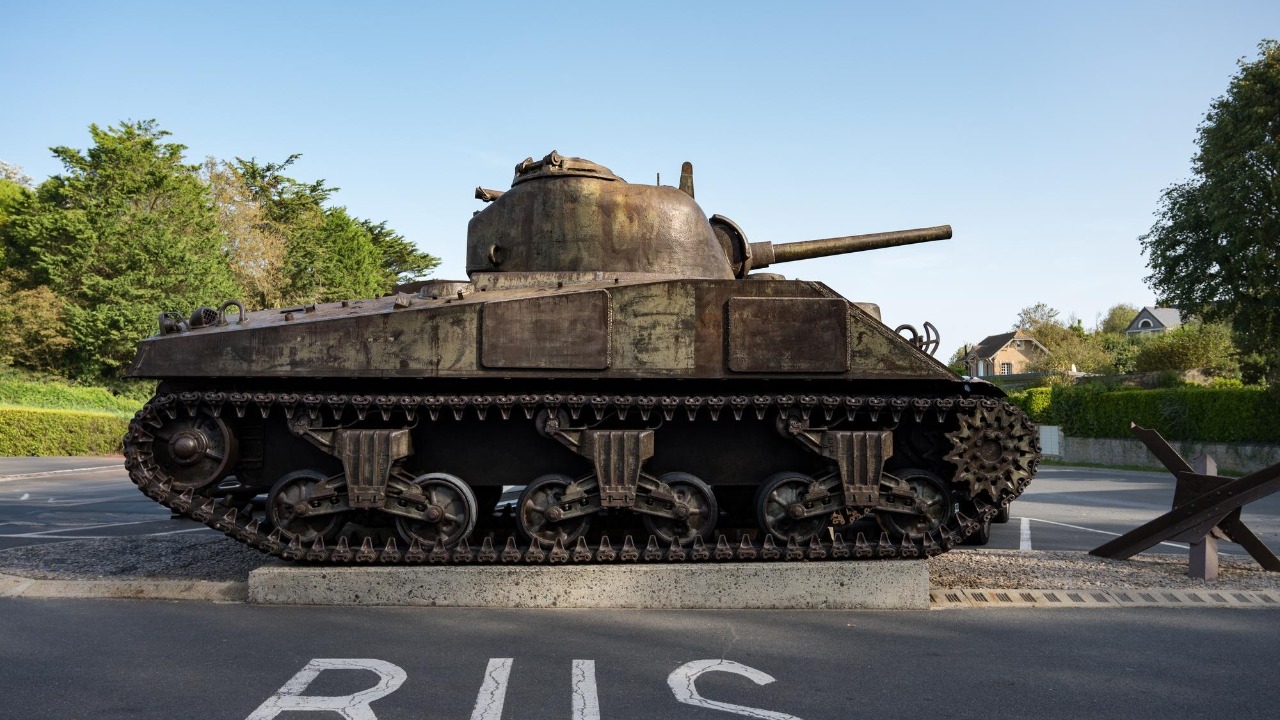
The M4 Sherman is often remembered as a noisy, gasoline-fueled box that burned too easily and lost duels with German armor. Yet generations after World War II, American officers and analysts still dissect how it was designed, built, and used. They are not trying to resurrect a mid‑century tank, they are mining a case study in how “good enough” equipment, fielded at scale and supported by agile logistics, can win a modern war.
From the prototype’s evaluation in the United States to the last Shermans still seen in service abroad, the tank’s story offers a compact seminar on tradeoffs, myths, and industrial power. That is why the U.S. military keeps returning to it when teaching future commanders how to think about weapons, not just how to operate them.
The Sherman as a lesson in “good enough” design
For contemporary planners, the Sherman is a reminder that battlefield success rarely comes from chasing the single most lethal machine. The tank was not the heaviest armored vehicle of its era and it did not carry the largest gun, but it struck a deliberate balance between firepower, protection, and mobility that could be mass produced. Analysis of wartime production shows that, in the case of the Sherman, the United States accepted some design compromises in order to field a tank that was reliable, easy to maintain, and available in very large numbers, a combination that had a decisive effect on the war once those vehicles reached the front.
Modern doctrine writers point to this as a classic example of “good enough” engineering, where the right answer is not the most exquisite prototype but the system that can be built, shipped, and kept running under combat conditions. Reporting on the tank’s development notes that American engineers and officers evaluated the prototype in the United States with an eye to how quickly factories could retool and how easily crews could learn the controls, not just how thick the armor looked on paper. That focus on practical performance, rather than perfection, is a core lesson the U.S. military still emphasizes when it studies the Sherman’s design choices and their impact on World War II.
Quantity, logistics, and the power of industrial scale
Another reason the Sherman remains on reading lists is that it embodies how industrial capacity and logistics can outweigh individual matchups on the battlefield. The United States used its manufacturing base to produce Shermans in vast numbers, then backed them with a supply chain that could keep them fueled, repaired, and upgraded. Accounts of wartime operations stress that this balance between quality and quantity allowed American forces to absorb losses, rotate damaged tanks out of the line, and still maintain armored pressure across multiple theaters.
Technical histories highlight how maintainability was baked into the design. A Sherman tank’s engine, for example, could be removed and replaced in a matter of hours or days, which meant a vehicle hit or broken on Monday might be back in action by the end of the week. That kind of turnaround only works when the underlying machine is simple enough to service and the logistics system is robust enough to move spare parts and replacement powerplants forward. For today’s officers wrestling with how to sustain complex platforms, the Sherman’s combination of straightforward engineering and industrial support offers a concrete benchmark for what resilient, scalable logistics can look like in practice.
Myths, survivability, and how crews actually fought
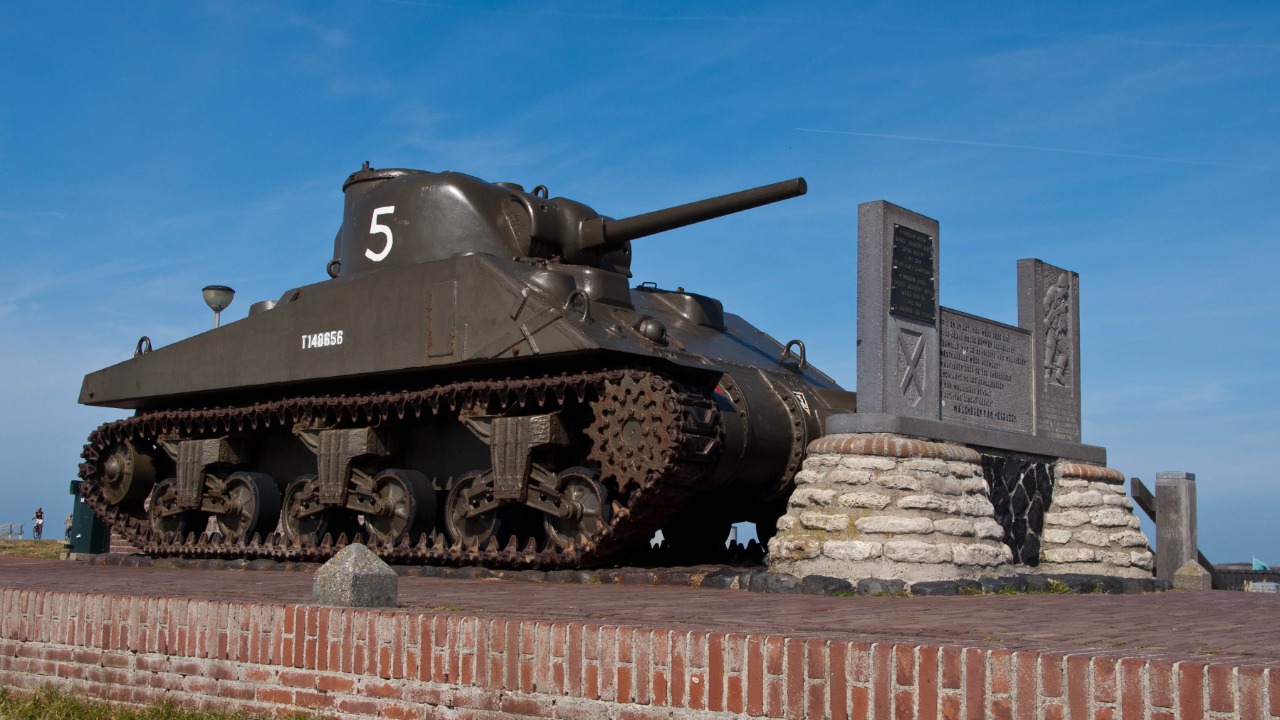
The Sherman also endures in military classrooms because it is a case study in how myths can distort perceptions of a weapon’s real performance. Popular culture and postwar anecdotes often paint the tank as hopelessly inferior, a rolling death trap that stood no chance against German armor. Yet detailed assessments argue that The Sherman was not really that inferior and that this reputation is a myth built up over time, often by focusing on the worst engagements and ignoring the broader context of how the tank was intended to be used.
Veteran accounts and later analysis push back on the idea that Sherman crews were simply thrown into frontal duels they could not win. Commenters like Lokiorin, writing in a widely cited discussion, note that many of the most persistent stories about catastrophic losses come from a narrow set of battles and from what one historian calls “Panzer worship,” the tendency to judge Allied equipment only by its performance against the most elite German formations. In practice, American and Japanese tank crews in the Pacific, for example, fought in environments where the Sherman’s reliability, mobility, and ability to coordinate with infantry and artillery mattered more than a single armor thickness statistic. By dissecting these myths, modern instructors encourage officers to question surface narratives about “inferior” or “superior” hardware and to look instead at doctrine, training, and operational context.
Adaptability, variants, and the value of modular design
Beyond raw numbers, the Sherman is a template for how a basic platform can be adapted into a family of vehicles. The original tank was a decent design, simple to build in large numbers and maintain, easily transported, and adaptable to a wide range of roles. Over the course of the war, that adaptability produced specialized versions for fire support, amphibious landings, and tank destroyer missions, all built on the same core chassis and mechanical systems.
Modern acquisition officials study this evolution as an early example of modular design. Once the United States had a proven hull and drivetrain, engineers could bolt on different turrets, guns, and equipment without restarting the entire evaluation process. That approach allowed the Army to respond to new threats, such as heavier German armor or fortified island defenses, by fielding upgraded Shermans rather than waiting for an entirely new tank. Today’s emphasis on common platforms and open architectures, from armored vehicles to aircraft, echoes the way the Sherman became a flexible toolkit for commanders who needed different capabilities from the same industrial base.
Training, doctrine, and combined arms thinking
The Sherman’s record is also a window into how doctrine and training can matter as much as hardware. Early in the war, the U.S. Army experimented with separate Tank Destroyer and Cavalry officer candidate schools, reflecting a belief that specialized units with dedicated vehicles would handle enemy armor while Shermans focused on supporting infantry. Over time, experience on the battlefield led to those schools being shuttered and missions rebalanced, as commanders realized that tanks, infantry, artillery, and air support had to be integrated more tightly rather than split into rigid categories.
For today’s officers, that shift is a cautionary tale about building doctrine around idealized roles instead of how units actually fight. Analyses of Sherman engagements show that when crews operated as part of a combined arms team, using reconnaissance, artillery, and air cover, their losses dropped and their effectiveness rose. When they were pushed into isolated duels without support, casualties spiked and the tank’s weaknesses were magnified. Studying those patterns helps modern planners think about how to employ current armored forces, and it reinforces the idea that even a well designed vehicle can fail if doctrine and training do not match the realities of combat.
Legacy, longevity, and what the Sherman still teaches
The Sherman’s long service life is another reason it remains a touchstone. Seventy five years after the prototype entered its evaluation period in the United States, elderly Shermans were still seen in service in some countries, a testament to how durable and maintainable the design proved to be. That kind of longevity is not just a historical curiosity, it is a data point for modern planners who must decide whether to invest in highly specialized systems or in platforms that can be upgraded and kept relevant over decades.
Historians who track these late‑service tanks note that many of them were modernized with new guns, radios, and armor kits, yet still relied on the same basic hull and mechanical layout. For the U.S. military, that reinforces the value of designing equipment with future growth in mind, even when the immediate pressure is to field something quickly. The Sherman shows that a “good enough” tank, if built on a solid and adaptable foundation, can outlast its original war and continue to serve in new roles, a lesson that resonates as the Pentagon weighs how to balance cutting edge prototypes with proven, upgradable workhorses.
From WWII armor to modern supply chain thinking
Finally, the Sherman has become a surprisingly useful case study for thinking about supply chains and resilience in the twenty first century. The tank’s success depended not only on its design but on a vast network of factories, depots, and transport routes that kept fuel, ammunition, and spare parts flowing from American plants to distant battlefields. Contemporary research on emerging technologies in supply chain management describes how new tools can serve as key enablers of resilience and agility, goals that echo what wartime logisticians achieved with far more primitive means.
By comparing the Sherman era’s emphasis on redundancy, standardization, and rapid repair with modern concepts like real time tracking and predictive maintenance, military educators can show officers that the underlying principles have not changed. The tank’s story illustrates how a force that treats logistics as a strategic asset, rather than an afterthought, can sustain high tempo operations even when individual vehicles are lost or damaged. That is why, long after the last U.S. Sherman left active duty, the tank still rolls through war colleges and staff courses as a compact, steel clad lesson in how design, doctrine, and industrial power combine to shape the outcome of wars.