
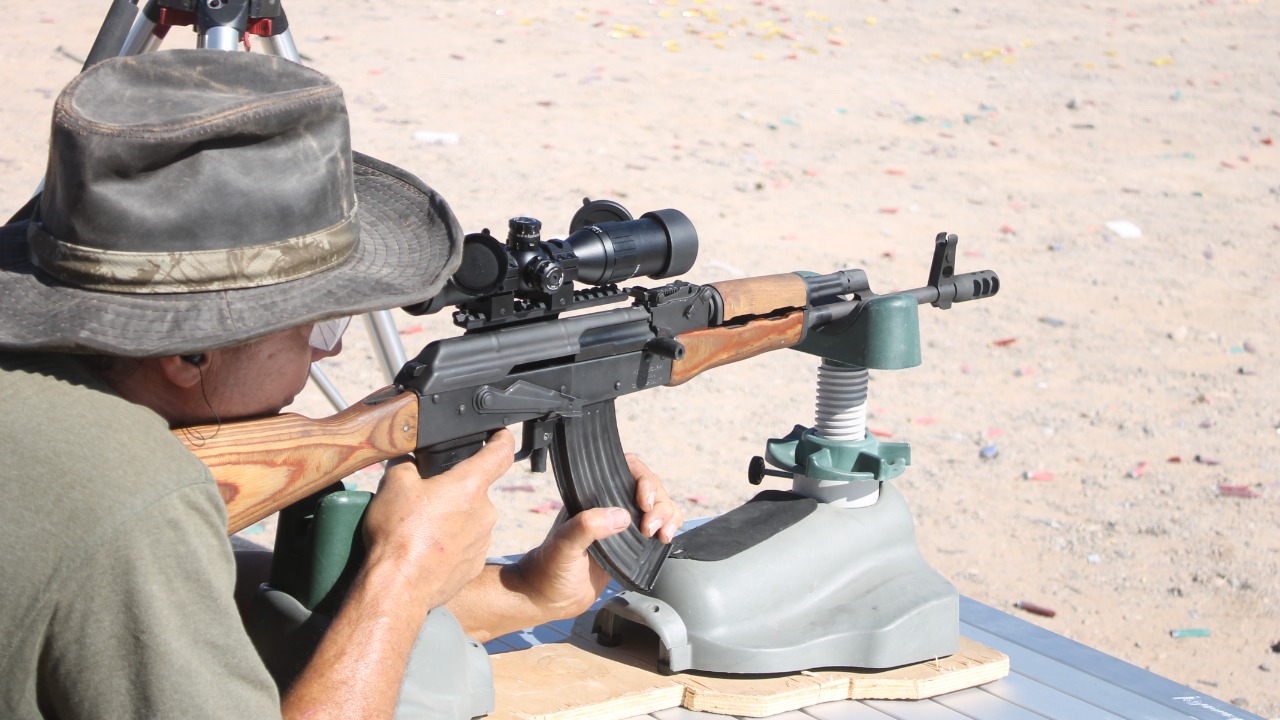
The modern battlefield is crowded with drones, satellites and software that sounds like a rejected Marvel villain, yet the most decisive piece of hardware is often a seventy year old Soviet design that looks like it was built in a tractor factory. The AK-47 keeps showing up in civil wars, insurgencies and cartel turf fights because it solves the ugliest problems of combat with brutal simplicity, and it does it cheaply enough that even the most threadbare fighters can afford a ticket to the gun show. Strip away the mythology and the memes, and the rifle’s staying power comes down to a mix of engineering shortcuts, industrial scale production and a talent for surviving the kind of neglect that would make other weapons file a workplace grievance.
How a peasant-proof rifle became everyman’s gun
At its core, the AK-47 is not a precision instrument, it is a stubborn appliance, closer to a cast iron skillet than a chef’s knife. The design of The AK, officially the Avtomat Kalashnikova, favors loose tolerances and a long stroke gas piston that happily cycles even when the rifle is caked in mud, sand or the sort of mystery grime that accumulates in the back of a pickup. That philosophy, described by engineers as “peasant-proof,” means a barely trained recruit can keep the weapon running with minimal maintenance and still put out enough fire to matter in a firefight, a point echoed in explanations that highlight how it was Designed for ease and speed of manufacture and “effective enough” rather than elegant.
This ruggedness turns the rifle into what one historian called a battlefield leveler, a tool that lets poorly equipped militias and guerrillas stand against modern conventional units that might otherwise steamroll them. Accounts of the AK-47 as Everyman’s Gun describe how its reliability and forgiving ergonomics allow fighters with little formal training to operate in harsh climates and still deliver sustained fire, which is why it appears in conflicts from jungles to deserts as a kind of default setting for war. When a weapon can be tossed in the back of a technical, dragged through a swamp, or handed to a new recruit after a five minute tutorial and still function, it earns a reputation that no marketing campaign can buy.
Mass production, cheap Ammo and the economics of endless war
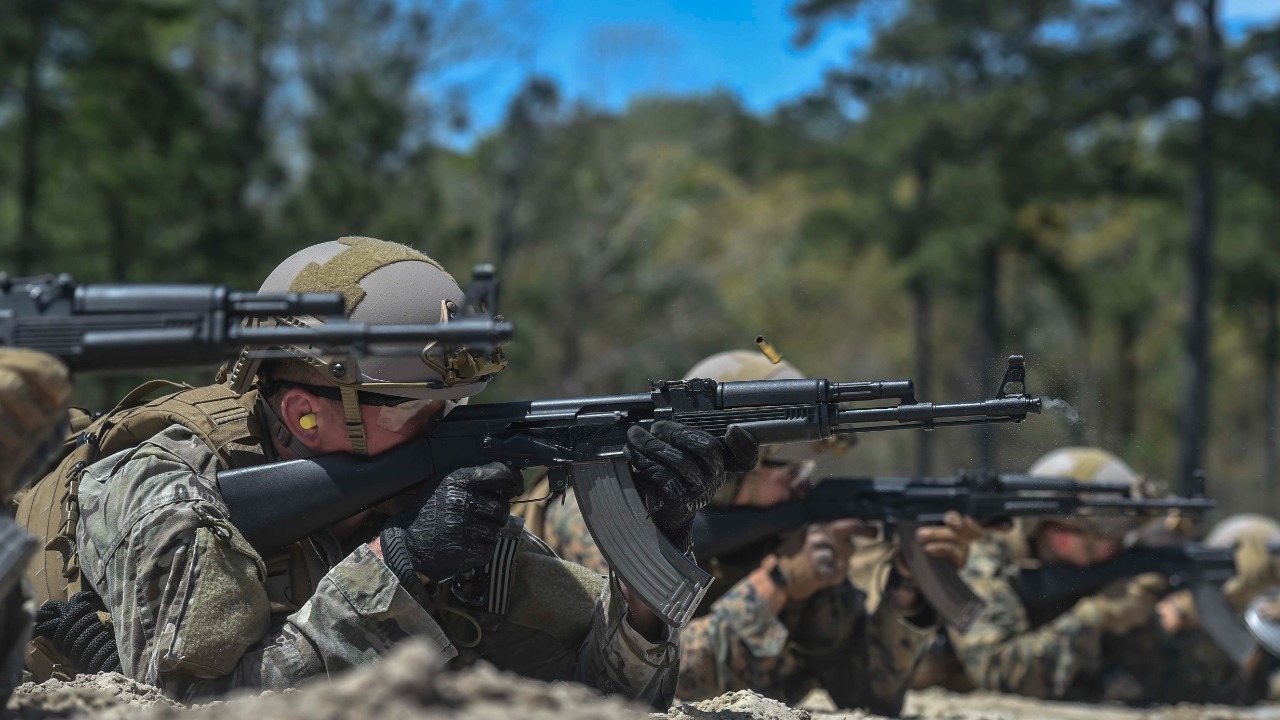
Durability alone does not win global market share, however, and the AK-47’s real superpower is that there are simply a staggering number of them. Commenters dissecting its popularity point out that Also they built over 100 m of the things, a figure that turns the rifle from a product into an ecosystem. When tens of millions of identical or compatible rifles are scattered across continents, parts, magazines and know-how become as common as used Toyota Corolla hubcaps, and that ubiquity keeps costs low enough for militias, cartels and breakaway factions to arm entire units instead of a handful of elites.
The ammunition story is just as important, and just as unglamorous. In one widely cited Comments Section, users note that Ammo is super duper common, and cheap, because the 7.62×39 mm cartridge has been churned out for decades by state factories and black market workshops alike. That abundance means a fighter can train, waste rounds in celebratory fire or spray suppressive bursts without a quartermaster having a panic attack over the budget. When a weapon system is fed by cartridges that are everywhere, from dusty border markets to city basements, it becomes the default choice for any group that expects a long, grinding conflict rather than a short, decisive campaign.
Why fighters keep choosing the AK-47 over fancier rivals
On paper, plenty of modern rifles beat the AK-47 in accuracy, ergonomics or modularity, yet fighters from jungles to city slums keep reaching for the old warhorse. One reason is that the rifle was built to meet an infantry soldier’s best friend standard, prioritizing a lightweight package that is easy to load and capable of Rapid Fire that feels intuitive under stress. In debates comparing it to Western designs, some argue that the AK47 fires a better and more powerful round and has proven more capable in war, especially in environments where maintenance is sporadic and spare parts are whatever can be scavenged from the nearest cache.
That preference shows up in conflicts where independence movements, cartels and insurgent groups all converge on the same solution. Analysts describing why almost all fighters use the AK-47 point to its role in struggles where forces used them to fight for independence, where cartels used them to push their product, and where Somali fighters used them to shoot down an American Helico, illustrating how a single platform can serve as both a symbol and a practical tool. When a rifle can be pressed into service as a status object, a terror weapon and a workhorse for day to day patrols, it becomes more than a line item on a logistics spreadsheet, it becomes the default language of armed power.
From mass shootings to mass culture, the AK-47 brand effect
The AK-47 is not just a tool of war, it is a brand, and like all strong brands it has escaped its original purpose and seeped into places its designers never imagined. Reporting on how the AK and its Western counterpart Evolved Into Rifles of Choice for Mass Shootings notes that the Kalashnikov line was shorter and more compact than many earlier rifles, which made it easier to maneuver in tight spaces and contributed to its appeal for attackers seeking maximum damage in minimal time. That same analysis describes how the platform Redefined War in Part by being reliable to an extraordinary degree, a trait that unfortunately translates all too well from battlefields to civilian massacres.
Pop culture has done the rest of the marketing work for free. The silhouette of the curved magazine and gas tube has become visual shorthand for rebellion, criminal swagger and anti state defiance, appearing in music videos, video games and protest art until even people who have never touched a firearm can sketch it from memory. When a weapon’s number, 47, is instantly recognizable and its outline is as iconic as a sports car logo, it gains a psychological presence that nudges buyers, smugglers and would be fighters toward it before they ever open a catalog. The result is a feedback loop where notoriety fuels demand, demand fuels circulation, and circulation cements the rifle’s place in both real and imagined conflicts.
Why the AK-47 keeps winning the ugly wars of the future
Modern militaries may obsess over smart munitions and networked targeting, but the messy reality of most conflicts still comes down to small units with rifles trying to control streets, hillsides and checkpoints. Analysts who call the AK-47 a battlefield leveler are really describing its talent for thriving in exactly those chaotic, low resource environments where logistics are fragile and training is rushed. When a weapon can be manufactured in bulk, handed to recruits after a short briefing and expected to function with minimal cleaning, it becomes the logical choice for any force that anticipates attrition, desertion and equipment loss as daily facts of life.
That logic is unlikely to change soon. The model and its variants, which are AK-47s, continue to circulate through gray and black markets, and discussions of how the rifle became so widespread emphasize that it was Designed for rapid production and export from the start. As long as conflicts are fought by irregular forces who value reliability over refinement, and as long as cheap Ammo and surplus stocks keep flowing, the AK-47 will remain the rifle that quietly shapes outcomes while more glamorous technologies hog the headlines. In a world that keeps promising clean, high tech wars and then delivering muddy, improvised ones instead, the old Kalashnikov is perfectly suited to keep on winning.