

Rifles collect legends faster than they collect dust, and some of those stories age about as well as milk in a truck bed in August. A gun gets a cameo in a classic Western, a glowing review at deer camp, or a viral video, and suddenly it is spoken of in tones usually reserved for vintage sports cars and miracle cures. Yet when the trigger is finally pulled in the real world, a surprising number of these supposed icons turn out to be more myth than marksman.
When a rifle fails to live up to its reputation, the problem is rarely just the metal and wood. Hype, nostalgia, bad setup, and plain misunderstanding all play starring roles. The result is a long list of firearms that are either unfairly worshipped or unfairly blamed, and sometimes both in the same weekend.
How legends are born in the first place
I have learned that a rifle’s legend usually starts with a story, not a spec sheet. One shooter has a great day at the range, a hunter drops a buck at an impressive distance, or a movie star shoulders a particular model with just the right squint, and suddenly that gun is “the one.” A recent feature on rifles that never really earned their halo describes how certain models get talked up at the gun counter until they sound like they can bend physics on command, even when their real performance is closer to “fine, if you are not too picky.” In that reporting, Josh Clark walks through examples where the marketing and campfire tales far outpaced what the rifles actually delivered once the honeymoon ended.
Pop culture pours gasoline on that spark. Classic Westerns turned lever actions into near-mythical tools, and the guns associated with John Wayne are a prime example. The Winchester 1892, which John Wayne carried in multiple films including True Grit and Stagecoach, is now treated as a kind of shorthand for frontier toughness. You can spot The Winchester in scene after scene, and the camera loves it. That screen time convinces generations of viewers that owning one will somehow transfer a little of that swagger into their own shoulders, even though the rifle’s cinematic reputation has more to do with prop selection than ballistics.
Hollywood’s “perfect rifle” problem
Once you start paying attention, the gap between on-screen rifles and real-world rifles is almost comical. A breakdown of gun use in Westerns points out that the firearms in many of those movies are historically off, mechanically misused, or treated like magic wands that never need to be reloaded. In one analysis, The Guns Are Wrong In Most Westerns is not just a catchy phrase, it is a summary of how directors routinely pick whatever looks good on camera, then have characters fire far more rounds than the gun can actually hold. That kind of cinematic cheating quietly rewires expectations, so a viewer comes away thinking a particular rifle is more powerful, more accurate, or more advanced than it ever was.
Gun Culture commentary has also highlighted how those same Westerns gloss over the quirks and limitations that real shooters have to live with. Lever actions are shown being fired from the hip with pinpoint accuracy, in dust storms, at full gallop, without a single malfunction or missed shot. The Winchester that John Wayne cycles so effortlessly is not dealing with real-world issues like sight alignment, ammunition variability, or the small matter of human nerves. When a modern buyer finally picks up a similar rifle and discovers it does not automatically turn them into a frontier hero, the disappointment is baked into the mismatch between Hollywood fantasy and mechanical reality.
When “must have” rifles disappoint at the range
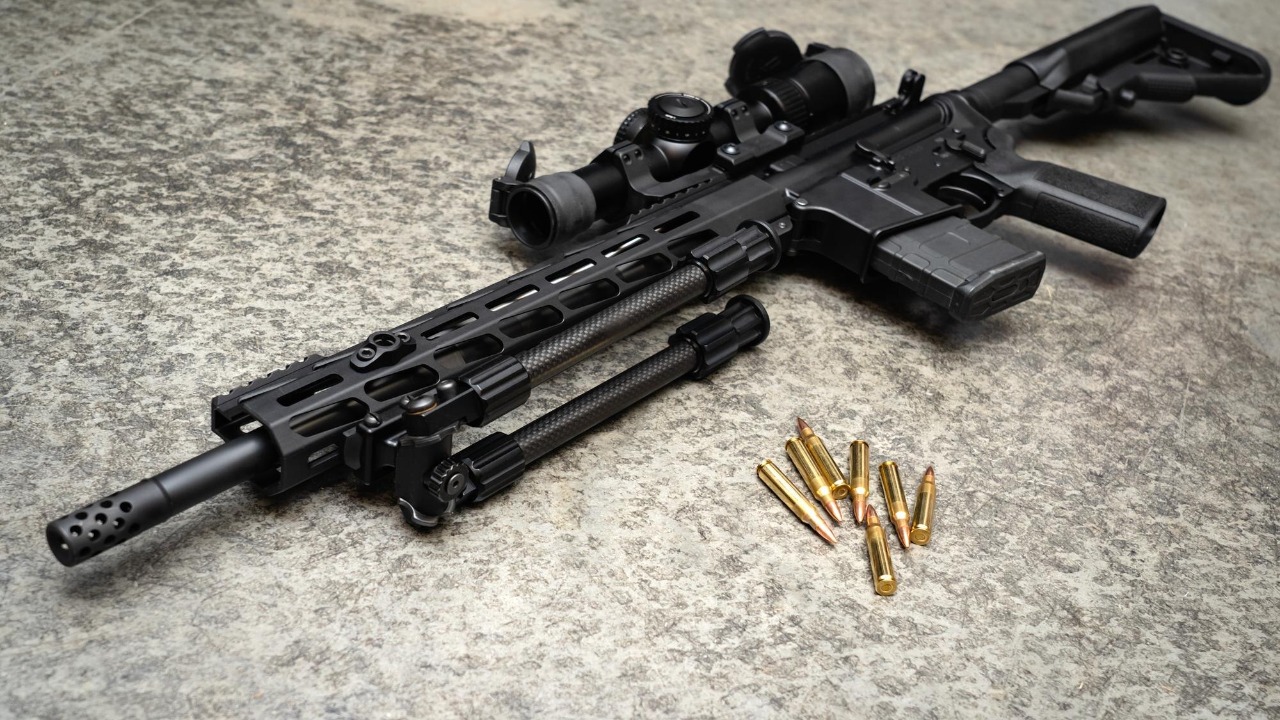
Even outside the movie theater, reputations can sprint far ahead of performance. Modern cartridges and platforms are marketed as game changers, especially when they fit into popular rifles like the AR-15. Coverage of the 350 Legend, for example, lays out three reasons someone might feel they need one and two reasons they might want to think twice. The pitch is that this cartridge is a powerhouse compared to other AR-15 options that use similar case dimensions, promising more punch without abandoning the familiar platform. On paper, that sounds like the perfect compromise, and it fuels a wave of “you have to get one” advice.
Reality, of course, is more nuanced. The same analysis notes that the 350 Legend is not a powerhouse compared to most traditional rifle cartridges, only relative to other AR-15 rounds that share its basic footprint. That is a crucial detail that tends to vanish in casual conversation. A hunter who buys into the legend expecting long-range dominance may find that the cartridge’s real strengths are more modest and situational. When the marketing gloss wears off and the rifle is judged on actual performance instead of brochure promises, the legend can feel a little inflated.
Blaming the rifle when the setup is the real villain
Some rifles earn a bad name not because they are flawed, but because they are poorly treated. I have watched shooters curse a gun that “just will not group” while the real culprit was loose hardware or neglected maintenance. A detailed rundown of rifle setup mistakes points out that LOOSE ACTION screws are a common, boring, and devastating problem. If the action is not firmly secured to the stock, accuracy falls apart, yet many owners never check those screws before declaring a rifle a lemon. The same reporting lists other simple errors, like misaligned scopes and inconsistent rest positions, that can turn a decent gun into a scattergun.
Those setup issues are not glamorous, which is exactly why they get ignored. It is more satisfying to blame a brand than to admit that the torque wrench never left the toolbox. The Realtree Camo guidance on ACTION screw tension and other fundamentals makes it clear that a rifle that has “never shot well” often just needs basic attention. When those details are skipped, the legend that forms is not about a reliable workhorse, but about a supposedly cursed rifle that no one wants to touch, even though the fix might be a five minute adjustment and a fresh box of ammo.
Regret, buyer’s remorse, and the myth of the perfect gun
If you want to hear how legends collapse, talk to people about the rifles they would never buy again. One video project did exactly that, asking hunters a single question about which rifle they regret purchasing the most. The answers poured in from budget rifles that promised champagne performance on a soda budget to premium models that simply did not fit the shooter or the job. The pattern was not that one brand failed everyone, but that expectations, marketing, and real-world use rarely lined up as neatly as the catalog suggested. Sep is mentioned in connection with that project, but the more important detail is the chorus of “I thought it would be better than this.”
Those stories are a useful antidote to hero worship. They show that even experienced hunters can be seduced by glowing reputations, only to discover that the rifle kicks harder than expected, refuses to feed certain ammunition, or just does not inspire confidence. When enough of those experiences accumulate, the legend flips, and the same model that was once hyped as a must have becomes the butt of range jokes. The truth usually sits somewhere in the middle, with the rifle being perfectly serviceable for some uses and some shooters, but not the universal solution the marketing implied.
Workhorse reality versus battlefield myth
Some rifles are so famous that they barely feel like objects anymore, they are symbols. The AK is one of those. According to technical histories, the AK-47 was designed to be a simple, reliable fully automatic rifle that could be manufactured quickly and cheaply using mass production methods in the Soviet Union during the late 1940s. That origin story is part of why it is often portrayed as indestructible, a gun that will run forever in mud, sand, or neglect. The legend suggests that if you so much as look at an AK-47, it will chamber a round and function flawlessly until the sun burns out.
The real design brief, however, was about practicality, not immortality. The AK’s reputation for reliability is grounded in reality, but the myth that it never jams or wears out is just that, a myth. Like any mechanical system, it has tolerances, maintenance needs, and limits. When people treat the legend as literal truth, they can be sloppy with care and then act surprised when the rifle behaves like a machine instead of a magic trick. The gap between “robust and forgiving” and “invincible” is where disappointment lives, even for a platform as proven as the AK-47.
Why some rifles never really had a chance
Every so often, a rifle is born into a reputation it cannot possibly meet. A slideshow on rifles that never deserved their reputation highlights models that were either overpraised or unfairly maligned from the start. Some were saddled with unrealistic expectations because of a single standout feature, like a novel action or a striking stock design, while others were condemned based on early production issues that later runs quietly fixed. In each case, the story that stuck was not the full story, but a simplified version that fit neatly into range gossip.
Once that kind of narrative hardens, it is almost impossible for the rifle to escape it. A gun that was merely average becomes a punchline, and a gun that was merely good becomes a legend, even if both would look pretty similar on a target at 100 yards. The xm25rifle example mentioned in that reporting, tied to online listings and enthusiast chatter, shows how quickly a model can be locked into a reputation that has more to do with perception than performance. By the time a new owner gets one in hand, they are not evaluating a tool, they are wrestling with a story they have been told for years.
Living with rifles after the legend fades
In the end, the rifles that never live up to their legend are usually victims of our own storytelling habits. We like simple narratives: the flawless hero gun, the hopeless lemon, the cartridge that solves every problem. Real rifles are messier. They are shaped by design choices like those that guided the AK-47, by cinematic exposure like The Winchester in John Wayne films, by marketing pitches around cartridges such as the 350 Legend, and by mundane setup details like LOOSE ACTION screws that no one wants to think about. When all of that collides with human expectations, disappointment is almost guaranteed for at least some buyers.
The good news is that once the legend is stripped away, what is left is often a perfectly decent tool. A rifle that is not the miracle you were promised can still be accurate, reliable, and enjoyable if it is matched to the right job and cared for properly. The trick is to treat reputations as starting points, not verdicts. Listen to the stories, then check the screws, the fit, the ammo, and your own needs. The legend might get you to pick up the rifle, but the reality is what will keep it in your safe or send it down the road to someone else chasing a myth of their own.