

Some handguns feel trustworthy the moment they land in your palm, long before you have the data to justify that gut reaction. The grip locks in, the sights line up, and your brain quietly says, “Yes, this will do nicely,” even if your skills are still a work in progress. That instant sense of control is not magic or marketing, it is a mix of ergonomics, trigger behavior, and reliability that certain pistols get right and others spectacularly miss.
When I look at which models people warm up to quickly, the pattern is clear: the guns that inspire fast confidence are the ones that help you succeed instead of punishing every mistake. From compact carry pistols to classic 1911s and even humble revolvers, the standouts share a few traits that show up again and again in expert recommendations and real-world defensive advice.
Ergonomics: When the grip feels like a handshake, not a dare
I have never seen a new shooter fall in love with a handgun that feels like a brick wrapped in sandpaper. Confidence starts with how the gun fits the hand, because if you are fighting the grip, you are not focusing on the sights or the trigger. Detailed guidance on choosing a Firearm for Personal Defense puts comfort and control right at the top, treating hand fit as a “Key Factors” issue rather than an afterthought. When a pistol’s grip angle, texture, and controls line up with your anatomy, the gun points naturally, recoil feels manageable, and your brain quietly downgrades the “this might hurt” alarm.
That is why so many “easy confidence” lists, like the 13 pistols that new carriers instantly feel confident with and the related 13 handguns that build confidence quickly, keep circling back to how the gun sits in the hand. Story author Josh Clark highlights models that give new carriers a sense of control instead of punishing mistakes, which is another way of saying the ergonomics are doing half the work for you. Broader advice on the best handguns is blunt about this too, noting that Ergonomics play a crucial role because a handgun should feel natural, not like a grip-strength test designed by your worst gym teacher.
Triggers that help, not sabotage, your aim
Once the gun feels right in the hand, the next confidence killer or confidence builder is the trigger. A good trigger is predictable, with a clean break and a reset you can feel, so your sights do not leap off target every time you press it. Walther’s Performance Duty Trigger, for example, is described as having a little bit of take-up to a defined wall, then a very clean break at around 4-4.5 pounds with a very short reset. That kind of consistency lets a new shooter focus on sight picture instead of wondering when the gun will finally go off.
You see the same theme in reviews of defensive 1911s, like the Springfield Armory .45 ACP Garrison, where the factory trigger is praised for a tiny fraction of an inch of smooth take-up and a constant 4-1/2 lbs break. That kind of repeatable feel is a big reason Many shooters consider a 1911 to balance power, concealability, and ease of use in a way that is hard to argue with. When the trigger behaves the same way every time, your brain quickly learns “press here, hit there,” and that is the sort of simple cause and effect that breeds fast confidence.
Recoil, size, and the fine line between reassuring and rude
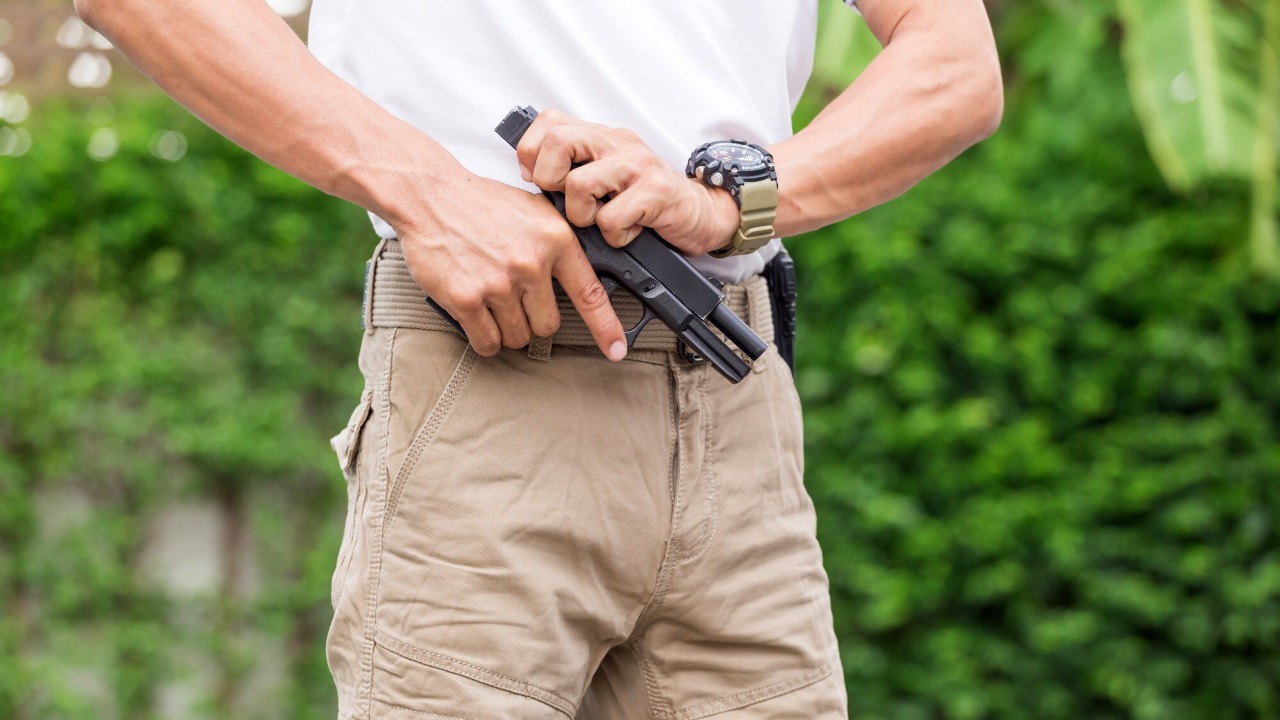
Even the best trigger cannot save a pistol that feels like it is trying to escape your hands at every shot. Recoil management is where a lot of otherwise promising guns lose new shooters, turning anticipation into flinch and flinch into misses. Advice aimed at home defenders, which highlights compact but controllable pistols like the Glock 19 Gen 5 as a “Best CCW” choice, leans heavily on this balance of size and shootability. The same guidance points to a full-size option like the Walther PDP Full Size 4.5 for those who can handle a bit more bulk in exchange for softer recoil and a longer sight radius.
On the flip side, there are pistols that make even experienced shooters flinch, as one blunt look at harsh handguns points out. When you have spent years behind a handgun, you learn quickly which pistols behave well and which ones try to fight you, and Some models are notorious for sharp recoil, awkward grips, or slide bite that trains people to brace for pain before they even press the trigger. That is the opposite of instant confidence, and it is why lists of Pistols that turn confident shooters hesitant read like a cautionary tale about what happens when ergonomics, trigger, and recoil all miss the mark at the same time.
Reliability: the quiet foundation of trust
No matter how comfortable or soft shooting a handgun is, confidence evaporates the first time it chokes when you need it. For the modern defender, reliability is no longer optional, it is the standard, as one analysis of why handgun reliability defines personal defense puts it. That piece notes that handguns are more dependable than ever, but it also makes clear that personal defense is a harsh pass or fail test, and a gun that occasionally fails is a gun you will never fully trust again.
That is why so many people gravitate toward platforms with reputations forged in demanding roles, like the P226 MK25 that is identical to the pistol carried by the U.S. Navy SEALs. When a design has been vetted by the Navy and other hard users, the average carrier gets to piggyback on that track record. Even in the world of backup guns, where size and weight are at a premium, experts point out that Modern revolvers offer “five for sure” dependability, and Unlike autos they can be fired from inside a pocket or pressed up against an aggressor without going out of battery. That kind of mechanical certainty is not glamorous, but it is exactly the sort of thing that lets you sleep at night.
Design philosophies that calm the nerves
Beyond the basics of fit, trigger, and reliability, some handguns inspire confidence because their entire design philosophy is built around managing stress. Traditional double action, often shortened to TDA, is a good example. A detailed look at these pistols argues that their long, deliberate first pull is a primary reason for their resurgence, especially for appendix carry. The idea is simple: a heavier initial press acts like a built-in safety during holstering and high stress handling, without giving up the lighter, shorter follow up shots that help with accuracy.
On the other end of the spectrum, some designs win people over by feeling like an extension of the hand rather than a machine that needs constant supervision. Advocates of SIG Sauer pistols, for instance, invite hesitant buyers to handle different models in person with the promise that the right pistol is the one that feels like an extension of your hand. That is not just sales patter, it is a recognition that confidence is partly psychological. When a gun’s controls fall under your fingers without conscious thought, and its behavior matches your expectations, your brain has more bandwidth for the important stuff, like not shooting the wrong thing.
Why certain models keep showing up on “confidence” lists
When I compare the recurring stars of confidence focused lists with broader defensive recommendations, the overlap is hard to miss. Compact, striker fired pistols like the Glock 19 Gen 5 show up both as a Best Home Defense Guns pick and as the kind of carry gun that new owners quickly trust. Full size options like the Walther PDP Full Size 4.5 combine that Performance Duty Trigger with generous ergonomics, which is a fancy way of saying they are big, comfortable, and easy to shoot well. The same pattern holds with 1911s that pair a crisp 4-1/2 lbs trigger with a slim single stack grip, giving shooters a blend of power and control that feels reassuring instead of intimidating.
Lists curated by Josh Clark, such as the 13 pistols that new carriers instantly feel confident with and the 13 handguns that build confidence quickly, lean heavily on those same traits. The photos credited to Bricolage and Shu show pistols with generous grip texture, clear sights, and controls that are easy to reach, which is exactly what you would expect from guns chosen for how quickly they put people at ease. When you cross reference those picks with warnings about Handguns that undermine confidence, the dividing line is obvious: the winners are the guns that feel intuitive, behave predictably, and keep working when it counts.
In the end, that instant surge of trust you feel with some pistols is not superstition, it is your brain quietly tallying up a lot of small design choices and deciding the odds are in your favor. Ergonomics that let you get a solid grip, triggers in the 4-4.5 pound sweet spot with clean breaks, recoil that does not feel like a practical joke, and reliability proven everywhere from the Navy to street level backup guns all add up to the same conclusion. The handgun that inspires confidence is the one that lets you focus on the problem in front of you instead of the tool in your hand, and once you find that, you will know it the moment you pick it up.