

On paper, plenty of gear looks perfect. It glows in PowerPoint, crushes lab tests, and dazzles procurement officers who have never had to crawl through mud with it digging into their ribs. Yet time after time, the kit that earns real trust is the stuff that has already survived the chaos of combat and come back for more. Battlefield-tested equipment still sets the bar because it has been vetted by the one quality-control department that never pulls punches: people whose lives depend on it.
That hard-earned standard now shapes everything from rifles and body armor to industrial hinges and consumer gadgets that brag about being “military grade.” Behind the marketing, there is a simple reality. Gear that can function in a firefight, on a pitching deck, or in a sandstorm is almost always overqualified for the rest of us, and the systems that prove it in war zones are quietly rewriting expectations in factories, data centers, and even video games.
Why “MIL-SPEC” still scares bad design straight
For engineers, the phrase “MIL-SPEC” is less a buzzword and more a threat: meet the standard or get ready to redesign everything from the stitching to the circuit boards. Military specifications exist to make sure gear hits strict benchmarks for quality assurance, reliability, and performance, not just once in a climate-controlled lab but over years of abuse. When a piece of equipment is built to a formal military specification, it has to clear defined thresholds for durability, environmental resistance, and function, which is why manufacturers treat those requirements as a brutal but effective benchmark rather than a suggestion.
That discipline pays off in the field, where gear that meets Quality Assurance MIL SPEC standards is expected to deliver unmatched reliability even when it is soaked, frozen, or rattling around in the back of an armored truck. The same testing culture has spilled into civilian industries, where companies quietly borrow those military benchmarks to harden everything from telecom cabinets to access hardware. One manufacturer notes that standards originally written for military gear are now used as reference while designing ruggedized components for harsh industrial environments. The result is a quiet arms race in durability, where battlefield expectations set the floor for what counts as “tough” everywhere else.
Lab tests, prototypes, and the rude awakening of real combat
Before any piece of gear earns the right to be called “battlefield tested,” it starts life as a prototype that gets poked, dropped, frozen, and occasionally humiliated in controlled trials. Military programs lean on rigorous prototype testing to catch flaws early, because a clever new design that has not been punished properly is just a future failure report waiting to happen. Detailed evaluations of Military prototypes emphasize that, before innovations reach the front line, they must go through exhaustive testing to avoid the nightmare scenario of equipment failing when soldiers need it most.
Yet even the best lab work has limits, a lesson driven home every time a “perfect” system meets real-world chaos. Analysis of modern naval operations points out that One lesson from recent air defense scares is brutally clear: no amount of peacetime simulations or training can fully replace the experience of operating under live fire, when real weapons are in the air and every weakness is exposed in seconds. That reality check is why militaries treat formal reliability trials as a foundation, not a finish line. Military standard testing is described as the base that guarantees equipment stays functional in extreme conditions, but the true verdict only arrives when that gear is used in combat and either quietly does its job or fails in a way nobody can ignore.
When the “next big thing” rifle meets the mud
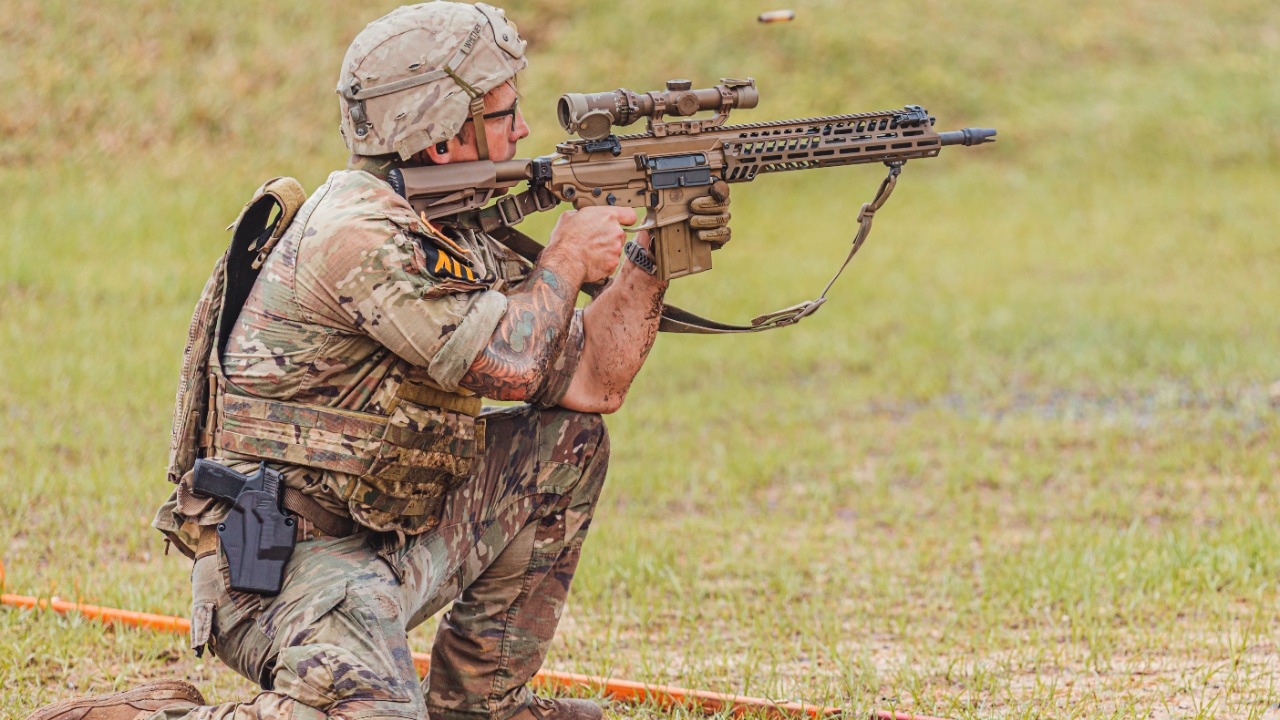
Nothing exposes the gap between brochure and battlefield quite like a new service rifle. The Army’s adoption of the Sig Sauer XM7 was pitched as a leap forward, but not everyone who has studied it is convinced it is ready to be the everyday workhorse for infantry. One Army officer, Trent, who is currently a student at the Marine Corps Expeditionary Warfare School and has examined the weapon closely, has argued that the XM7 is unfit for use as a modern service rifle, raising concerns about weight, ergonomics, and suitability for sustained combat use. His critique underscores a familiar pattern: a weapon can ace procurement requirements and still stumble when troops imagine carrying it on long patrols or fighting in tight urban spaces.
That tension between innovation and practicality is not limited to briefing rooms. Even in the virtual trenches of Battlefield and Battlefield 1, players instinctively gravitate toward “standard issue” weapons that feel balanced and dependable. When both soldiers and gamers keep defaulting to the “boring” rifle, it is a sign that reliability and predictability still beat novelty when the pressure is on.
Armor, PPE, and the quiet gold standard nobody wants to test personally
If rifles are the loud proof of concept, body armor is the quiet contract between a soldier and the people who built their gear. In the Military Personal Protective Equipment Market, combat gear remains the dominant segment, defined by high durability and the ability to protect soldiers in active combat scenarios In the Military Personal Protective Equipment Market. That dominance is not about fashion, it is about trust. When someone straps on a plate carrier, they are betting that the manufacturer has already done the terrifying part of the testing so they do not have to find out the hard way whether the armor works.
Inside the industry, that trust is treated almost like currency. One armor maker’s leadership, including Beck, has described how a major contract effectively confirmed what Everybody in the field already believed, that their ballistic protection had become the gold standard and that nothing else really compared anywhere around the world. That kind of reputation is not built on marketing copy. It comes from repeated proof in combat zones, where armor that fails is never forgotten and armor that works becomes the quiet favorite of units that have seen what incoming fire really looks like.
From war zones to warehouses to your glitchy game loadout
Once gear has survived the worst that combat can throw at it, civilian industries tend to treat that performance as a cheat sheet. Companies that design rugged access hardware for harsh environments openly acknowledge that military standards, originally written for gear headed into war, now serve as practical benchmarks for civilian industrial hardware as well. The same logic shows up in aerospace and defense manufacturing, where the influence of military standards extends far beyond the battlefield. But the expectations that govern combat equipment now shape how Aerospace and other high-stakes sectors design systems that must deliver optimal performance in critical missions. When a hinge, sensor, or connector is good enough for a fighter jet, it suddenly looks very attractive for a wind farm or a remote data center.
The ripple effects even reach the entertainment world, where players expect their digital gear to behave with the same consistency as the real thing, and get annoyed when it does not. It is a small problem compared with a rifle jamming in combat, but the irritation comes from the same place. Once people get used to equipment, physical or digital, that behaves predictably under stress, anything less feels like a bug. Military-grade expectations have quietly trained users to demand that their tools, apps, and even game menus behave like well-drilled soldiers instead of moody artists.
That is why battlefield-proven gear still defines the upper limit of what counts as “good enough.” Formal standards like Quality Assurance MIL SPEC keep designers honest, prototypes and Military testing catch the obvious flaws, and real combat delivers the final, unforgiving verdict. From Trent questioning whether the XM7 is truly ready for prime time, to Beck celebrating armor that Everybody treats as the gold standard, to gamers arguing over Standard Issue Rifles in Battlefield 1, the pattern is the same. When lives, wins, or even just hard-earned unlocks are on the line, people reach for the kit that has already survived the worst. Everything else is just waiting for its first real test.