
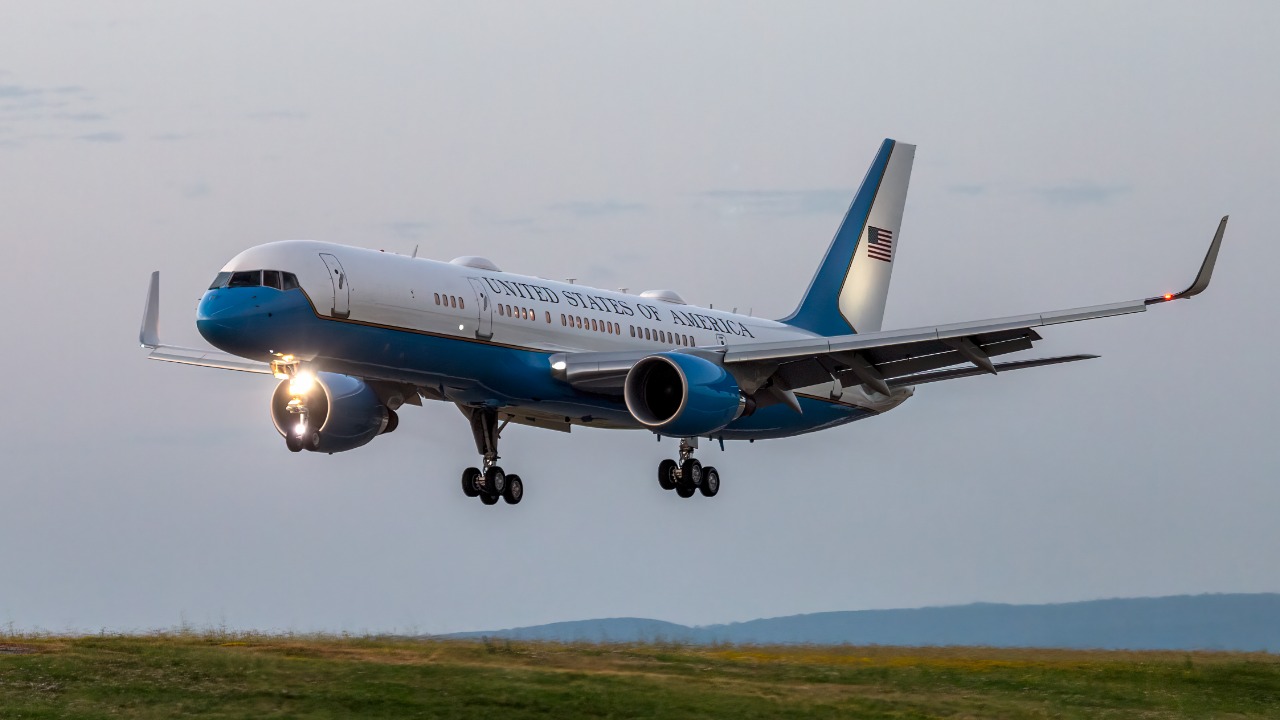
Air Force One is built and operated to avoid surprises, yet earlier this week, the presidential jet was forced to abandon its Atlantic crossing and return to the United States. The rare diversion highlighted both the vulnerability of aging hardware and the depth of the safety net that surrounds the aircraft that carries President Donald Trump. The episode offered a rare public glimpse into how the system reacts when something goes wrong and why, even in those moments, the president’s plane remains one of the safest aircraft in the world.
What went wrong on the way to Davos
The trouble began as President Donald Trump was en route to Davos, Switzerland, for the annual gathering of political and business leaders. After takeoff from the Washington area, Air Force One developed what officials described as a minor electrical issue while crossing the Atlantic, prompting the crew to halt the journey and return to the United States out of caution. Reports on the incident describe the problem as limited in scope, but any anomaly in the electrical system of a highly modified Boeing 747 carrying the president is treated as a serious operational concern, which is why the crew chose to reverse course rather than press on toward Europe.
Once the aircraft turned back, the presidential travel operation shifted into contingency mode. Air Force One landed back near Washington, and President Donald Trump transferred to a backup jet so he could continue his trip to Davos, Switzerland, with only a delay rather than a cancellation. Coverage of the incident notes that the diversion revived questions about the age of the current Air Force One fleet and whether recurring electrical issues signal the need to accelerate replacement plans, even as officials stressed that the jet returned safely and that the decision to abandon the first leg reflected an abundance of caution rather than a loss of control in flight. The episode underscored how even a relatively contained malfunction can ripple through global diplomacy when it affects the president’s mobility.
Aging aircraft and the push for replacement
The jets that serve as Air Force One are not new. The current pair are heavily modified Boeing 747-200B aircraft, a design that dates back decades and is no longer in commercial production. Analysts who examined the recent electrical issue have pointed to the age of these airframes and their complex wiring as a likely backdrop for the malfunction, noting that any aircraft of this vintage requires intensive inspection and periodic replacement of components to keep pace with modern reliability standards. The fact that the problem was described as minor does not erase the reality that older systems can be more prone to glitches, especially when they have been layered with generations of upgrades.
Debate over how and when to replace the current 747-based fleet has been underway for years, and the latest diversion has given fresh urgency to that discussion. Reporting on the incident notes that the glitch has revived arguments that President Donald Trump has made about the need for new presidential aircraft, even as he has scrutinized the cost of such programs. Proposals for future Air Force One jets have focused on newer Boeing platforms with updated electrical architecture, improved electromagnetic pulse protection, and more efficient engines, all intended to reduce the risk of in-flight issues and to simplify maintenance. The recent electrical scare has become a concrete example for those who argue that the cost of delay is measured not only in dollars but also in operational risk and diplomatic disruption.
Layers of security and redundancy in the sky
Even with age-related concerns, Air Force One remains one of the most secure and resilient aircraft ever built. The White House describes the jet as Capable of refueling midair, which gives it effectively unlimited range and allows the President to remain airborne and out of harm’s way if conditions on the ground are unstable. The aircraft is outfitted with extensive communications gear that turns it into a flying command center, with secure voice and data links that allow the President to stay in contact with military commanders and civilian leaders around the world. Inside, the layout includes office space, a medical facility, and accommodations that allow the presidential party to continue working even during long flights.
Defensive systems add another layer of protection. Public descriptions of the aircraft’s equipment mention countermeasures designed to throw off heat-seeking missiles, including flares and systems that can misdirect a targeting sensor. Some accounts refer to features such as mirror-like devices and Electric countermeasure suites that are intended to confuse or blind incoming threats before they can lock on. While many of the most advanced Defenses remain classified, open sources describe jammers and other tools that can disrupt missile guidance and radar tracking. The airframe itself is believed to be hardened against electromagnetic pulses, and the aircraft’s Secure technology is designed by Boeing to keep critical systems functioning even in the most demanding environments, which is why a single electrical anomaly can be isolated without compromising the entire jet.
Planning, protocols, and why incidents stay rare
The recent diversion also highlighted the human and procedural side of presidential aviation safety. Every trip is planned in meticulous detail, with routes chosen to minimize risk and to ensure that suitable diversion airports are always within reach. Reports on Air Force One operations emphasize that the safety of Air Force One is not left to chance and that every journey involves strategic routing and prearranged emergency options, including backup landing sites and alternative aircraft. When the electrical issue appeared over the Atlantic, those plans allowed the crew to pivot quickly, return to the United States, and move President Donald Trump to another jet without leaving him stranded or disconnected from his responsibilities.