
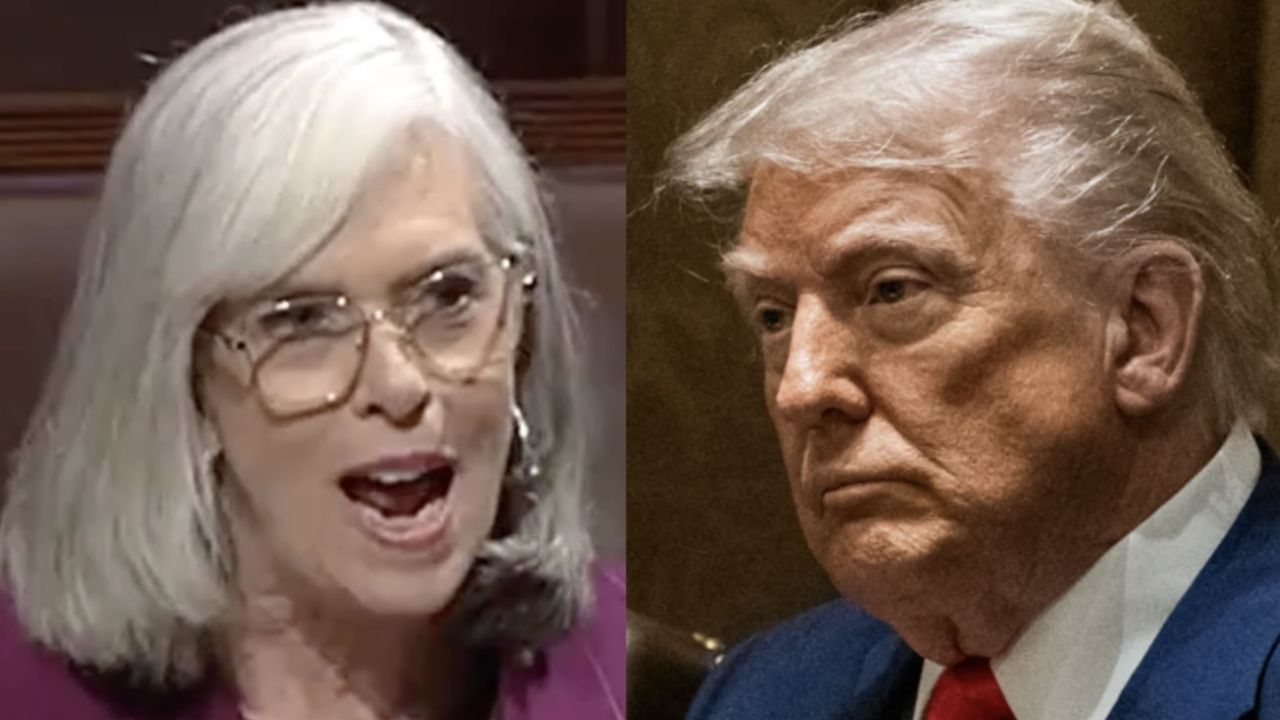
House Democratic Whip Katherine Clark of Massachusetts said Thursday that heating oil costs have risen more than 70% as winter approaches and accused congressional Republicans of refusing to end the U.S. war with Iran that has disrupted global energy markets. Clark’s post on X, issued 26 days before the midterm elections, ties the cost of heating homes directly to a conflict she has spent months trying to force Congress to end.
The Post
Clark published the message on her official X account on Thursday, Oct. 8, 2026. In full, it read:
“Gas, groceries, and energy bills are soaring.
As winter approaches, heating oil costs have gone up more than 70%.
But Republicans still refuse to end Trump’s reckless war.”
What the Numbers Show
State-level price data support the scale of the increase Clark cited. In Massachusetts, the state’s weekly fuel survey put the average retail price of heating oil at $6.12 a gallon as of Oct. 5, up about 73% from $3.53 a year earlier. Maine’s latest survey showed an average of $5.96, up roughly 79% from $3.33. In New York, the state energy research authority projects heating oil will climb from $3.72 a gallon to $6.27 this winter, an increase of nearly 70%.
The national picture is less severe by some measures. The U.S. Energy Information Administration projects that heating oil will average $5.26 a gallon this winter, up 34% from last winter, and that households that heat primarily with oil will spend 21% more, partly offset by a milder winter forecast for the Northeast. The agency says such homes make up about 3% of U.S. households and are located mostly in the Northeast. The National Energy Assistance Directors Association has estimated the jump at about 50%, which it says would add nearly $900 to the average heating bill for those households.
Markets moved again on Thursday. Benchmark heating oil futures rose to about $4.82 a gallon, up more than 4% on the day and more than 111% from a year earlier. Prices extended gains for a fourth straight session as supply concerns added to a tight refined-products market. The EIA says global refinery output has fallen, cutting production of distillate, the category that includes both heating oil and diesel. Disruptions to oil flows through the Strait of Hormuz have pushed crude higher.
Clark is not the only Democrat pressing the issue this week. Sen. Elizabeth Warren and Reps. Stephen Lynch and Lori Trahan, joined by other lawmakers, sent the administration a letter warning that “heating oil costs for the upcoming winter are projected to reach record levels.” The letter says New England families that rely on heating oil could see bills rise about $600 on average. It also points to the administration’s attempt to eliminate the $4 billion Low-Income Home Energy Assistance Program and urges the White House to “reverse course on the senseless war in Iran.”
Clark’s Record on the War and Prices
Clark’s position has been consistent since the first strikes. On Feb. 28, she said Trump “campaigned on the promise of ‘no new wars’” and launched a major military operation against Iran without congressional authorization. She urged Speaker Mike Johnson to call the House into session for a vote on a bipartisan War Powers Resolution and said Democrats would force one if he did not. Two days earlier, she had joined Democratic leaders in announcing plans to compel a vote on the Khanna-Massie resolution.
On March 4, Clark took to the House floor and said, “Donald Trump has taken America to war. Without authorization. Without explanation.” The next day, after House Republicans blocked the resolution, she said “the American people need lower costs, not another endless war.” She said the conflict was already “hiking gas prices by 22 cents” and had claimed the lives of six service members.
By April 16, Clark was describing the economic toll in blunter terms. She told Republicans that “Americans are being asked to foot the bill,” citing spending of $2 billion a day on the conflict and warning of rising gas, grocery and housing costs. On May 13, as the war entered its third month, she said on the floor that “the single fastest way to bring down costs is to end this war.” She added that the Strait of Hormuz remained closed, that utility bills were rising and that shipping costs were pushing up prices for food, clothing and car parts.
House Democrats scored a procedural win in early June when the chamber approved a war powers resolution directing the president to pull U.S. forces from hostilities with Iran. Clark’s office described it as a key step toward ending the war. She said the vote showed Democrats were “listening to the American people,” and she called it “pretty shocking” that only four of 218 House Republicans joined them.
On Sept. 17, Clark stood with Democratic Leader Hakeem Jeffries and Caucus Chair Pete Aguilar and framed the November elections as a verdict on the economy. “We have 47 days ‘til we have a referendum on 47’s economic failure,” she said. She said Republicans and Trump had made two fundamental promises, to “bring down costs on day one” and “no new wars,” adding that “both of those promises have been broken.” She also warned that war-related diesel costs would “further drive farmers out of business and grocery prices even higher.”
Where the War and the Politics Stand
The conflict remains unresolved. Reuters reported Thursday that Iranian Foreign Minister Abbas Araghchi said Tehran is still reviewing Washington’s response to a proposal under which the Strait of Hormuz could reopen within seven days. Reuters also reported that last week saw the largest number of attacks on tankers in the waterway since the war began. Trump said Thursday on Truth Social, “We will not be attacking Iran at any time prior to the Midterm Elections,” after telling reporters Wednesday night that renewed strikes were under consideration, a remark that helped send oil prices higher.
Public support for the war has slipped. A Reuters/Ipsos poll in August showed backing for military action against Iran had fallen from 37% in March, and 83% of respondents expected the conflict to be prolonged. Reuters reported in September that top Trump aides were pushing to keep the war contained through the midterms to limit Republican losses. On the prediction market Polymarket, Democrats are given a 91% chance of winning the House, against 9% for Republicans.
Clark and Impeachment
Clark has pressed for ending the war through war powers votes rather than impeachment. She called for an impeachment inquiry into Trump in July 2019, during his first term. In a recent House vote on articles of impeachment introduced by Rep. Al Green, she voted “present,” as did Jeffries and Aguilar. The three leaders issued a joint statement focused on restoring affordability for voters. The midterm elections are scheduled for Nov. 3.