
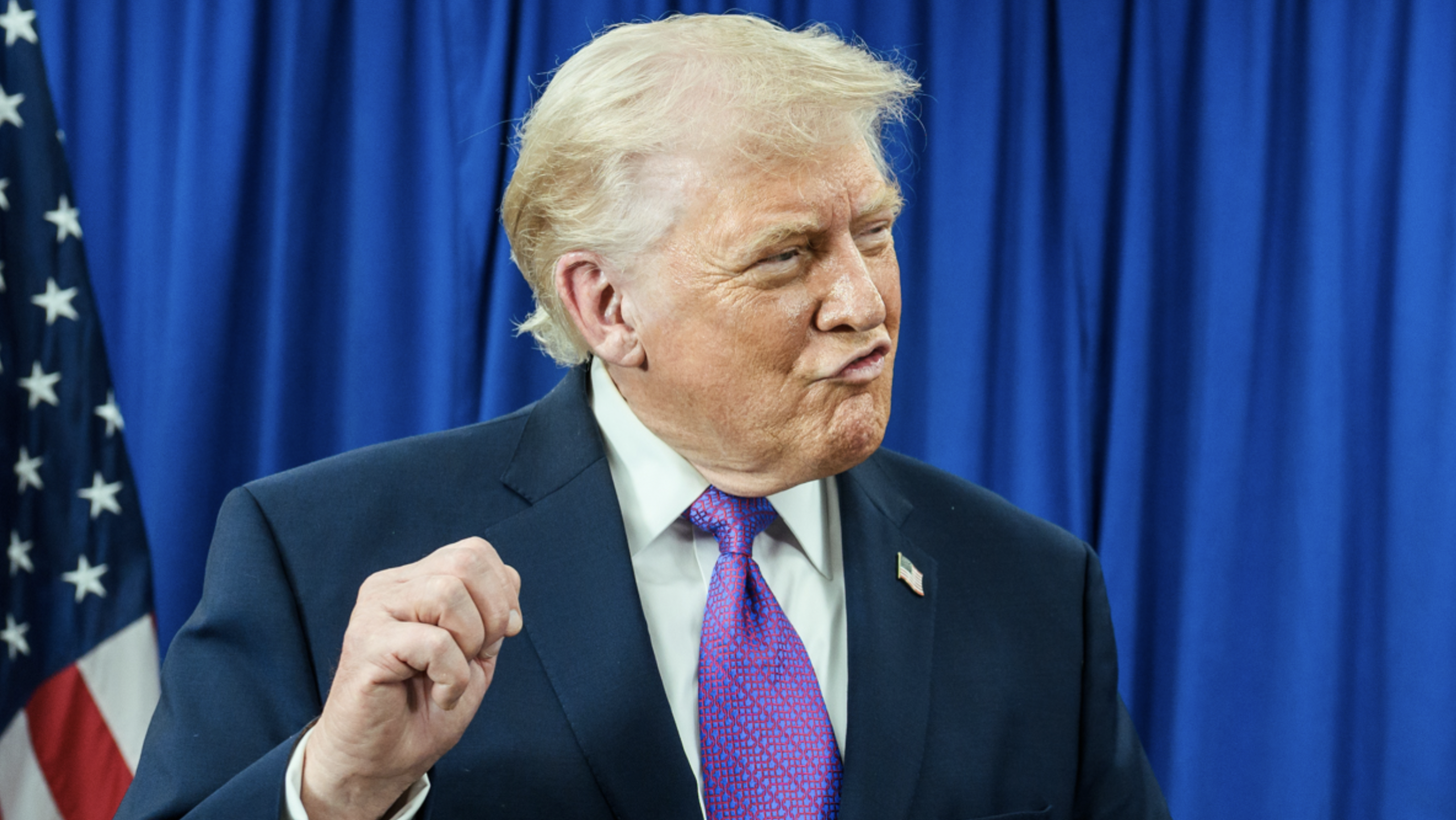
President Donald Trump used his April 1, 2026 Address to the Nation to emphasize American energy dominance, asserting that the United States remains in a strong position despite rising fuel costs tied to the ongoing Middle East conflict.
During the address, Trump pointed to his administration’s domestic energy policies as a key factor insulating the country from global disruptions, even as oil prices have surged past $105 per barrel since the start of military operations against Iran. He framed the situation as temporary and stressed that U.S. production levels outweigh external pressures.
Trump: We have sooo much gas under my leadership pic.twitter.com/XSm0Ar8O6I
— Acyn (@Acyn) April 2, 2026
“Remember, because of our drill a baby drill program, America has plenty of gas. We have so much gas. Under my leadership, we are number one producer of oil and gas on the planet. Without even discussing the millions of barrels that we’re getting from Venezuela, because of the Trump administration’s policies, we produce more oil and gas than Saudi Arabia and Russia combined. Think of that. Saudi Arabia and Russia combined. And that number will soon be substantially higher than that. There’s no country like us anywhere in the world. And we’re in great shape for the future. The United States imports almost no oil through the Hormo Strait and won’t be taking any in the future. We don’t need it. We haven’t needed it and we don’t need it. We’ve beaten and completely decimated Iran. They are decimated both militarily and economically and every other way,” Trump said.
The remarks come as American consumers face noticeably higher gasoline prices, driven in part by instability in global oil markets following the escalation of conflict with Iran. While acknowledging price increases elsewhere in his speech, Trump’s comments in this section focused on projecting confidence in U.S. supply and long-term energy independence.
Trump also highlighted reduced reliance on critical global shipping lanes such as the Strait of Hormuz, arguing that the United States no longer depends on foreign oil imports to meet domestic demand. His characterization of Iran as “decimated” both militarily and economically was presented as further evidence that the conflict would not undermine America’s energy security.
The address framed rising fuel costs as a short-term consequence of geopolitical tensions, while underscoring the administration’s position that domestic production capacity will ultimately stabilize markets.