
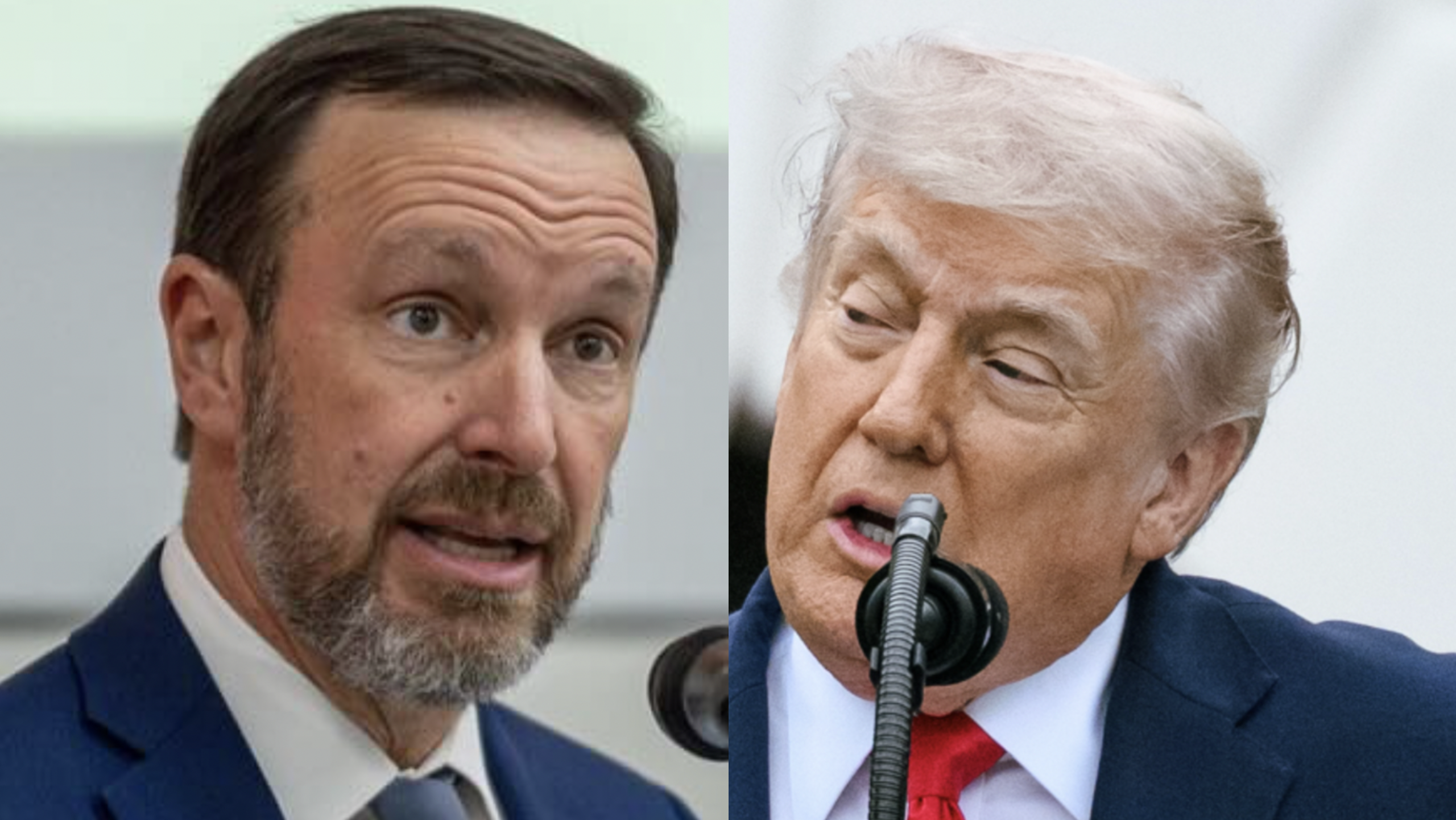
As the United States and Iran edge toward a potential agreement to end months of devastating conflict, U.S. Senator Chris Murphy (D-CT) is sounding the alarm — welcoming any end to the war while making clear that the terms now circulating would represent a catastrophic failure of American foreign policy, not a diplomatic triumph.
Murphy laid out his assessment in a detailed thread posted to X on May 25, 2026, saying plainly that while he hopes the war ends, what is taking shape is a deal built almost entirely on Iran’s terms — one that leaves the United States weakened, its leverage diminished, and Tehran more emboldened than before the first bombs fell.
“These Are Iran’s Terms”
Murphy opened his thread with a conditional welcome for any deal that stops the fighting, but immediately drew a sharp line between ending the war and claiming victory. “If this deal with Iran is real, I will welcome it because every day this insane war goes on, America gets weaker,” he wrote. “The priority is to end the war — now. But make no mistake: these are Iran’s terms. Our nation emerges humiliated.”
The Connecticut Democrat’s framing cut directly against any White House effort to spin the emerging agreement as a negotiating success. In Murphy’s view, the architecture of the deal under discussion amounted to a full-circle return to conditions that existed before the conflict began — at enormous cost to the United States.
What the Deal Actually Says
Murphy then broke down what he described as the core exchange at the heart of the memorandum of understanding taking shape between Washington and Tehran. “The deal is basically this: we give Iran billions to get back to where we were before the war,” he wrote. “And reports suggest the deal might codify Iran’s right to control the Strait. What a disaster this whole thing was.”
The framework under negotiation would involve lifting U.S. sanctions on Iran and releasing billions of dollars in Iranian funds frozen around the world, alongside provisions addressing Iran’s restrictions on transit through the Strait of Hormuz and a moratorium on Iranian nuclear enrichment. Maritime traffic through the Strait has remained well below pre-conflict levels as Iran has sought to formalize its de facto control over the waterway, including a tiered system of payments that Iran has reportedly charged some vessels.
Murphy acknowledged reports of a potential nuclear concession from Iran but was openly skeptical. “There are reports there may be a tiny nuclear concession from Iran in the deal and if so, great,” he wrote. “But I doubt it — they are most likely postponing all the nuclear issues.”
An Obama-Era Promise Recycled
Murphy then turned to what he called the hollow nature of the nuclear offer being floated. Even if Iran were to commit to shipping out enriched uranium — the reported concession — that pledge would not be new ground. “A promise to ship out enriched uranium was also in Obama’s deal — as well as a lot of other things Trump will never get,” Murphy wrote. “And now that we are dropping sanctions, we have less leverage to get them to give more in future negotiations.”
The 2026 conflict followed the failure of indirect talks between the U.S. and Iran, with previous diplomatic engagements in 2025 and early 2026 stalling over disagreements about Iranian enrichment capabilities. Critics including Murphy have long argued that exiting the 2015 Joint Comprehensive Plan of Action — the nuclear deal brokered under President Obama and abandoned by President Trump during his first term — set in motion the conditions that led to war.
None of Trump’s Goals Accomplished
Murphy’s thread then delivered what he described as a straightforward accounting of the administration’s failed war aims. “Trump hasn’t accomplished ANY of his constantly shifting goals,” he wrote. “Iran still has its ballistic missile and drone program. They still have a navy that can close the Strait. A hardline regime is still in charge.”
According to a Congressional Research Service assessment, a prominent short-term U.S. objective throughout the conflict was reopening the Strait of Hormuz to commercial traffic, though the ability to accomplish that militarily was noted as potentially limited. The House and Senate have collectively rejected nine measures since early March 2026 aimed at ending hostilities, with the Senate most recently advancing a War Powers Resolution on May 19 that would force an end to the military campaign — a measure Murphy vocally supported.
Why the War Was Always Unwinnable by Air
Murphy was careful to note that the failure to achieve broader strategic objectives was not simply a matter of poor execution — it was a structural problem that opponents of the war had warned about from the beginning. “None of those things could be accomplished by an air campaign — which is why so many of us opposed this war,” he wrote. “And now the new regime is emboldened. They took our best shot and beat us. Iran emerges more powerful.”
Murphy had previously taken to the Senate floor alongside Democratic colleagues to call on the Trump administration and Senate Republicans to end the war and address what he described as an affordability crisis it had unleashed on the American people.
Relieved, But Not Silent
Despite his relief at the prospect of an end to the fighting, Murphy closed his thread with a pointed rebuke of any expectation that Democrats should simply move on. “I’m glad the war might end. Thousands of innocent people have been killed. Our economy has been ruined,” he wrote. “But that doesn’t mean we should be silent on how incompetent Trump is and how insane this war was from the start.”
The senator’s full post laid out the stakes with unusual bluntness for a moment that many in Washington may be tempted to call a victory:
“If this deal with Iran is real, I will welcome it because every day this insane war goes on, America gets weaker. The priority is to end the war — now. But make no mistake: these are Iran’s terms. Our nation emerges humiliated. The deal is basically this: we give Iran billions to get back to where we were before the war. And reports suggest the deal might codify Iran’s right to control the Strait. What a disaster this whole thing was. There are reports there may be a tiny nuclear concession from Iran in the deal and if so, great. But I doubt it — they are most likely postponing all the nuclear issues. A promise to ship out enriched uranium was also in Obama’s deal — as well as a lot of other things Trump will never get. And now that we are dropping sanctions, we have less leverage to get them to give more in future negotiations. Trump hasn’t accomplished ANY of his constantly shifting goals. Iran still has its ballistic missile and drone program. They still have a navy that can close the Strait. A hardline regime is still in charge. Of course, none of those things could be accomplished by an air campaign — which is why so many of us opposed this war. And now the new regime is emboldened. They took our best shot and beat us. Iran emerges more powerful. Again, I’m glad the war might end. Thousands of innocent people have been killed. Our economy has been ruined. But that doesn’t mean we should be silent on how incompetent Trump is and how insane this war was from the start.”
A Deal Still Uncertain
The draft memorandum of understanding includes commitments from Iran to never pursue nuclear weapons and to negotiate over a suspension of its uranium enrichment program and the removal of its stockpile of highly enriched uranium, though U.S. forces mobilized during the conflict would remain in the region during a 60-day negotiating period and only withdraw if a final deal is reached. Many of the terms laid out in the memo would be contingent on a final agreement being reached, leaving the possibility of renewed war or an extended period in which the hot war has stopped but nothing is truly resolved.
For Murphy, whatever the final outcome, the ledger of this war is already written — and it does not favor the United States. The senator’s argument, stated plainly from the beginning of the conflict and reiterated on Sunday, is that the same result — or a better one — was available through diplomacy long before the first strike was launched.