
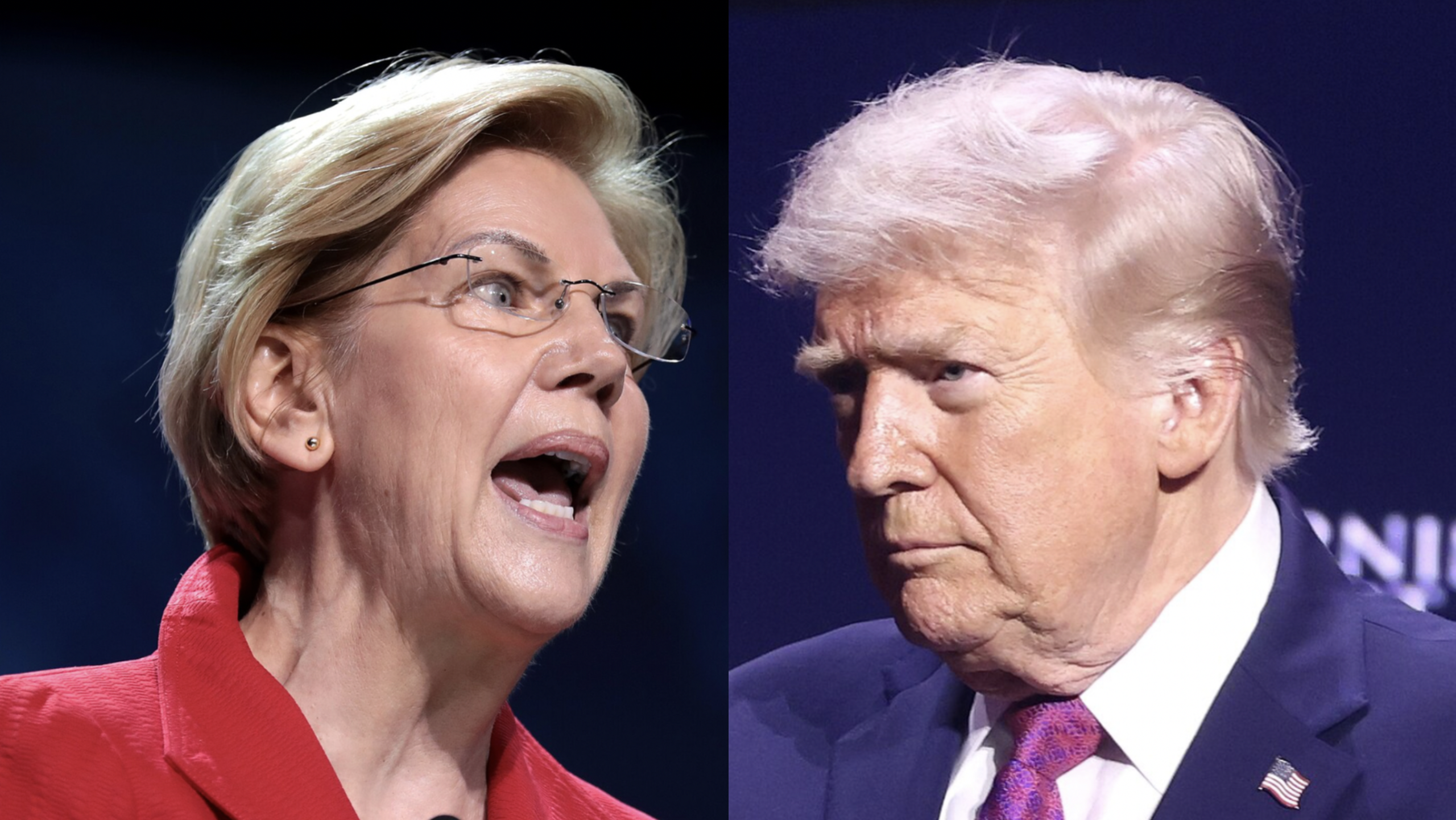
Sen. Elizabeth Warren (D-Mass.) said Thursday that Senate Republicans voted for the 13th time to continue President Donald Trump’s war with Iran, using an X post to tie the vote to rising gas prices, higher grocery bills, and mounting American casualties. The vote, held earlier in the day, again fell short of the votes needed to force a withdrawal of U.S. troops from the conflict.
Warren’s post, published at 12:19 p.m. on July 30, 2026, read in full: “NEW: Senate Republicans just voted to continue Donald Trumps war with Iran for the 13th time. – Rising gas prices – Increasing grocery bills – 18 U.S. service members have been killed – Over 600 Americans have been injured We must end Trump’s war.”
Thursday’s vote was on a motion to discharge a war powers resolution from the Senate Foreign Relations Committee, which would have directed Trump to halt hostilities against Iran absent congressional authorization. It failed 50-49, marking the second such resolution defeated in the Senate in the past two weeks and the 13th time the chamber has voted on an Iran-related war powers motion since the conflict began. Senate Republicans have now blocked the measure on 11 separate occasions, while approving it once, in June, when it passed as a nonbinding resolution that did not require Trump’s signature.
The war between the United States and Iran began after U.S. and Israeli air strikes on Tehran in late February 2026, following the collapse of diplomatic negotiations. The conflict has since expanded, with oil prices climbing above $100 a barrel last week amid the fighting. It briefly entered a ceasefire before Trump informed Congress in July that hostilities had resumed after peace talks broke down again.
Since Warren’s statement, congressional Democrats have repeatedly pointed to combat and non-combat casualty figures to underscore the human cost of the war. In April 2026, Warren said at a Senate Armed Services Committee hearing that at least 400 U.S. troops had been injured in the conflict up to that point, and that traumatic brain injuries caused by blast exposure had become the “signature injury” of the war against Iran.
A Pattern of Failed Votes
Thursday’s defeat followed a similar pattern to earlier votes this year. On July 23, the Senate voted 47-49 to reject a joint resolution from Sen. Chris Van Hollen (D-Md.) that would have had the force of law, while the House separately approved a nonbinding companion measure 214-208. Republican Sen. Susan Collins of Maine crossed the aisle to support the measure, while Democratic Sen. John Fetterman of Pennsylvania voted against it, continuing a pattern of breaking from his party on the issue.
The one occasion Senate Republicans allowed a war powers measure to pass came on June 23, when the chamber voted 50-48 to approve a House-passed concurrent resolution directing Trump to withdraw troops. Four Republicans — Bill Cassidy of Louisiana, Susan Collins of Maine, Rand Paul of Kentucky and Lisa Murkowski of Alaska — joined Democrats. Because the measure was nonbinding, it did not require Trump’s signature, but it still drew a sharp response from the president, who called the vote “poorly timed and meaningless” and said it “made his job more difficult” as he sought to negotiate with Iran.
That vote’s passage was aided by the absences of Republican Sens. Dave McCormick of Pennsylvania and Mitch McConnell of Kentucky. The following day, Trump held a tense meeting with GOP senators on Capitol Hill, during which he criticized Paul, Murkowski and Cassidy over their votes. Cassidy and Paul subsequently reversed course on a later resolution; Cassidy voted no after receiving a briefing from Vice President JD Vance, and Paul voted “present,” saying he wanted to “give the president more space and leverage to negotiate a lasting peace.”
Warren’s Broader Case Against the War
Warren has argued since the war’s earliest days that Trump’s military action against Iran was unconstitutional. In a June 2025 press conference in Somerville, Massachusetts, marking the anniversary of the Supreme Court’s decision overturning Roe v. Wade, Warren said U.S. strikes on Iran amounted to an “act of war” that Trump lacked constitutional authority to order. “The Constitution is clear. If there is no immediate threat to Americans, to our servicemembers or to the homeland, the president has no legal authority to order our troops to strike another country. None,” Warren said.
Warren has also focused on the financial toll of the conflict on American households. On March 20, 2026, she wrote to Treasury Secretary Scott Bessent and other administration officials raising concerns about the economic costs of the war for American families. The following month, Warren and Sen. Jeff Merkley (D-Ore.) led a group of lawmakers urging the nonpartisan Congressional Budget Office to determine the true cost of the war, saying “the American people deserve to know the true costs of this conflict, and they deserve transparency and honesty when their government commits the nation to war.”
Warren has separately pressed the Pentagon on its handling of civilian harm during the conflict. In April 2026, she and Sen. Van Hollen led nine senators in opening an investigation into Defense Secretary Pete Hegseth’s role in weakening civilian harm prevention programs. In July, Warren led nine members of Congress in writing to Hegseth after the Pentagon’s independent watchdog found that the administration had defunded and blocked reforms meant to protect civilians during the war, which the lawmakers said potentially violated federal law.
At a March 2026 Senate Armed Services Committee hearing, Warren also criticized what she described as the Trump administration’s shifting justifications for the war, noting that the White House had claimed in June 2025 that “Iran’s nuclear facilities have been obliterated, and suggestions otherwise are fake news,” even as officials continued to cite the nuclear program among evolving rationales for continued military action.
Republican Response and Democratic Allies
Republicans who have opposed the war powers resolutions have defended the military campaign as a necessary response to Iranian aggression. During House floor debate in July, Rep. Brian Mast (R-Fla.), chairman of the House Foreign Affairs Committee, held up photographs of U.S. service members killed in the war and said, “This operation is bringing reckoning for the hundreds of times Iran has attacked and killed people of the United States of America.” Mast added that “to belittle this mission is to belittle and demean the very service these members gave their life for.”
Other Democrats have echoed Warren’s calls to end the conflict. Sen. Chris Van Hollen, who has sponsored several of the Senate’s war powers resolutions, said on the floor ahead of the July 23 vote that “there is no good way out of a bad war,” calling it “a self-inflicted wound on our country.” Senate Democratic Leader Chuck Schumer urged Republican colleagues to support the July 30 measure, describing the conflict as “one of the biggest catastrophes in American history.”
Sen. Rand Paul, one of the Republicans who has occasionally crossed party lines on the issue, told reporters ahead of a prior vote that he believed “the Iran war has not been a success,” reflecting what multiple reports have described as growing unease among some Republicans even as the party has continued to block binding measures to end the conflict.
Political Stakes Ahead of the Midterms
The repeated votes come as the war has become an increasingly prominent issue ahead of the 2026 midterm elections, with Democrats seeking to put Republicans on record on a conflict that polling and lawmaker statements have described as unpopular. The Senate’s narrow margins mean that even a handful of Republican defections have been enough to pass nonbinding measures, though binding resolutions requiring the force of law have consistently fallen short by one or two votes.
Even if Congress were to pass a binding resolution, Trump would be expected to veto it, and any veto would require a two-thirds majority in both chambers to override — a threshold Democrats do not currently have. That dynamic has left largely symbolic votes, like Thursday’s, as the primary tool available to lawmakers seeking to register opposition to the war’s continuation.
Warren’s Thursday post did not announce new legislative action but reiterated her position that the war should end, aligning with her monthslong record of statements, letters and hearing testimony opposing the conflict’s continuation. Her office has not indicated whether additional war powers resolutions will be brought to a vote in the coming weeks.