
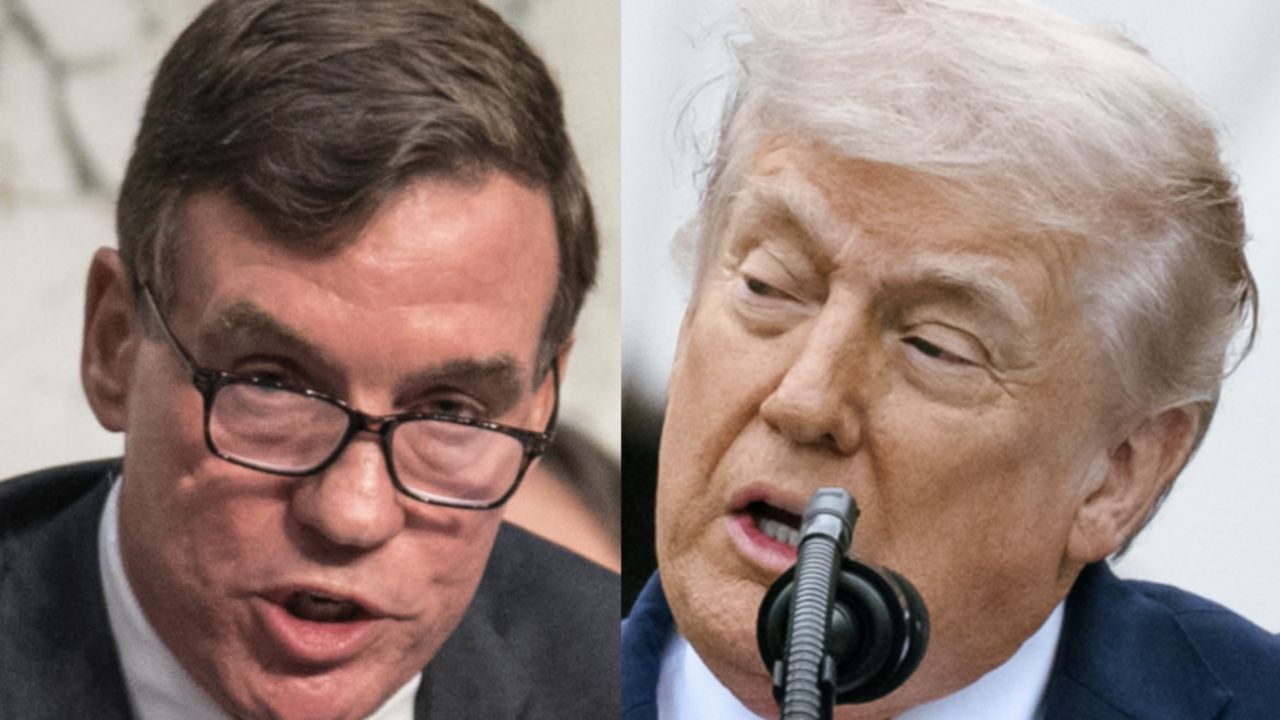
WASHINGTON — Sen. Mark Warner, the top Democrat on the Senate Intelligence Committee and one of the few lawmakers briefed on the nation’s most sensitive national security intelligence, delivered his bluntest assessment yet of the U.S. war with Iran on Wednesday. He said the conflict has weakened the country, drained its finances and strengthened the very government it was meant to defeat. The post landed seven months into a war that President Donald Trump once predicted would last only weeks.
The Post
Warner published the statement on X at 3:16 PM on Sept. 30, 2026. It reads in full:
“Trump’s war is a total disaster. It’s left us weaker and poorer… and instilled a more extreme and emboldened Iranian regime.”
The Virginia Democrat serves as Vice Chairman of the Senate Select Committee on Intelligence and sits on the “Gang of Eight,” the small group of congressional leaders briefed on classified intelligence. His post came as Iranian officials said they had received an official U.S. reply to Tehran’s latest proposal for ending the war, and as Trump again predicted the fighting would be over “very, very soon.”
How the War Began
The war began on Feb. 28, 2026, when the United States and Israel launched strikes on Iran, with CENTCOM announcing that it and partner forces had begun airstrikes. Analysts and news agencies described the opening operation as a leadership “decapitation strike.” Warner issued a statement that same day acknowledging that Iran’s leadership had long supported terrorism and pursued nuclear ambitions. He said the strikes risked a repeat of a familiar pattern, citing “misrepresented intelligence” and “prolonged, costly nation-building,” and argued that the decision to take the country to war belongs to Congress.
Appearing on CNN’s “State of the Union” on March 1, Warner said he had “saw no intelligence” showing Iran was about to launch a preemptive strike on the United States, and he called the conflict “a war of choice.” He also said the elimination of Supreme Leader Ali Khamenei and other senior figures was “good for the region.” In a PBS NewsHour interview after a congressional briefing that week, he said he would “shed no tears” over the leaders’ deaths while still arguing that the war was Trump’s choice.
Warner’s Statements, Month by Month
In March, Warner turned increasingly toward the economy. On March 25 he delivered a Senate floor speech on rising energy costs, saying the closure of the Strait of Hormuz had disrupted global oil and gas supply chains and industries from semiconductors to new cars. He also argued that Russia and Iran appeared to be among the largest beneficiaries of the war. A week later, his office released a congressional analysis finding that Virginians had paid $254 million more at the pump in the war’s first month.
In April, after a Trump address on the conflict, Warner said the president had offered a “moving target of justifications” and had not answered basic questions. He said there was “no evidence” the new Iranian government was better than the old one and that the Strait of Hormuz remained closed. On April 12, after talks in Pakistan failed and Trump announced a blockade of the strait, Warner told CNN he did not understand how blockading it would push Iran to open it. He asked why the administration would relieve sanctions on Iranian oil if the goal was to “strangle Iran.” That month he also told CBS that the war’s four goals (regime change, uranium, missiles and the strait) had not been met on “any honest assessment.”
A ceasefire took effect April 7, and on May 1 the administration notified Congress that hostilities had “terminated.” Warner joined 37 Senate Democrats in disputing that, noting the continued troop deployments, ongoing strikes and naval blockade in the strait, and asking Trump to release the Office of Legal Counsel opinion behind the claim. The letter pointed out that Trump himself said on May 4, “we have a war right now.”
On Sept. 21, Warner wrote on X that Trump had said the war would last “six weeks” and that it had now entered its seventh month with no clear end in sight, and he described a heavy financial burden on American households. His Sept. 30 post followed nine days later.
The Cost to American Households
The price data bear out part of Warner’s “poorer” claim. Before the war, gasoline averaged just under $3 a gallon, and as of Sept. 23 it was nearly $4.50, the highest ever recorded for late September, according to NBC News. Diesel, which moves much of the nation’s freight, has set repeated records, most recently reaching $6.52. The 10-year Treasury yield has climbed from 3.96 percent to nearly 5 percent since the war began, a run-up NBC compared to 2022.
The Congressional Budget Office reported Sept. 15 that the war was responsible for more than a third of this year’s rise in inflation and would add roughly half a percentage point to inflation in early 2027, driven mainly by reduced oil and gas shipments through the Strait of Hormuz and the Red Sea. The average 30-year mortgage rate stood at 7.22 percent, up from under 6 percent before the war.
The Price Tag and the Debt
The CBO estimated the war had cost $38 billion through Aug. 1 and would add about $3 billion each month it continues. The figure is close to the $37.5 billion Defense Secretary Pete Hegseth gave a Senate hearing on July 21. It does not include borrowing costs, and the CBO said replenishing depleted weapons stockpiles could take five years or longer. Total U.S. public debt passed $40 trillion in August.
An Emboldened Iran?
On the second half of Warner’s claim, the picture is mixed. Iran’s economy is in freefall, and its currency hit a record low on Sept. 29, at more than 2.5 million rials to the dollar. Tehran has also pressed demands. Foreign Minister Abbas Araghchi said last week that Iran would reopen the Strait of Hormuz within a week if the U.S. lifted its blockade of Iranian ports, released frozen assets and waived sanctions on Iranian oil sales, among other conditions. Trump rejected the offer as “not acceptable,” saying Iran wanted a deal because it was “losing so badly.”
Iran has meanwhile projected confidence on several fronts. U.S. forces ended their mission in Iraq on Sept. 30, a withdrawal Iran and its allies celebrated as a victory. Iran’s security chief said Trump was “trapped in a quagmire,” and Iranian forces recently targeted Bahrain’s Sheikh Isa Air Base, which houses U.S. personnel. In late September, Iran-backed Houthi forces escalated in Yemen, opening a new crisis around the Bab al-Mandab Strait.
The Administration’s Position and the Political Backdrop
Trump has maintained that the campaign is succeeding. On Tuesday he said Iran was “failing very badly” and predicted the war would be over “very, very soon,” though he has also said he expects it to continue until after the Nov. 3 midterm elections. He has said he is weighing whether to escalate or make a deal, telling reporters, “We blow them up or make a deal.” The Treasury Department announced new sanctions Tuesday on ten individuals and entities accused of helping supply Iran’s defense ministry, part of a campaign it calls “Operation Economic Outcast.“
Criticism over the war’s cost is no longer confined to Democrats. Sen. Shelley Moore Capito (R-W.Va.) said Monday that Trump should end the war as it reached its seven-month mark, telling a reporter, “I would” tell him to end it now. She said Americans were disappointed that the conflict had not been short, “especially when they see gas prices going up.”
What Comes Next
Qatari mediators have shuttled between Araghchi and U.S. envoy Jared Kushner without a breakthrough, and the contents of Washington’s latest reply have not been made public, according to Iranian officials. The Strait of Hormuz remains largely closed to normal commercial traffic. Warner’s post leaves little doubt where the Senate’s top intelligence Democrat stands on the war’s results so far, and the coming weeks will test whether a deal, an escalation or a continued stalemate defines the war’s next phase.