
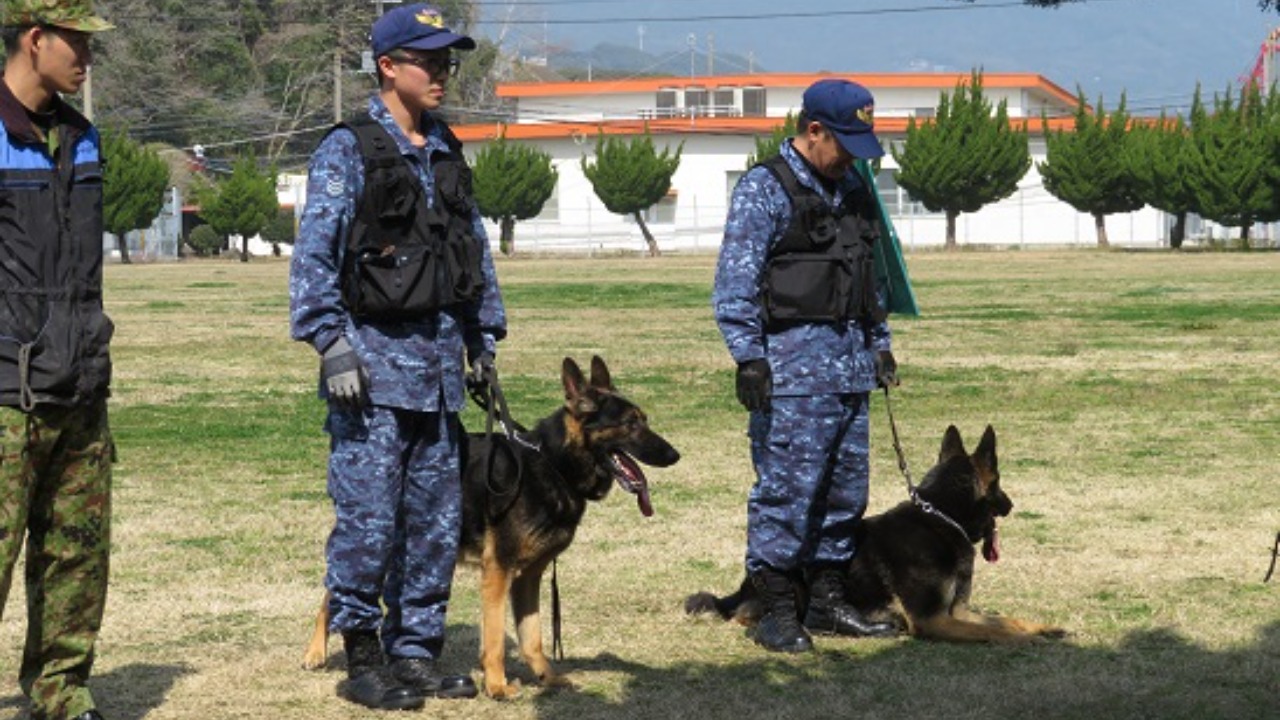
On battlefields abroad and in crowded terminals at home, the most effective bomb hunters often move on four legs rather than two. Their work is quiet, close range, and unforgiving, yet every successful search means a patrol comes back intact or a public space stays safe. I see these K9 teams as a rare fusion of biology, training, and trust that turns a dog’s instincts into a life‑saving instrument.
The Nose That Finds What Machines Miss
Modern security technology is impressive, but it still struggles to match the sensitivity and mobility of a trained dog. I start with the biology, because that is where the advantage begins. Jun and other researchers have shown that canine noses are longer and roomier than ours, which lets Their nasal passages pull in more air with every sniff and expose it to a dense forest of receptors. Dogs carry far more odor receptors than humans, so Dogs can separate faint chemical traces from background smells in a way no handheld sensor yet matches, especially in open air or cluttered urban terrain.
That natural hardware becomes a weapon only after long, expensive preparation. A fully trained military dog can represent a major investment once selection, veterinary services, kenneling, and dog food are counted, yet that cost is weighed against the price of a single missed device on a convoy route or in a terminal. When I watch a team work, I see the handler reading subtle changes in breathing and body posture that signal a target odor, a skill that depends on hundreds of repetitions with controlled explosives and distractions. The result is a living detector that can move through crowds, climb stairs, and search vehicles in ways that fixed scanners cannot, which is why bomb dogs remain central to explosives detection even as new sensors arrive.
From Patrols to Presidents: Where K9 Teams Serve
The reach of these teams now spans almost every layer of American security. In uniformed formations, Oct and other officials describe how Military working dogs are trained and certified to conduct patrol work, detection of improvised explosive devices, and detection of contraband, giving commanders a flexible tool that can shift from base security to route clearance. On one Pacific installation, even our K9s are Team Dover in spirit, integrated into daily operations rather than treated as a niche capability, which reflects how deeply these animals are woven into routine force protection.
Beyond the gates, civilian agencies rely on the same skills in very different environments. Each year, the Transportation Security Administration uses a public calendar to honor its explosives detection canines, a small gesture that hints at how many airport checkpoints and baggage halls depend on these dogs. Jan and other leaders at the Transportation Security Administration have framed the calendar as a way to celebrate the hard work of TSA handlers who walk their partners through terminals long before passengers arrive. I see that as a reminder that the same nose that searches a dusty road in a combat zone can just as easily sweep a line of suitcases in Seattle or Atlanta, and that continuity of practice is one reason the system holds.
The Human Half of the Leash
For all the focus on the dogs, the human on the other end of the leash is just as critical. Jan reports that Military working dog handlers are one of several secondary military occupational specialties within the Military Police community, which means these soldiers and Marines arrive with a grounding in law enforcement or security before they ever touch a leash. At units like H&HS, MCAS Cherry Point, that background shapes how handlers plan searches, manage risk, and coordinate with infantry or aviation units that depend on their teams to clear routes and compounds.
The culture around these teams reflects that shared responsibility. In one Marine unit, Cpl Daniel P. Pierce, a specialized search dog handler attached to Task Force Military Police, described training that can be as stressful as combat because mistakes in rehearsal are meant to prevent mistakes on patrol. He and his peers treat their dogs as force multipliers, not mascots, and that mindset shows in how they rehearse building entries, vehicle checks, and open‑area sweeps with live distractions and simulated fire. When I speak with handlers, I hear the same refrain: the dog is a partner, not a tool, and that partnership is what lets them move calmly into places where a single hidden device could change everything, a reality captured in Marine training accounts.
Elite Units and Expanding Missions
At the sharpest edge of U.S. power, K9 teams have become full members of elite formations. Apr and other advocates describe how Once selected, These special operations canines train in explosives detection, tracking, and direct combat tasks until They are treated as integral members of their teams, not attachments. In Army Special Forces, one handler put it bluntly: You do not plan for the dog to be on the floor, he gets a seat, a recognition that the animal is part of the team’s planning and survival, not an afterthought. That ethos runs through accounts of Four‑Legged Green Berets who deploy, jump, and ride into target compounds alongside their human counterparts.
Other federal units have built their own specialized K9 elements. ATF Explosives Detection Canines are certified and trained to find explosives and firearms‑related evidence, and the K‑9’s nose is paired with their mobility so they can work crime scenes, post‑blast sites, and large events where static sensors fall short. Within the Secret Service, the Special Operations Division runs the Canine Explosives Detection Team, and The Canine Explosives Detection Team is tasked with sweeping venues and motorcade routes before the president or foreign dignitaries arrive. I see the same pattern in maritime security, where Oct and other officers introduced Buda, a U.S. Coast Guard K‑9 trained to sniff out threats in ports and on vessels, showing how one group of four‑legged officers can help prevent mass casualty events on U.S. soil by extending human reach into cargo holds and pier complexes, as seen in Coast Guard demonstrations.
Training Pipelines, Technology, and the Future Fight
None of this capability appears overnight, and I have come to see the training pipeline as a quiet industrial base of its own. Ready for the Workforce is the phrase used for dogs that complete formal preparation, whether they have Puppy Program pedigrees or outside credentials, and Whether they come from military breeding lines or civilian kennels, would‑be canine troops have to graduate from demanding courses before they deploy. In that system, Puppy Program candidates are evaluated for nerve, drive, and sociability, then matched with handlers who will live and work with them just like their human comrades, a process that can take years but yields teams that understand each other’s rhythms under stress.
Technology is reshaping how those teams train and operate. Nov analysts argue that Technology Isn just Coming, it is Here, and that Five years ago most K9 tech was nice to have, while Now it can mean the difference between a good team and a great one. New tools help handlers track search patterns, reduce mistakes, and improve search efficiency, from GPS‑enabled harnesses to software that logs every training repetition. In the field, that data can highlight gaps in a dog’s exposure to certain explosives or environments, letting units adjust before a deployment, a shift that is already visible in working dog programs.