
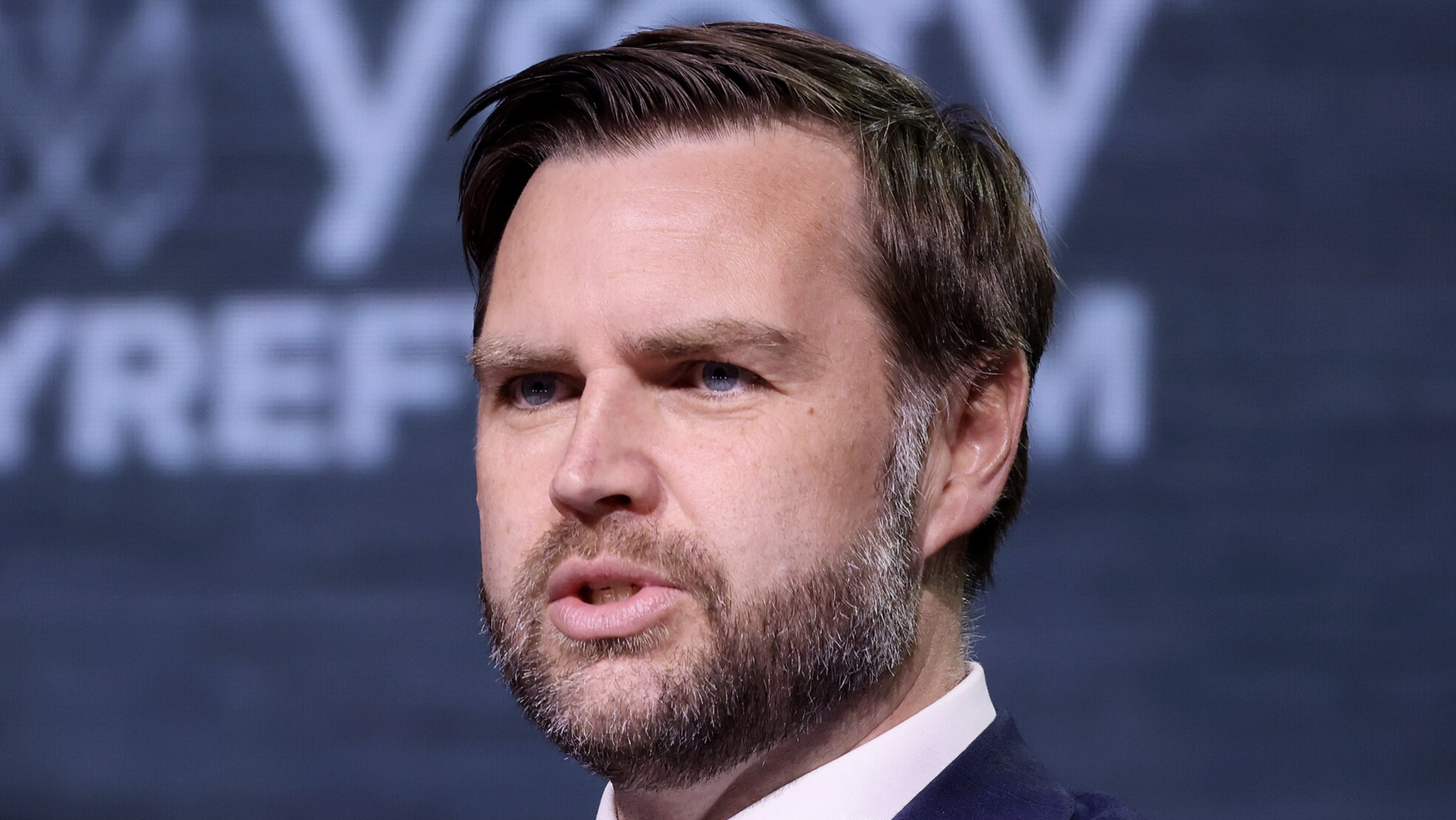
MILWAUKEE, Wis. — Vice President JD Vance offered a blunt and unvarnished account of the deteriorating U.S.-Iran ceasefire agreement on Wednesday, telling reporters in Milwaukee that Iran had followed the terms of its deal with the United States for roughly one week before resuming attacks on commercial vessels transiting the Strait of Hormuz — and warning that the American response would be swift and unrelenting.
Speaking at an event at the Fiserv Forum in Milwaukee on July 8, 2026, Vance was asked about the state of the conflict with Iran and the fate of the Islamabad Memorandum of Understanding, the 14-point framework agreement signed by President Donald Trump and Iranian President Masoud Pezeshkian on June 17. The deal had provided for a 60-day ceasefire extension, the reopening of the Strait of Hormuz to commercial shipping toll-free, and the lifting of the U.S. naval blockade of Iranian ports in exchange for Iran standing down from attacks on vessels.
“We made a deal with the Iranians,” Vance said in response to a question from Julia Fellow of 620 WTMJ. “We came into the situation with maximum leverage and maximum strength. Their nuclear program was destroyed. Their conventional military was destroyed. And you’ve got some people within the Iranian system who are saying, we want to change our relationship with the United States. We want to turn over a new leaf.”
Vance described the agreement as having been born out of a recognition by pragmatic Iranian officials that a new direction was possible — but said the administration’s willingness to negotiate was not unconditional. “The president said, okay, we will sit down at the table and negotiate and see if the smart people in that system can take over from the crazy people,” Vance said.
The terms of the deal, as Vance characterized them, were straightforward. “The basic deal that we cut was we’ll lift our blockade if you stop shooting at ships,” he said. “But if you shoot at ships, we are going to punch back and we’re going to punch back harder than ever before.”
Iran held to those terms — briefly. “They were well behaved for about a week,” Vance said, “but then they started shooting at ships.” According to Vance, the renewed attacks came within 24 hours of the question being posed to him Wednesday morning. “What happened 24 hours ago? They started shooting at ships again,” he said. “The deal is very simple. If they shoot at ships, we’re going to knock the hell out of them. And it’s that simple. And that’s the basic way it’s going to work.”
The U.S. military had already acted on that threat. On July 7, U.S. Central Command completed a new round of offensive strikes against Iran, hitting over 80 targets with precision munitions in immediate response to Iran’s latest attacks on commercial vessels transiting the Strait of Hormuz. U.S. forces struck Iranian air defense systems, command and control networks, coastal radar sites, anti-ship missile capabilities, and more than 60 Islamic Revolutionary Guard Corps small boats in and near the strait to degrade Iran’s ability to continue attacking international commerce flowing through the international trade corridor.
Iran had attacked three commercial vessels transiting the strait, including the Marshall Islands-flagged M/T Al Rekayyat, the Saudi Arabia-flagged M/T Wedyan, and the Liberian-flagged M/T Cyprus Prosperity. CENTCOM described the strikes as a response to aggression that was “unwarranted, dangerous, and a clear violation of the ceasefire.”
The attacks and the retaliatory U.S. strikes came against the backdrop of a conflict that began on February 28, 2026, when the United States and Israel launched strikes against Iran. On June 17, Trump and Iranian President Masoud Pezeshkian signed remotely the Islamabad Memorandum of Understanding to end the war, with Trump signing it at the Palace of Versailles following the G7 summit. The memorandum provided for an end to military strikes, the reopening of the Strait of Hormuz to commercial shipping toll-free for 60 days, an end to the U.S. naval blockade of Iranian ports, and a 60-day extension of the ceasefire.
On Wednesday, Vance refused to confirm the specifics of what U.S. military action might come next, but left no ambiguity about the administration’s posture. “The president maintains a lot of options,” he said. “I’m obviously not going to tell you exactly what’s going to happen tonight, but the president has said to them very simply, the Strait of Hormuz is going to be open.”
The vice president tied the open strait directly to economic conditions at home, arguing that the administration’s resolve on the issue had already been felt by American consumers. “That means oil and gas is going to flow to the American people,” Vance said. “That’s why we see gas prices starting to come down. That’s why we see the oil prices so low — because the president said that crucial artery through which we ship a lot of the world’s energy, that artery has got to remain open.”
Those remarks stood in contrast to broader market developments on Wednesday. Brent crude oil prices surged as much as 7% to around $80 a barrel on Wednesday as escalating tensions in the Middle East fueled concerns over further supply disruptions. Analysts pointed to the renewed exchanges between U.S. forces and Iran as the primary driver of the spike, with investors weighing the prospect of a full breakdown of the Islamabad agreement.
On July 8, after the United States and Iran exchanged attacks, Trump declared that the memorandum of understanding with Iran was “over” and said he did not want to continue dealing with the Iranian regime, which he called “sick people,” though he later indicated that U.S. negotiators could continue negotiations while voicing pessimism about the results.
Vance, for his part, kept his message simple and direct. Iran had a clear choice, he said — comply or face continued military consequences. “They can either follow it or they can have exactly what happened to them last night,” the vice president said. “It’s just going to keep on happening until they open up that lane and stop shooting at ships. It’s simple.”
CENTCOM stated that its forces remain postured and prepared to hold Iran accountable when the agreement is not adhered to or obeyed.