
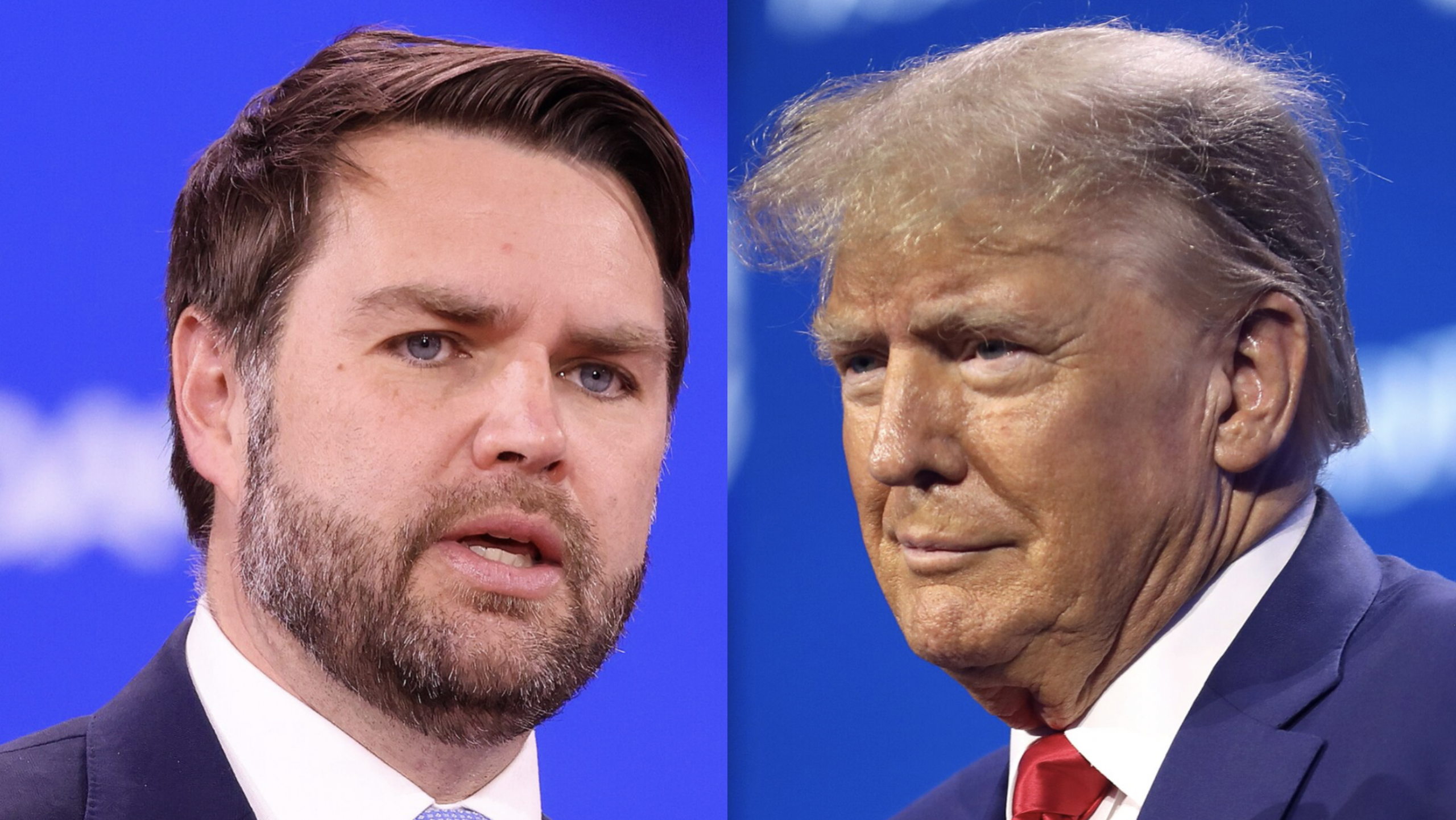
U.S. Vice President JD Vance confirmed Monday that Iranian negotiators threatened to walk out of talks in Switzerland over the weekend after President Trump warned Tehran of renewed military strikes, but said the Iranian delegation never actually left the table, with both sides continuing to negotiate past 1 a.m.
The exchange occurred during a reporter’s question at Vance’s closing news conference following the first round of technical talks held under last week’s Islamabad Memorandum of Understanding. Asked directly whether Trump’s threats had disrupted the negotiations and whether Iranian officials had walked out, Vance offered a detailed account of what transpired.
“No, they didn’t throw a wrench in the system,” Vance said. “The thing with the Iranians, yes, they did threaten to walk out or at least there were social media threats that they would walk out, but we were negotiating well past 1 in the morning yesterday. So, they didn’t walk out and their technical team is still here in Bergensstock working with our technical team actually as we speak, though I imagine maybe some of them are taking a break to watch this news conference.”
Vance then characterized the broader dynamic between the two governments in personal terms, framing Trump’s public responses to Iranian statements as a natural reaction to provocation rather than a destabilizing factor in the talks. “What we told the Iranians yesterday is when you guys engage in what us millennials might call trash talk, you can’t expect the president of the United States not to respond and not to correct the record,” Vance said. “So when they say things that aren’t true, the president is going to respond to it. I’m going to respond to it. Americans are going to respond to it. When they make threats that aren’t rooted in reality, they have to accept that the president of United States is actually going to set the record straight. That’s all that happened. So yes, there was a little bit of threatening, there was a little bit of whining, but at the end of the day, the talks continued and we made great progress.”
The episode Vance described traces back to a tense weekend at the Bürgenstock Resort. Trump, speaking from Camp David, posted on social media that Iran needed to immediately rein in Hezbollah, which he accused of “causing trouble” in Lebanon. “If they don’t,” Trump wrote, “we’ll hit them hard again.” The warning came as Iran’s military announced it had once again closed the Strait of Hormuz, citing continued Israeli strikes on Hezbollah positions in Lebanon despite a ceasefire announced days earlier.
Iran’s lead negotiator, Mohammad Bagher Ghalibaf, the speaker of Iran’s Parliament, responded on social media platform X by warning that Iran’s armed forces stood ready to respond to threats, and separately cautioned that American officials “would do better to be careful about their statements.” Despite the public friction, Vance opened the negotiations on a notably different tone, telling reporters that the talks represented an opportunity to “turn over a new leaf” with Iran. “Can we change relations in the Middle East permanently, or do we go back to doing things the old way, which is not our preference, but is certainly very much something that can happen?” Vance said.
Vance was joined in Bürgenstock by Steve Witkoff and Jared Kushner, both serving as special envoys for the president, while Iran’s delegation was led by Ghalibaf and Foreign Minister Abbas Araghchi, a veteran of nuclear negotiations dating to the Obama administration. The two sides were also joined by mediating delegations from Qatar and Pakistan, whose foreign ministries jointly described the session as “positive” and “constructive” once it concluded.
Notably, even as tensions flared between Washington and Tehran over the weekend, Iranian President Masoud Pezeshkian issued his own warning aimed not at the United States or Israel but at domestic critics of the negotiating process. Continuing the war, he said, “is not in the interest of any individual or group,” adding that internal divisions within Iran’s government over how to handle the talks could themselves become a liability. “If there are ‘internal rifts’ in Tehran,” he said, “then there will be no need for Israel and America.”
A senior U.S. diplomat involved in the talks told reporters Sunday night that negotiators anticipated working through the night on the full range of issues covered by the memorandum. “We’ve had robust discussions on all elements of the nuclear deal,” the official said. “We plan to continue working through each of these issues and using today’s work as a starting point for ongoing technical talks going forward.”
By Monday, mediators from Qatar and Pakistan announced in a joint statement that the two sides had agreed to a “road map” for reaching a final deal within 60 days, along with a new communication line intended “to avoid incidents and miscommunication” in the Strait of Hormuz. The statement described “encouraging progress” and announced the “immediate commencement of technical talks,” though it left unclear which delegation would lead that follow-on process.
Despite the friction over the weekend, Vance maintained that the overall trajectory of the talks remained positive. He told reporters that technical-level negotiators from both countries, along with counterparts from Qatar and Pakistan, remained at the Bürgenstock resort continuing their work even as the vice president’s own news conference wrapped up — a sign, he suggested, that the public sparring between Washington and Tehran had not derailed the substance of the negotiations.