
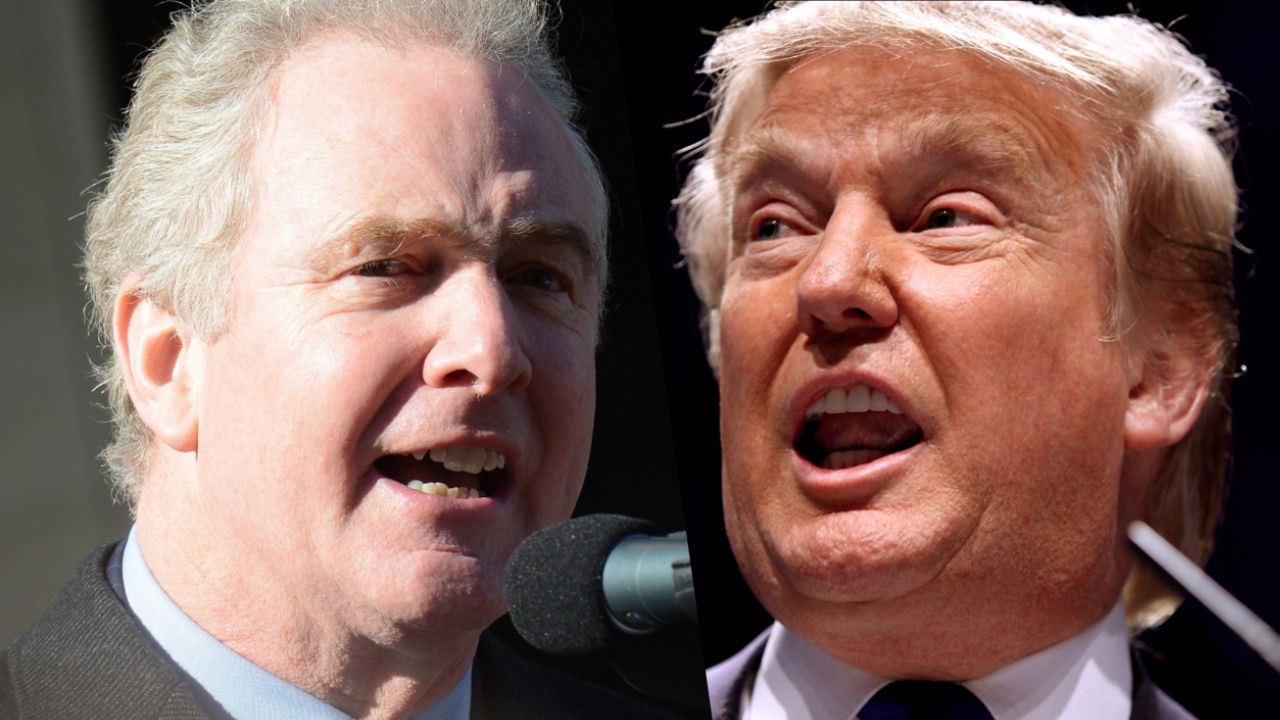
Senator Chris Van Hollen said President Donald Trump was breaking a wartime promise to Afghan civilians who risked their lives helping U.S. forces, and sending many of those allies back into harm’s way, by dismantling the Special Immigrant Visa program. The administration has suspended issuance of immigrant visas to Afghan nationals, including those visas, under a December 2025 proclamation.
“For over 20 years, civilians in Afghanistan risked their lives to help us,” Van Hollen, a Maryland Democrat, wrote Wednesday in a post on X. “The bipartisan Special Immigrant Visa program was a promise & a recognition of their service. By dismantling this program, Trump is breaking that promise & sending many of these allies back into harm’s way.”
Congress built the program for Afghans who worked for or on behalf of the U.S. government during the war, including interpreters and others who served alongside American troops. A Senate Foreign Relations Committee minority report, released Oct. 2 by Ranking Member Jeanne Shaheen and other Democratic members, said more than 160,000 Afghan SIV recipients and family members had resettled in the United States since 2014.
The report said the visas were a lifeline for Afghans targeted by the Taliban for that wartime service, and a signal to partners in future conflicts that the United States keeps its word. It said issuance had stopped while more than 155,000 applicants remained in the pipeline, in the United States, in third countries, and in Afghanistan, where the report said many still face retaliation.
Under a policy the report dated to Jan. 1, 2026, the State Department suspended immigrant-visa issuance to Afghan nationals, including Afghan SIVs. Applicants who had otherwise completed the statutory steps could not receive visas or travel while the suspension lasted. The report said the administration had also eliminated the office that coordinated Afghan relocation, including case management, third-country processing, and flights.
The State Department’s own quarterly report to Congress for January through March 2026 lists one principal applicant and two derivative applicants issued in that quarter, three visas in all. The minority report said the department reported one principal applicant and three family members issued between January and March. Both accounts describe issuance as nearly stopped. The report also said average processing time in the first quarter of fiscal 2026 was 1,191 days, against a nine-month standard set in the fiscal 2014 defense authorization law.
The suspension follows a White House proclamation signed Dec. 16, 2025. A White House fact sheet said the order continued full entry restrictions on nationals of Afghanistan and other countries the administration described as having severe deficiencies in screening, vetting, and information-sharing. The fact sheet said the limits were meant to block entry of people about whom the United States lacked enough information to assess the risk. It did not discuss the wartime service of SIV applicants.
Shaheen’s office called the program a bipartisan commitment and urged issuance to resume for a backlog the report put at 155,367 applicants, including 23,431 with chief-of-mission approval. She said turning away people who risked their lives alongside American service members “sends exactly the wrong message to anyone we may ask to stand with us in the future.”
A separate review, not of the SIV program, found adjudication errors in a different Afghan pathway. The Department of Homeland Security inspector general reported a 40 percent error rate in a sample of Operation Allies Welcome asylum files, mostly missed aliases or incomplete documents, and two cases related to potential inadmissibility on terrorism-related grounds. Those files were asylum applications from Afghans flown out after the fall of Kabul, not Special Immigrant Visa cases.
The minority report’s closing recommendation is a permanent visa track for foreigners who join U.S. war efforts overseas, staffed to vet applicants over the long term. Van Hollen’s post framed the halt as a break with allies of the Afghanistan war. The December fact sheet framed the restrictions as a screening measure.