
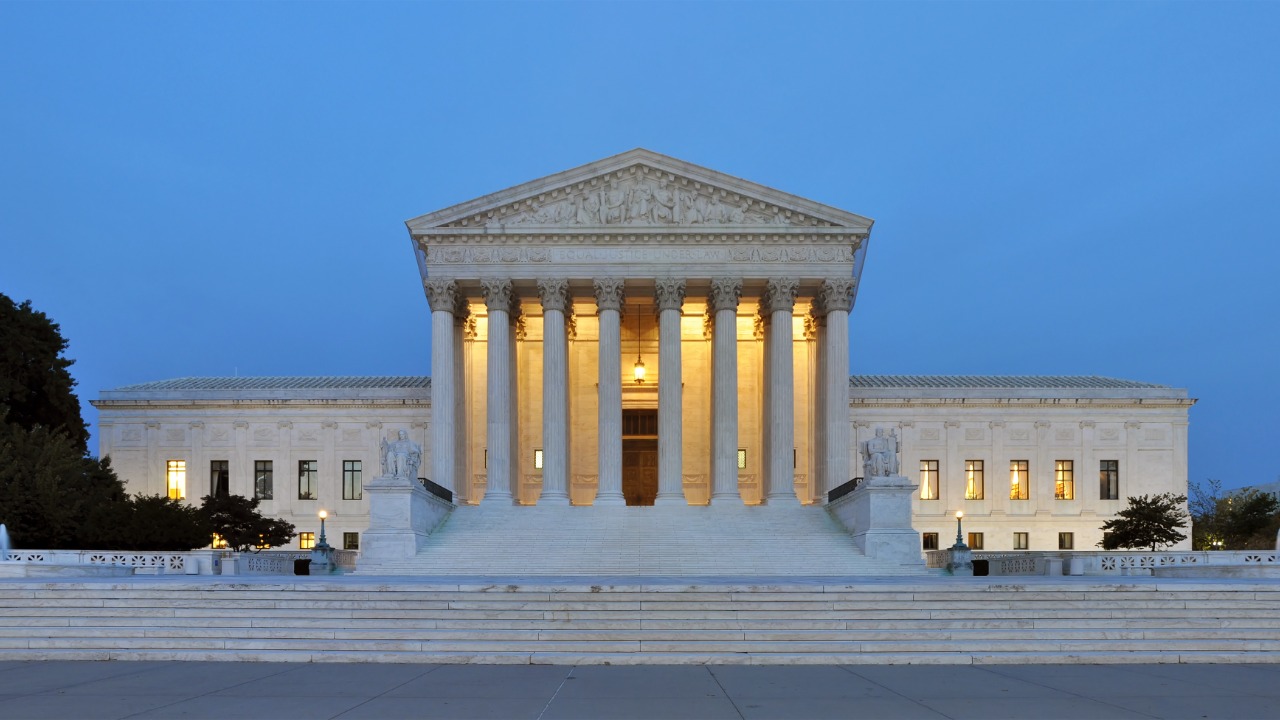
The US Supreme Court’s conservative majority is signaling deep doubt about Hawaii’s strict limits on where licensed residents may carry handguns, setting up a fresh clash over the reach of the Second Amendment. At stake is whether a state can treat most private businesses as gun-free by default, or whether that approach guts the right to bear arms in everyday life. The arguments suggest the court’s right wing is prepared to narrow how far blue states can go in walling off public spaces from firearms.
The “vampire rule” at the center of the case
The Hawaii law under review flips the usual presumption about guns on private property that is open to the public. Instead of allowing licensed carriers to bring a handgun into a shop, restaurant, or parking lot unless the owner objects, the statute bars them from entering with a weapon unless the owner gives explicit consent. The rule has been nicknamed the “vampire rule,” a reference to the idea that a person with a gun, like a fictional vampire, cannot cross a threshold without an invitation, a framing that several conservative justices seized on as they questioned whether the state had gone too far in limiting a constitutional right.
Critics of the statute argue that this default ban on firearms in most commercial spaces effectively turns the right to carry into a privilege that depends on the goodwill of property owners. During oral argument, members of the court’s conservative wing pressed Hawaii’s lawyers on why the state should be able to treat every grocery store, gas station, and shopping mall as off-limits unless owners post signs welcoming guns. Their skepticism echoed concerns that the law, which applies to private property that is open to the public, conflicts with the court’s own recent Second Amendment precedents, a tension highlighted in reporting on Hawaii gun carry.
How Hawaii tightened its rules after earlier Supreme Court rulings
Hawaii’s approach did not emerge in a vacuum. The state rewrote its carry regime after a 2022 decision by the Supreme Court forced jurisdictions with restrictive “may issue” systems to open up licensing to ordinary applicants who meet objective criteria. In response, Hawaii expanded access to permits but then layered on a long list of sensitive locations and default bans, including the contested rule for private property that is open to the public. Since that earlier ruling, more than 2,200 people in Hawai’i have obtained licenses to carry, a sharp change for a state that once issued permits sparingly.
State officials defend the new framework as a careful balance between the expanded right to carry and the need to protect crowded tourist areas, dense urban neighborhoods, and small businesses. They argue that property owners should control whether guns are allowed on their premises and that the default rule simply clarifies that choice. The Supreme Court, however, is now weighing whether Hawaii’s post 2022 map of gun-free zones respects the historical limits the justices themselves endorsed, a question that has drawn national attention as the justices consider how far states may go in redrawing their laws after the high court’s earlier guidance, a dynamic noted in coverage of Hawaii’s strict gun.
Conservative justices press Hawaii on history and practical impact
During the argument, the court’s right wing focused on whether Hawaii could point to historical analogues for such a sweeping default ban on guns in commercial spaces. Several justices suggested that while legislatures have long been able to declare specific locations like courthouses or polling places off limits, treating nearly all private businesses as presumptive gun-free zones is a different matter. Their questions reflected a broader concern that the state’s approach, if upheld, would allow lawmakers to hollow out the right to carry by designating vast swaths of modern life as sensitive places, a concern that surfaced repeatedly as the Supreme Court examined how the Hawaii law bars licensed carriers from entering private property that is open to the public without explicit permission.
Conservative justices also pressed Hawaii on the real-world effect of its rules for ordinary permit holders who want to go about daily tasks. They questioned how a person with a license is supposed to navigate a patchwork of properties where guns are banned unless a sign says otherwise, and whether that uncertainty itself chills the exercise of a constitutional right. Accounts of the argument describe the court’s conservative majority as highly skeptical that the state had drawn a narrow, historically grounded line, with observers such as Stephen Gutowski noting that the Aloha State’s expansive restrictions appeared to face an uphill battle.
National stakes for concealed carry and state gun policy
The outcome of the Hawaii case will ripple far beyond the islands. Several other jurisdictions have adopted similar rules that treat private businesses as gun-free unless owners opt in, and a decision against Hawaii would likely force them back to the drawing board. The Supreme Court heard the dispute on a Tuesday session as part of a broader term that includes multiple Second Amendment cases, and the justices’ questions suggested they are keenly aware that their ruling could reshape how states regulate concealed carry in shopping districts, entertainment venues, and other everyday settings, a prospect underscored in coverage of how the Hawaii guns case could affect concealed carry laws nationwide.