
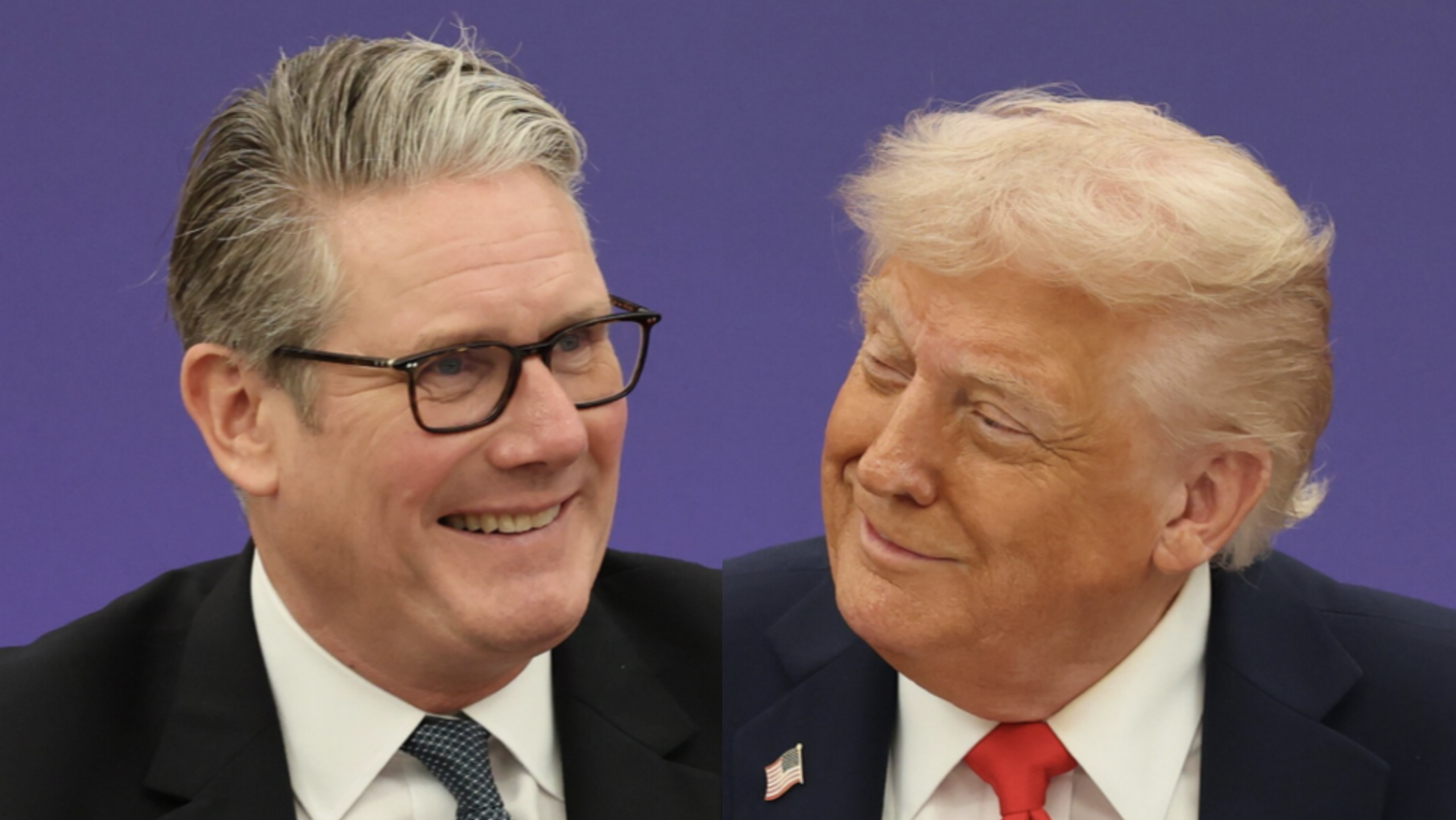
British Prime Minister Keir Starmer issued a sweeping statement of support Sunday for the newly reached agreement between the United States and Iran, calling it a turning point for global stability and demanding the swift and verifiable implementation of both its maritime and nuclear components. The statement, posted to X at 5:30 p.m. on June 14, 2026, came hours after Pakistani Prime Minister Shehbaz Sharif announced the deal on social media and President Donald Trump confirmed it on his Truth Social platform — marking the end of a conflict that has roiled global energy markets and tested Western alliances for months.
“I warmly welcome today’s agreement reached between the United States and Iran,” Starmer wrote. “This is a hugely important step forward in ending the war, ensuring regional stability and re-opening the Strait of Hormuz.”
A Deal Months in the Making
The agreement came as shipping in one of the world’s most critical trade corridors had remained at a near-standstill, with the U.S. and Iran clashing in the Persian Gulf amid fraught efforts to reach an interim deal to restore maritime traffic to prewar levels. Multiple sources had told Reuters that the draft deal would reopen the Strait of Hormuz, end the U.S. blockade of Iranian ports, and extend a ceasefire, while leaving Iran’s nuclear program to be addressed during a 60-day period of additional talks. A signing ceremony is set for Friday in Switzerland, according to Pakistani Prime Minister Sharif. gCaptaingCaptain
Trump confirmed the agreement on Truth Social, writing “The Deal with the Islamic Republic of Iran is now complete,” and adding that the strait would be open “toll free” and that the U.S. naval blockade would end. “Ships of the World, start your engines. Let the oil flow!” Trump wrote.
Starmer Congratulates Trump and Mediators
In his post, Starmer extended congratulations to both the American president and the regional partners who helped broker the breakthrough. “I congratulate President Trump and the mediators from Pakistan, Qatar and elsewhere who have contributed to this breakthrough,” he wrote. “We have long urged de-escalation and this is the progress we had hoped to see.”
The statement of praise for Trump was notable given the turbulent personal dynamic between the two leaders throughout the conflict. Trump repeatedly insulted Starmer during the war, calling him cowardly because of his unwillingness to join the U.S. war on Iran, saying he was “No Winston Churchill” and describing Britain’s aircraft carriers as “toys.” Starmer, for his part, consistently maintained that Britain’s path was one of diplomacy rather than direct military engagement.
Britain’s Posture Throughout the Conflict
Starmer had stood firm on his decision not to join the initial strikes on Iran, stating that “the longstanding British position is that the best way forward for the region and the world is a negotiated settlement with Iran, where they give up their nuclear ambitions.” He framed that choice as one of principle, expressing the importance of “having the strength to stand firm by our values, no matter the pressure to do otherwise.”
Starmer had also repeatedly stated that the most effective way to support the cost of living in Britain was to push for de-escalation in the Middle East and a reopening of the Strait of Hormuz. The war’s economic consequences were felt acutely in the United Kingdom, where disrupted energy supplies drove up prices for ordinary families. In April, Starmer warned that the consequences of the Iran war would last for a generation, and called for closer economic and defense ties with Europe in response to the strains it had placed on the transatlantic relationship.
Starmer’s Full Statement
In the post, Starmer laid out Britain’s complete position in detail:
“I warmly welcome today’s agreement reached between the United States and Iran. This is a hugely important step forward in ending the war, ensuring regional stability and re-opening the Strait of Hormuz. I congratulate President Trump and the mediators from Pakistan, Qatar and elsewhere who have contributed to this breakthrough. We have long urged de-escalation and this is the progress we had hoped to see. Attention must now turn to fully implementing the memorandum of understanding to ensure the Strait reopens and remains fully and permanently open, and that the detailed elements of the nuclear agreement are finalised. We stand ready to support the technical talks that will now begin. Our priority is that this becomes a durable and lasting peace, and we will work with international partners to support that. We are clear that toll-free freedom of navigation must now be restored in the Strait of Hormuz, to begin easing the severe economic impacts that have been felt for several months — on families here in the UK and around the world. We will continue to work with partners to support this — including, if required, through standing up the defensive, independent multilateral mission which the UK and France have taken a leading role in planning up to this point, particularly to offer support on mine clearance in an agreed way. For any peace to endure, it is essential that the commitments made, particularly in relation to Iran’s nuclear programme, are robust, verifiable and fully implemented. It remains the UK’s firm and longstanding position that Iran must never have a nuclear weapon.”
The Strait of Hormuz and the Mine-Clearing Mission
Central to Sunday’s statement was Starmer’s commitment to restoring full commercial shipping through the Strait of Hormuz. Britain has spent months building the architecture to make that possible. On May 12, 2026, the United Kingdom and France convened defense ministers and representatives from 38 nations to announce their political support for an independent and strictly defensive multinational military mission, which would support civilian shipping, provide reassurance to commercial shipping operators, and conduct mine clearance operations.
The mission’s operations were to commence only in a permissive environment and in full accordance with international law and national constitutions. Preparations for the mission were anything but last-minute — the UK’s RFA Lyme Bay, already stationed off Gibraltar, was loaded with autonomous mine-hunting drones and ammunition in late May 2026, and up to 40 partner nations had been coordinated under a UK-France-led framework following a multinational summit in April 2026.
Starmer on Sunday made clear that mission now stands ready to be activated. “We will continue to work with partners to support this — including, if required, through standing up the defensive, independent multilateral mission which the UK and France have taken a leading role in planning up to this point, particularly to offer support on mine clearance in an agreed way,” he wrote.
Nuclear Commitments Must Be “Robust and Verifiable”
Beyond the maritime dimension, Starmer drew a firm line on the nuclear terms of any enduring agreement. “For any peace to endure, it is essential that the commitments made, particularly in relation to Iran’s nuclear programme, are robust, verifiable and fully implemented,” he wrote. “It remains the UK’s firm and longstanding position that Iran must never have a nuclear weapon.”
According to Reuters, a senior Iranian official had previously indicated that under the terms of the draft deal, Iran agreed not to produce or acquire nuclear weapons and to maintain the nuclear status quo — including no uranium enrichment or expanding nuclear facilities — until a final deal is reached, while the United States would release $25 billion of frozen Iranian assets. The nuclear elements of a comprehensive agreement are expected to be finalized during the 60-day follow-on talks.
What Comes Next
Starmer said Britain stands ready to participate in the technical negotiations that will follow the signing ceremony. “Attention must now turn to fully implementing the memorandum of understanding to ensure the Strait reopens and remains fully and permanently open, and that the detailed elements of the nuclear agreement are finalised,” he wrote. “We stand ready to support the technical talks that will now begin.”
The path to Sunday’s agreement was not without turbulence. Earlier on June 14, an Israeli strike on the southern suburbs of Beirut — which Israel said targeted Iranian-backed Hezbollah militants — threatened to derail negotiations entirely. Iran’s foreign ministry held the United States responsible for the attack, and Iranian negotiator Mohammad Baqer Qalibaf said the strike showed the United States lacked “the will and ability to fulfill your commitments.” Trump himself publicly rebuked the strike, writing that it “should not have happened, particularly on a special day when we are so close to a Peace Deal with Iran.” The deal ultimately held. For Starmer — who spent months absorbing Trump’s public criticism while quietly maintaining Britain’s consistent call for a negotiated settlement — Sunday’s agreement represented the outcome his government had pursued from the start.