
Ukraine’s new defense leadership aims to reduce casualties by leveraging improved data management. The country’s freshly appointed minister, Mykhailo Fedorov, is promising to rebuild Europe’s largest wartime military around real time data, artificial intelligence, and a management culture that rewards measurable results rather than seniority. His pledge represents a high-risk experiment to apply technology-driven methods to ongoing military operations.
The stakes are stark. After nearly two years of full scale invasion, Ukraine faces exhausted units, strained mobilization, and a Russian opponent that has learned to adapt. Fedorov’s answer is to treat the armed forces as a vast system to be mapped, analyzed, and constantly optimized, from drone strikes and logistics to personnel policy and battlefield morale.
From digital wunderkind to wartime defense chief
Mykhailo Fedorov arrives at the Defense Ministry with an unusual résumé for a wartime commander, but one that helps explain his fixation on data. Ukraine’s parliament has tasked the 34-year-old with reforming a sprawling institution while Russian forces continue to press along the front. Before this appointment he served as the country’s digital chief and first deputy prime minister, where he became known for turning Ukraine into a test bed for e government services and for pushing the military toward high tech solutions. That background has made him both a symbol of generational change and a lightning rod for skeptics who question whether a civilian technologist can manage entrenched generals and battlefield realities.
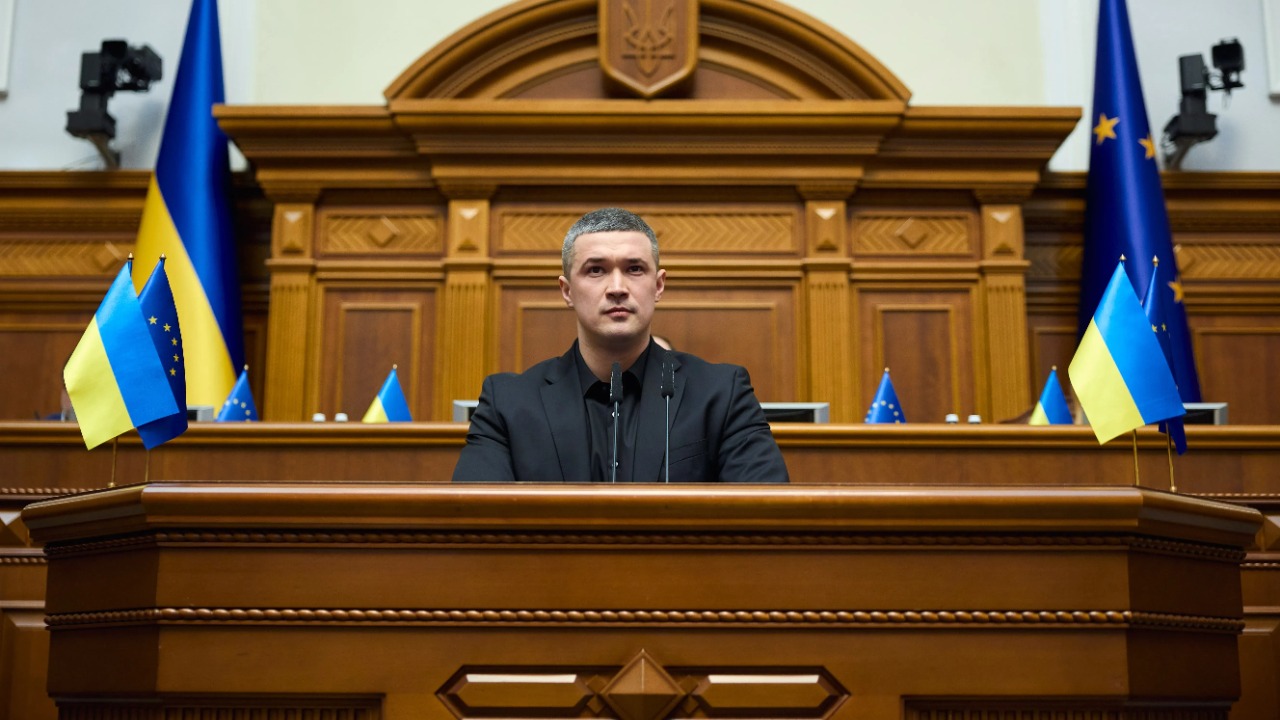
Supporters argue that Fedorov’s track record in wartime innovation is precisely why he was elevated. He was instrumental in creating a defensive “drone line” designed to inflict maximum damage on Russian troops, and he helped cultivate a domestic ecosystem of firms developing electronic warfare systems and battlefield software. Analysts note that he is also Ukraine’s youngest minister, a fact that underscores how President Volodymyr Zelensky is leaning on a new generation of leaders comfortable with unconventional warfare and drones. Photographs of Mykhailo Fedorov taking the oath of office symbolize the generational shift in Ukraine’s leadership.
Turning the “mathematics of war” into a management doctrine
Fedorov’s central promise is to treat the armed forces as a data rich system that can be measured, compared, and constantly improved. In KYIV he has spoken of using what he calls the “mathematics of war” to overhaul ministry management, arguing that commanders and units should be evaluated on quantifiable performance rather than rank or personal connections. He has pledged to share Ukraine’s vast trove of wartime combat information with allies to help train artificial intelligence systems, framing the country’s experience as a unique laboratory for Europe’s security.
Fedorov stated that the ministry will implement a system rewarding units and commanders based on measurable performance, reflecting his experience with digital program analysis. In one interview, By Max Hunder reported that the new minister intends to overhaul how the ministry itself is run, promising a data driven shake up of procurement, logistics, and personnel. That same account noted that he is prepared to challenge long standing hierarchies, a stance that has already unsettled some senior officers but has drawn support from younger commanders who have grown up with battlefield tablets and drone feeds.
Digital backbone: from battlefield software to AI partners
The data centric strategy rests on a rapidly expanding digital backbone inside the armed forces. Ukraine’s Ministry of Defence has already begun rolling out a unified command and control platform that integrates frontline reports, logistics, and targeting information. Deployment of this system began in the autumn, and 160 units of the Land Forces and Air Assault Forces are already using it in daily operations. Officials say that throughout 2026 they plan to expand the system’s functionality, turning it into the nervous system of a more agile military.
Fedorov wants to go further by feeding that operational picture into advanced analytics and artificial intelligence. He plans to share wartime combat data with partners to train AI systems, emphasizing that large volumes of real-world information are essential for pattern recognition and predicting enemy behavior. In his public comments he has pointed to cooperation with a U.S. data analytics firm, Palantir, as one example of how Ukraine intends to turn raw battlefield logs into decision support tools for commanders.
Manpower crisis meets algorithmic reform
The promise of a data fueled reboot is colliding with a harsh demographic and political reality. Ukraine’s martial law bars all men aged 23 to 60 who are eligible for military service from leaving the country, yet tens of thousands have still managed to evade mobilization or desert. Fedorov has disclosed that roughly 200,000 soldiers have gone absent without leave and that about 2 million people are avoiding the draft, figures that lay bare the scale of the problem for Ukraine. Those numbers underscore why the new minister insists that “more technology means fewer casualties,” a line he used when urging lawmakers to back his appointment.
Fedorov emphasized that software alone cannot reform the traditional military command structure. “We cannot fight a war with new technologies but an old organizational structure,” he told legislators, arguing that the same data tools used to optimize drone strikes must also be applied to personnel rotations, medical care, and leave schedules. He has promised to overhaul ministry management, a commitment echoed in reports that describe his plan to shake up how the ministry evaluates commanders. He also emphasized that the defense establishment must collaborate closely with private firms developing electronic warfare systems.