
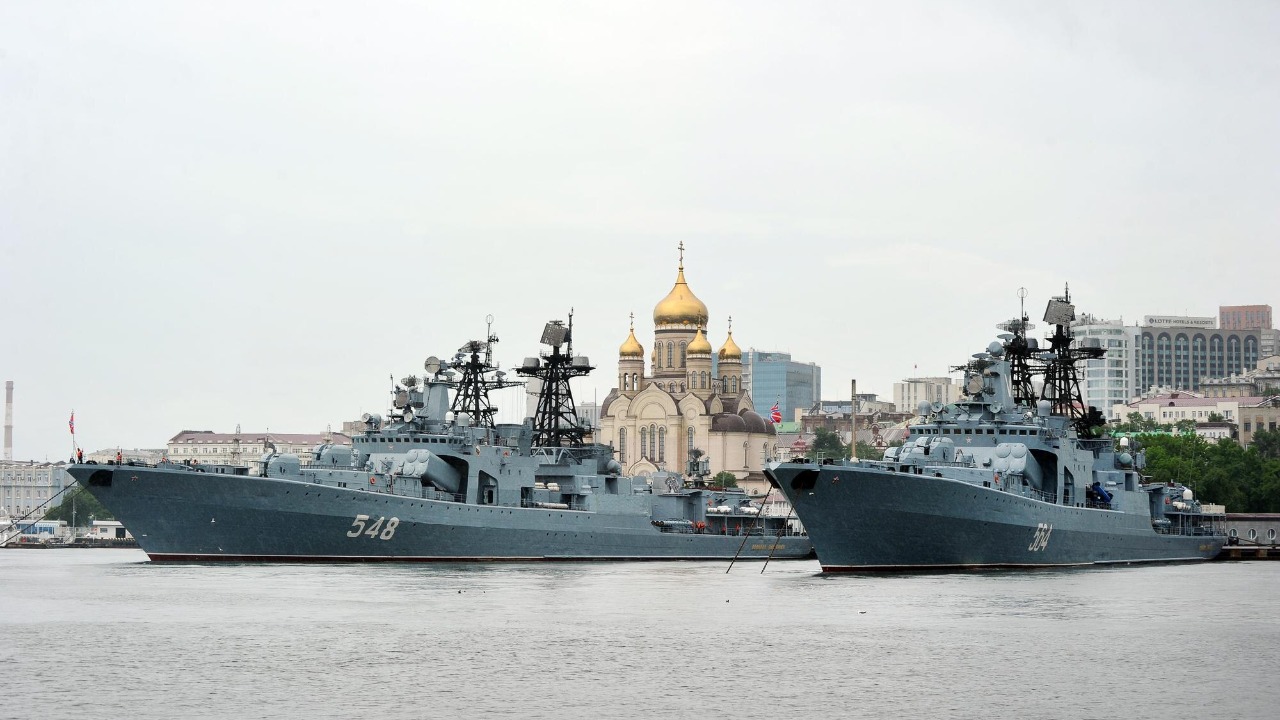
Ukraine has moved to place itself at the center of a fast‑evolving Arctic security debate, with President Volodymyr Zelenskyy vowing that Russian warships near Greenland would meet the same fate as vessels targeted in the Black Sea if the island joined NATO. His message, delivered to Western leaders already anxious about Russian and Chinese activity in the High North, links Kyiv’s battlefield experience to a broader contest over control of new sea lanes and strategic chokepoints. By tying Ukrainian support to Greenland’s potential alliance status, Zelenskyy is pressing for a more integrated Euro‑Atlantic response that stretches from Crimea to the Arctic Circle.
From Crimea to the Arctic: Zelenskyy’s new deterrence pitch
President Zelenskyy has framed Ukraine’s naval campaign in the Black Sea as a template for how the alliance could police Arctic waters if Greenland were brought under NATO’s umbrella. In public remarks amplified by Ukrainian outlets, he argued that if Ukraine were fully integrated into NATO structures, Russian vessels off Greenland could be struck “just like they did off Crimea,” a pointed reference to the string of successful attacks on the Black Sea Fleet. He has repeated the line that Russian ships “can sink near Greenland just as they do near Crimea,” turning a battlefield slogan into a strategic offer to the alliance and underscoring that the same mix of missiles, drones, and coastal defenses that reshaped the Black Sea could be projected northward.
That message has been sharpened in Davos, where the Ukrainian leader used a special address to warn that Western hesitation risks ceding the Arctic to rival powers. In his speech, he told political and business elites that “You either declare that European bases will protect the region from Russia and China and establish those bases, or you risk not being able to solve this problem with Russian ships,” explicitly linking the need for new northern infrastructure to the threat of hostile fleets. In the same intervention, he stressed that European security now runs through both the Black Sea and the Arctic, and that Ukraine’s hard‑won expertise in targeting Russian naval assets should be treated as a shared resource rather than a regional anomaly.
Greenland’s strategic weight and Trump’s pressure campaign
The stakes around Greenland are rising because the island has become a focal point of great‑power competition, not a remote afterthought. Analysts have highlighted how Greenland sits in the Arctic Circle and astride key North Atlantic routes, making it a natural platform for early‑warning systems, anti‑submarine patrols, and control of emerging shipping lanes as sea ice retreats. That geography has drawn intense interest from Washington, with Trump pushing for a stronger American footprint on the island, arguing that whoever shapes Greenland’s future will hold a lever over both European and North American security. The same maps that show Russian submarines slipping under polar ice also show why Zelenskyy is eager to extend Ukraine’s deterrent reach into these waters.
Yet the path to any deeper Western role has been politically fraught, particularly for Denmark and local communities. Reporting from Copenhagen and Nuuk describes how Danish troops who fought alongside US forces feel betrayed as President Trump couples harsh rhetoric about NATO with threats over a potential Greenland deal, leaving veterans and officials uncertain about Washington’s long‑term intentions. An emergency summit of EU leaders was convened to address those threats, and while the outlines of a Greenland arrangement remain unclear, the controversy has already rattled allies and markets. In that context, Zelenskyy’s offer to help patrol Arctic waters is not only a military proposal but also a political signal that smaller states can help stabilize an agenda that has been dominated by US‑Danish tensions.
Ukraine’s offer to NATO: “They can sink near Greenland”
Kyiv’s pitch is built on the claim that its forces have developed a unique capacity to neutralize Russian naval power, which could be redeployed far from home. Ukrainian President Volodymyr Zelenskyy has told Western partners that Ukraine is ready to sink Russian Ships off the Coast of Greenland if asked, presenting this as a logical extension of the campaign that has already forced parts of the Black Sea Fleet to relocate. In one widely shared formulation, he said that “They can sink near Greenland just as they do near Crimea,” a line that has been echoed by Ukrainian media and supporters to underline that the same Russian vulnerabilities apply whether the ships are off Sevastopol or sailing past Arctic fjords. The message is that Ukrainian crews, weapons, and targeting methods are exportable, and that the alliance should treat them as a modular tool for contested waters.
Social media posts amplifying his Davos remarks have sharpened that point further, stressing that “If Russian warships are sailing freely around Greenland, Ukraine can help. They can sink near Greenland just as they do near Crimea,” turning the phrase into a kind of informal doctrine for future cooperation. One feed framed the argument in conditional terms, noting that if Russian vessels were allowed to operate unchallenged, it would represent a failure of collective defense that Kyiv is prepared to help avert. Another outlet stressed that “They can sink near Greenland just as they do near Crimea,” quoting them and highlighting Zelenskyy’s insistence that Crimea and Greenland are now linked theaters in a single maritime struggle.
NATO calculations, Greenland’s future, and Ukraine’s long game
For NATO planners, Zelenskyy’s rhetoric intersects with a delicate negotiation over how far and how fast to expand the alliance’s footprint in the Arctic. A recent framework agreement between the United States and NATO has eased immediate fears of a rupture over Greenland, yet reporting from the island notes that “There is cautious relief and mistrust,” as residents and officials weigh the benefits of new bases against the risk of becoming a frontline. Commentators such as Andreas Noll have described how the deal has defused the sharpest dispute while leaving open questions about long‑term governance, environmental impact, and the balance between US and European roles. Into that uncertainty steps Ukraine, arguing that its presence would not only deter Russia but also distribute the security burden more evenly across the alliance.