
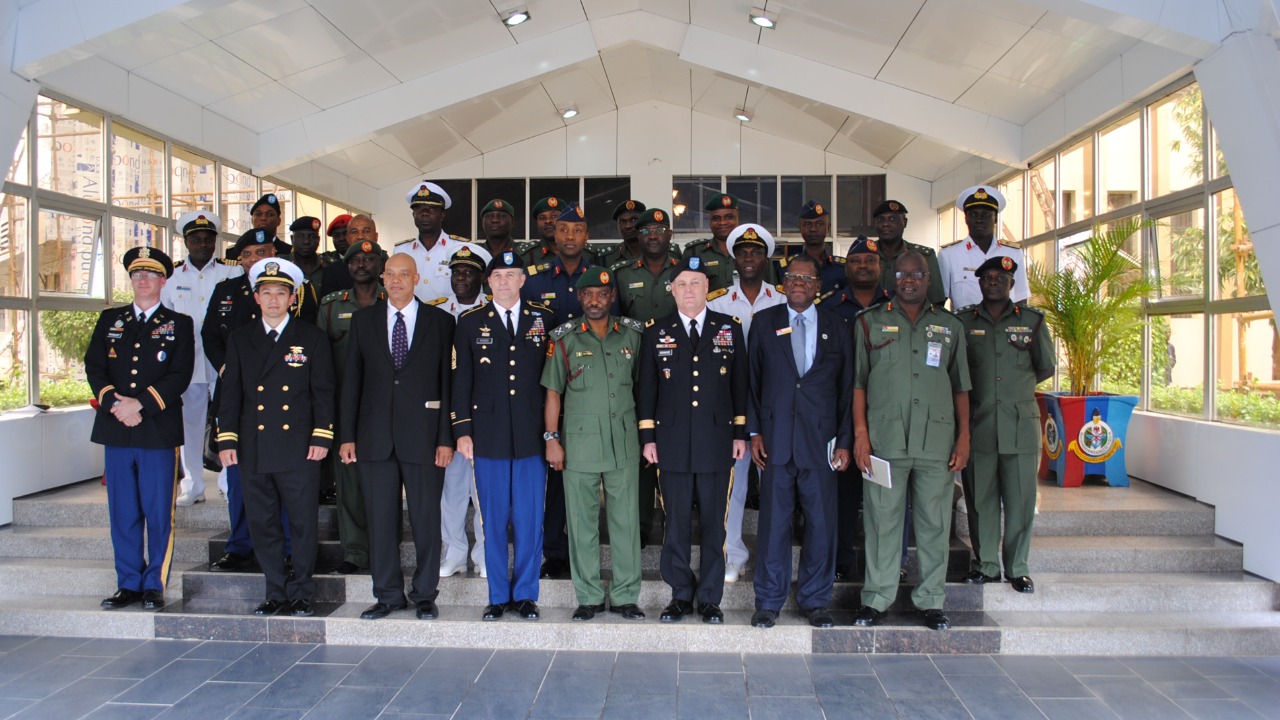
The United States has moved to deepen its security partnership with Nigeria by delivering a new tranche of military equipment intended to sharpen Abuja’s fight against insurgents and criminal networks. The latest supplies, handed over in the capital, are framed by both governments as a practical alternative to deploying American troops while still expanding Nigeria’s capacity to secure its own territory.
As President Donald Trump’s administration recalibrates its Africa posture, this package signals that Washington is willing to invest material support and intelligence cooperation in a key West African partner. It also tests whether better tools and training can shift the trajectory of a conflict that has strained Nigeria’s armed forces and unsettled the wider region.
AFRICOM’s evolving role in Nigeria’s security landscape
I see the latest delivery as part of a broader effort by United States Africa Command to entrench a long term security relationship with Abuja rather than a one off gesture. U.S. Africa Command has publicly described itself as “proud to continue its strong security partnership with Nigeria,” and confirmed that U.S. forces delivered critical military supplies to Nigerian partners in Abuja to support ongoing operations against violent extremist organizations, which it framed as a continuation of its engagement with Nigeria. That message underlines a strategic choice to work by, with, and through local forces rather than lead combat missions directly.
The same communication from Africa Command, referenced again in a more detailed description of the handover, stressed that U.S. forces delivered critical military supplies to Nigerian partners in Abuja and tied the move to the command’s wider mission on the continent, which is to build partner capacity and improve interoperability with African militaries through training, equipment, and advisory support, as set out in the Africa Command post. In practical terms, that means the new supplies are likely to be paired with instruction on maintenance, logistics, and targeting so that Nigerian units can integrate them into daily operations rather than treat them as symbolic hardware.
What the new supplies mean for Nigeria’s counterterrorism fight
From my reading of the available details, the shipment is designed to tighten Nigeria’s grip on its most volatile theatres rather than transform the battlefield overnight. Reports describe the package as “critical military supplies” aimed at boosting operations against insurgents and other armed groups, with one account noting that the United States has delivered such equipment to strengthen Nigeria’s ability to respond to security challenges across the country, language that appeared in a post highlighting how Washington strengthens Nigeria’s military. Nigerian officials have framed the support as a way to improve mobility, surveillance, and force protection in areas where troops face ambushes and improvised explosive devices.
Local coverage has emphasized that the United States has delivered new supplies specifically to boost Nigeria’s counterterrorism efforts, with one report stating that The United States has provided critical military support to help Nigeria tackle extremist threats and banditry, a point underscored in a detailed account of how The United States delivered new supplies. That focus on counterterrorism aligns with Abuja’s own messaging, which has long cast the fight against Boko Haram, Islamic State West Africa Province, and other armed groups as a national survival issue rather than a localized insurgency.
Diplomatic calculations behind equipment, not troops
I interpret Washington’s decision to send equipment instead of soldiers as a calibrated response to Nigerian political sensitivities and domestic debates in the United States. Earlier this cycle, the Bola Tinubu led presidency appealed to the United States to deploy its military to help Nigeria fight terrorists, a request that highlighted how stretched Nigerian forces had become, as reported in coverage that noted how Bola Tinubu sought deeper help. Instead of sending combat units, the Trump administration has opted to expand material and intelligence support, a choice that avoids the political and operational risks of a direct deployment.
Several accounts of the new package make that trade off explicit. One widely shared report explained that the United States has delivered military supplies to Nigeria as part of ongoing security cooperation, noting that the supplies were handed over to Nigerian partners in Abuja and are intended to support operations against Islamist militant groups, a description that appeared in a post citing According to United States Africa Command. Another narrative, shared by commentators discussing “Trumps Threat,” stated that the United States has finally suspended a plan to send American troops to Nigeria and instead promised to provide Intelligence Support and Defence Equipment, a formulation that directly referenced how Trumps Threat shaped the final decision.
Inside the handover in Abuja and the machinery behind it
What stands out to me is how institutional the process has become, with multiple U.S. agencies involved in moving the supplies from planning tables to Nigerian units. One detailed account noted that the U.S. State Department confirmed in a statement that the Defence Security Cooperation Agency delivered the required military supplies to Nigeria, and that the deliveries in Abuja have strengthened their security partnership, a description that highlighted the role of the State Department and the Defence Security Cooperation Agency. That bureaucratic machinery is what turns high level pledges into pallets of gear on an airfield.
Other reports have filled in the operational picture from the Nigerian side. One summary explained that U.S. forces delivered critical military supplies to Nigerian partners in Abuja and stressed that this delivery supports Nigeria’s ongoing operations against violent extremist organizations, language that appeared in a piece on counter-insurgency efforts. Another account, which described how the United States has delivered military supplies to Nigeria as part of ongoing security cooperation, again emphasized that the supplies were handed over to Nigerian partners in Abuja and are intended to support operations against Islamist militant groups, a point repeated in a separate post that cited United States Africa. Together, these details show a carefully choreographed handover that is meant to reassure both publics that the equipment is going straight into front line use.
Strategic stakes for Washington, Abuja, and the wider region
In strategic terms, I view this latest package as a test of whether targeted support can stabilize a key partner without drawing the United States into open ended deployments. One analysis from Lagos reported that the United States has delivered critical military supplies to Nigeria to bolster the West African nation’s fight against Islamist insurgents and criminal gangs, and framed the move as part of a broader security partnership between the United States and Nigeria. Another account stressed that the Federal Government confirmed ongoing talks with Washington on more support to tackle the security crisis in the country, reinforcing that Abuja sees this as the start of a deeper collaboration rather than a one off airlift, a point that appeared in coverage of how the United States boosts Nigeria’s fight.
There is also an industrial and doctrinal dimension that I cannot ignore. One commentary on the delivery noted that the United States builds military aircraft, missiles, and other advanced systems and linked that industrial base to the supplies now reaching Nigeria, while also highlighting that the shift from troop deployment to equipment and intelligence support reflects a promise to provide Intelligence Support and Defence Equipment instead of boots on the ground, a formulation that appeared in a post describing how American support would work. Another report, which stated that the United States has delivered critical military supplies to Nigeria as part of ongoing security cooperation, underlined that the deliveries are meant to strengthen Nigeria’s ability to respond to security challenges across the country, a point echoed in a post that described how Washington STRENGTHENS Nigeria’s military. If the new equipment helps Nigerian forces regain territory and protect civilians, it will bolster the case for this model of partnership across the Sahel and Gulf of Guinea, but if the violence persists, both governments will face hard questions about what more is required.