
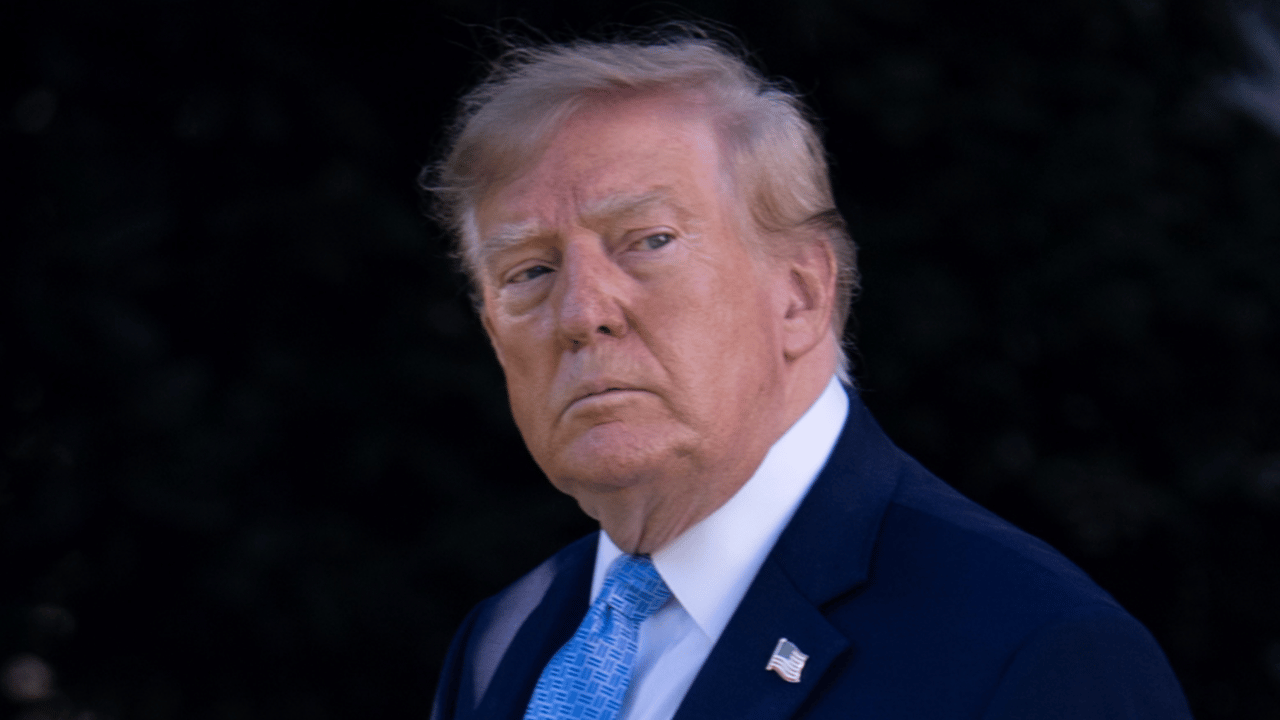
President Donald Trump said that if Democrats win Congress in Tuesday’s midterms, “I guess I’ll become Mr. Veto,” telling New York Post columnist Miranda Devine on her Pod Force One podcast that he would block Democratic bills and that if Republicans lose he would “veto everything.”
The New York Post reported the interview Sunday for an episode set to drop Monday. “I’m not going to let them ruin it,” Trump said. He sketched a sequence in which Democrats send legislation, “You veto it,” and “eventually, after a month or two of getting all vetoed, they’re just wasting [time], they come over, and you make a deal. I think that probably would happen, but hopefully we don’t have to worry about that.”
Later in the same interview he returned to the veto theme. “Look, if we didn’t win – I think we’re going to do great – but if we didn’t win, I’d veto everything. I’ll be vetoing, vetoing,” he said, the Post reported. He also said of Democrats, “They want to get rid of your Second Amendment, have transgender for everyone.” The Post said Trump has vetoed two bills in his second term and vetoed 10 in his first, and noted that in his first term’s final two years Democrats controlled the House but not the Senate. The same report said forecasters widely favored Democrats to win back the House, with Senate control described as more competitive.
The Pod Force One comments echo an earlier South Lawn answer. Leaving the White House for a Florida rally on Oct. 24, Trump told reporters that if Democrats take Congress, “What happens is I veto everything, and then the Democrats come and they want to make a deal.” “So we’ll work on that. I mean, if you look, historically, when you have a situation where that would happen, if it happens, you veto, veto, veto, and then they come and they say, ‘How do we get it done?’ And you make a deal.”
Democratic senators and House members have already sketched competing approaches to a Congress facing a Republican president’s veto. On CNN’s The Arena with Kasie Hunt on Oct. 22, Sen. Brian Schatz of Hawaii said a midterm win should be framed as an “institutional check against an out-of-control president” and that Democrats should use leverage “to try to bring this war to a conclusion and to reverse the Medicaid and SNAP cuts.” “I do not think it is time to propose things that the president of the United States is guaranteed to veto,” Schatz said. “I think that is somewhat of a bit of wasted energy.” He said bolder changes would require the presidency and both chambers in 2028, and that the near term is about “stabilizing the country” and cutting costs for diesel, gasoline and consumer goods. “I think people want to see us do not everything but a few things that will take the pain out of what they’re experiencing,” he said.
Rep. Ro Khanna of California took a different line on X. In an Oct. 24 post quoting The Arena coverage, he wrote a list that began, “Make him veto Medicare for All,” and continued through a $25 living wage, free childcare, free college, erasing student loans, taxes on billionaires, and bills on Israel aid. On Nov. 1, Khanna posted that the House and Senate “can stop funding for the war in Iran” and “refuse to appropriate money for it,” adding, “Trump’s veto has zero impact” on that appropriations lever, in a separate post.
Democratic leadership messaging in the final days of the campaign emphasized accountability and costs rather than Trump’s veto branding. A Nov. 1 Democratic Party post said Election Day is “the one chance we have to throw Republicans out of power and hold Trump accountable.” House Democratic Leader Hakeem Jeffries, in a Nov. 1 post on his House account, wrote that “The American people trust us to lower the high cost of living for everyone.”
Roll Call’s Oct. 26 analysis of the earlier “veto everything” threat noted that debt-limit and appropriations fights would still require votes even if a president returns other bills, and quoted Democratic strategist Jim Manley saying that if the House flips, Democrats should “just send bills over to the Senate and see if they die,” and that vetoes of popular legislation two years before the next presidential election would be a political opportunity for Democrats.
In the same Pod Force One interview, Trump said he would “love to run again if I had the chance, but the language is very exacting,” a reference to the 22nd Amendment that the Post also reported. He agreed with Elon Musk’s recent warning that a Democratic sweep could leave the country “maybe forever destroyed,” and said Democrats hope to add Puerto Rico and Washington, D.C., as states, expand the Supreme Court, and eliminate the Senate filibuster.
Under Article I, a president may return a bill to Congress, and a two-thirds vote in each chamber is required to override. The Post tallied two second-term vetoes and 10 in the first term. Trump’s “Mr. Veto” label, his prediction that Democrats would “make a deal” after weeks of vetoes, and his vow to “veto everything” if Republicans lose are his forecast from the podcast and the earlier South Lawn remarks. Schatz’s caution against sending guaranteed-veto bills and Khanna’s call to force vetoes or use appropriations where a veto “has zero impact” are Democratic strategies already on the record. Tuesday’s results and the calendar that follows will test both approaches.