
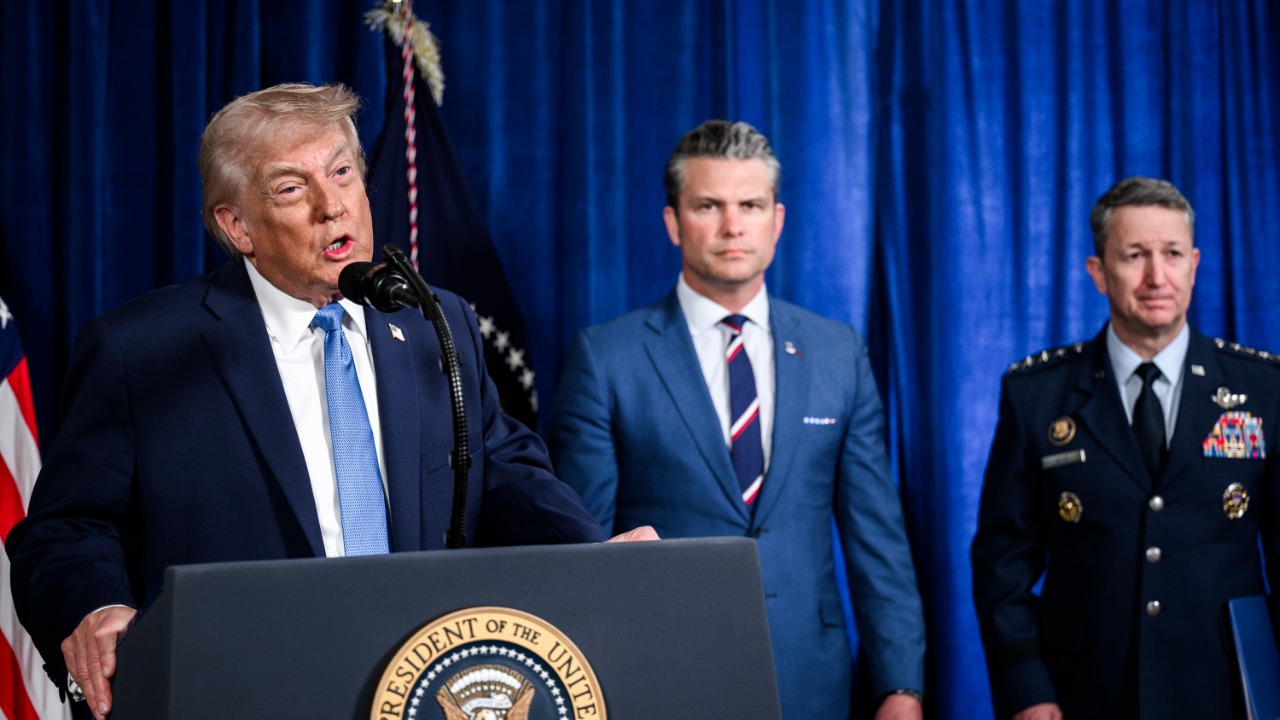
President Donald Trump has turned a long-simmering dispute over Greenland into a defining test of his approach to allies, vowing to complete what he casts as unfinished business in the Arctic. He argues that the United States must take control of the vast island to secure the North Atlantic and reshape the balance of power, while accusing Denmark of blocking that ambition. The clash has jolted relations inside NATO and forced Europe to confront how far it is willing to go to resist pressure from Washington.
Trump’s revived Greenland crusade and the Nobel grievance
Trump has revived his push for the United States to acquire Greenland with a new intensity, presenting it as a strategic imperative rather than a passing curiosity. He has told supporters that he is “pursuing Greenland” in part because he feels slighted by the Nobel Peace Prize process, linking his anger over the 2025 award to his determination to press the issue with European governments. In public comments highlighted by NPR, he tied his Greenland campaign to a broader narrative of being denied recognition, suggesting that if diplomatic efforts are not valued, he is less bound by traditional restraint.
That grievance has spilled into direct messages to European leaders, where Trump has explicitly connected his frustration over the Nobel Peace Prize to his stance on the Arctic. According to European officials cited by AP, he texted Norwegian Prime Minister Jonas Gahr Støre that “Considering your Country decided not to give me the prize, he no longer felt the same obligation to prioritize peace in his decisions. A separate account of his communication with Norway reported that he suggested those who think Norway does not influence the Nobel process are “just kidding,” underscoring how he has fused personal resentment with high-stakes Arctic policy in exchanges described by CBS.
Security logic, annexation rhetoric, and the “it will be done” warning
Behind the theatrics, Trump and his advisers have framed Greenland as central to national and international security, citing its location between North America and Europe and its role in missile warning and Arctic shipping routes. Reporting on internal discussions has described how Trump and his team have floated reasons ranging from early warning radar to control over new sea lanes as justification for a potential takeover, as detailed in an analysis from the New York Times. Commentators in the High North have gone further, characterizing his approach as an “Effort to Annex Greenland” that fits a broader logic of domination and a desire to anchor a North Atlantic missile defense initiative, a framing explored in an op-ed at High North News.
Trump has amplified that strategic language with stark public vows that the Greenland project will be completed. In a late-night social media blast that supporters circulated under the slogan “It Will Be Done,” he warned that he would ensure the United States has control over the island, a message that appeared in a viral rant shared among his backers. In a separate interview highlighted by AOL, he declared that “it will be done” in reference to removing what he called a “Russian threat” from Greenland, although the available reporting does not substantiate his broader claims about Russian activity or any specific NATO timeline for urging Denmark to respond. Those statements, combined with commentary that labels his push an annexation effort, have raised alarms among European officials who see a deliberate attempt to normalize the idea of changing Greenland’s status without the consent of Copenhagen or Nuuk.
Danish and European pushback, troop deployments, and NATO debates
Danish leaders have responded with unusually sharp language, insisting that Europe will not be coerced into trading territory or altering sovereignty arrangements under pressure. Prime Minister Mette Frederiksen has stated that “Europe won’t be blackmailed” in the wake of Trump’s Greenland threats, stressing that Denmark and the wider European Union will defend the principle that the island’s future is not up for sale, a stance reported in detail by the BBC. She has framed the dispute as a test of whether smaller allies can resist transactional demands from a larger partner, while also signaling support for Greenland’s right to decide its own path inside the Kingdom of Denmark.
That political resistance has been matched by concrete military moves in the Arctic. Denmark has dispatched what officials described as a “substantial contribution” of troops to Greenland, reinforcing bases and patrols in the self-governing territory as tensions with Washington rose, according to Al Jazeera. Separate reporting by Victor Nava noted that Denmark deployed more than 100 combat soldiers to the island, a visible signal that Copenhagen intends to maintain control over its Arctic defenses. At the same time, Danish officials have floated the idea of a formal NATO mission on Greenland, with live updates compiled by DW describing how the government is seeking to anchor the island’s security inside the alliance framework rather than in a bilateral bargain with the United States.
Alliance strain, tariff threat, and the limits of leverage
The Greenland dispute has widened into a broader test of NATO cohesion and transatlantic economic ties. President Trump has escalated his rhetoric with allies, sending a letter to European governments that linked his Greenland demands to grievances over defense spending and the Nobel Peace Prize, a linkage described in detail by CBS. He has also questioned Denmark’s “ownership” of Greenland despite its status as a self-governing territory within the Danish realm, and repeated his ambition for the United States to take control of the island in conversations recounted by the Washington Post. Those moves have forced other NATO members to balance reassurance visits to Copenhagen, described in a bipartisan congressional tour reported by NPR, with efforts to avoid an open rupture with Washington.