
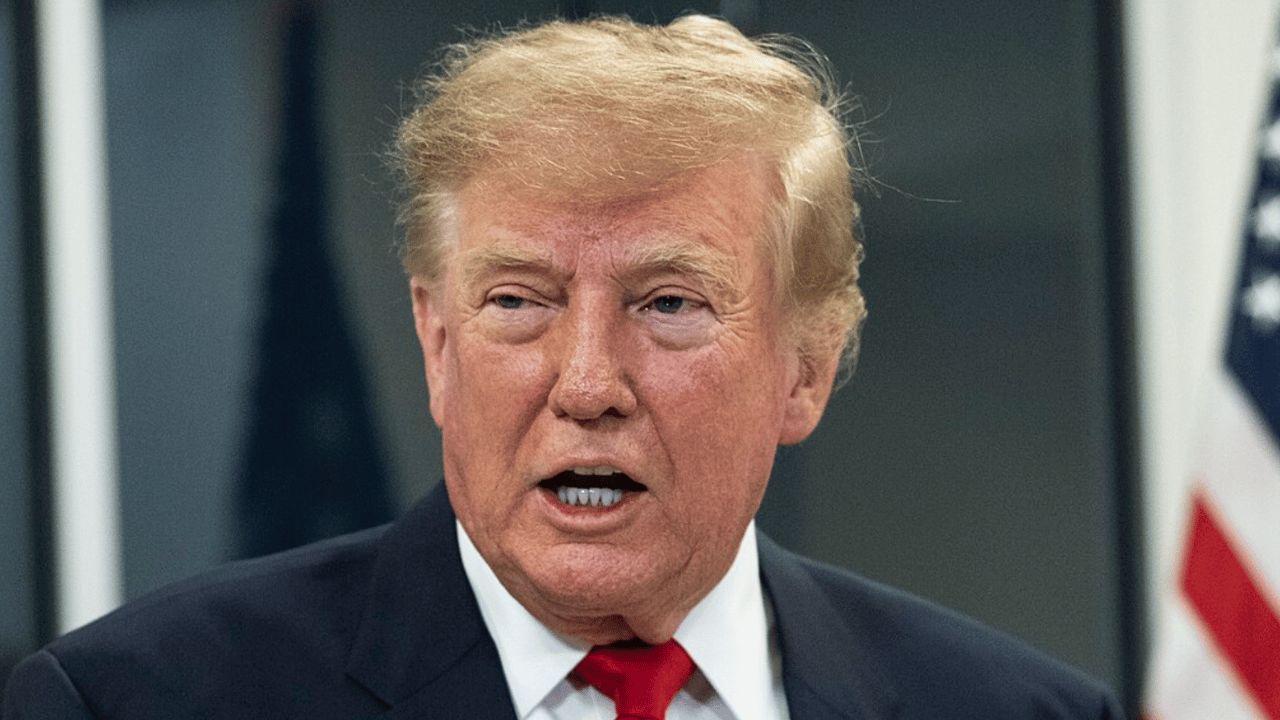
President Donald Trump told a midterm rally in Salina, Kansas, that Canada could become “the 51st state, which is possible,” as he said a Canada trade deal was near and argued that Ottawa charges U.S. farmers steep tariffs and cannot survive without the United States.
In a Nov. 1 speech, his closing midterm stop, Trump said the United States was “not gonna have any tariffs to pay to Canada,” then turned to Canadian duties on U.S. farm products. “But we have, uh, very interesting, so they charged our farmers 400% tariffs. Nobody wants to talk about it,” he said. “So they’re gi- — they’re gonna, they’re gonna end up giving us everything because without us, they can’t actually survive. We don’t want that unless they wanna become the 51st state, which is possible.” He added, “But we’re making a, we’ll make a good deal there. We’re gonna get that settled pretty soon.”
In that passage, “that” follows his claim that Canada will “end up giving us everything” because, he said, it cannot survive without the United States. He presented statehood as something Washington does not want “unless” Canada wants it, while also saying a deal would be settled soon. Immediately afterward he joked about renaming Lake Ontario “Lake America” and the Strait of Hormuz the “Trump Strait,” tying the Canada lines to a broader riff on geographic renaming that also covered the Gulf of America. The farm-tariff claim, the survival claim and the statehood “unless” clause all sat inside that same stretch of the speech, before he returned to Kansas plant announcements and midterm turnout.
Earlier Sunday, after arriving on Air Force One, Trump told reporters the sides have “the concept of a very good deal with Canada.” “I spoke with the prime minister the other day. I spoke to him again yesterday, and we have the concept of a deal that’s gonna be great for our farmers, great for our country, and it’ll be fine for Canada,” he said. He said part of the agreement is that “our farmers will have to pay no tariffs” and that duties had been “as much as 400% for milk products and other things.” In the same gaggle he said Canada would “build the Keystone Pipeline” and “pay for all of it.” Interior Secretary Doug Burgum said Canada exports “over 4 million barrels of oil to the United States” and that keeping that oil flowing matters for American farmers, ranchers and diesel prices.
Earlier the same day, before the Salina speech, Canadian Prime Minister Mark Carney described a “good conversation” with Trump on Canada-U.S. trade and said negotiating teams would work “in the coming weeks” toward a deal that would “fully respect Canada’s languages, culture, and sovereignty.” In his English-language post on X, Carney wrote that the talk built on “constructive discussions on the outlines of a mutually beneficial trade deal that would create jobs for our workers, boost affordability for families.” He posted a matching French version on the same account.
Carney has rejected the 51st-state slogan in prior remarks. Speaking to reporters in Istanbul in late October while answering U.S. election-interference allegations, he said Canada “will never be the 51st state” and “We are going our own way,” the Boston Globe reported. In June, asked about another Trump “51st state” social-media post, Carney told reporters in Montreal that Ottawa would not “respond or react to everything that he posts.”
The trade backdrop remains Section 338 and Section 232 tariffs. A White House October fact sheet said Trump signed a proclamation further modifying tariffs on certain Canadian products after Canada “walked away from a near-final trade deal” over the summer and imposed retaliatory tariffs on about $20 billion of U.S. exports. The fact sheet said the Section 338 tariffs apply regardless of USMCA origin and apply in addition to Section 232 duties, with product changes taking effect Oct. 30. Canadian retaliatory lists from the summer covered consumer and industrial goods; the White House fact sheet cast the October Section 338 changes as a response to Ottawa walking away from a near-final text and to those retaliatory duties.
In the same Salina speech, Trump cited Kansas-bound investment he tied to tariff pressure, including Merck’s nearly $1 billion De Soto expansion, Bombardier’s $270 million across Indiana, Texas and Kansas, and Boeing’s $1 billion in Wichita, according to the Factba transcript. He said tariffs are drawing plants back because companies “don’t wanna pay tariffs,” then pivoted into the Canada farm-tariff and statehood passage. Carney’s Sunday outline put jobs, affordability and sovereignty first; Trump’s Salina and gaggle remarks put farm tariff relief, Keystone paid by Canada, and a near-term settlement first.
Trump’s claims that Canada faces 400% farm tariffs, cannot survive without the United States, and might become the 51st state are his words from the Salina stage and the earlier gaggle. Carney’s Sunday post records a “good conversation,” a coming-weeks work plan, and a requirement that any deal respect Canada’s languages, culture and sovereignty. His Istanbul line that Canada “will never be the 51st state” is his prior rejection of annexation talk. White House Section 338 materials document the tariff measures still in force. Whether the coming weeks produce a signed agreement, and on what terms, remains unsettled in the public statements from Ottawa and Washington.