
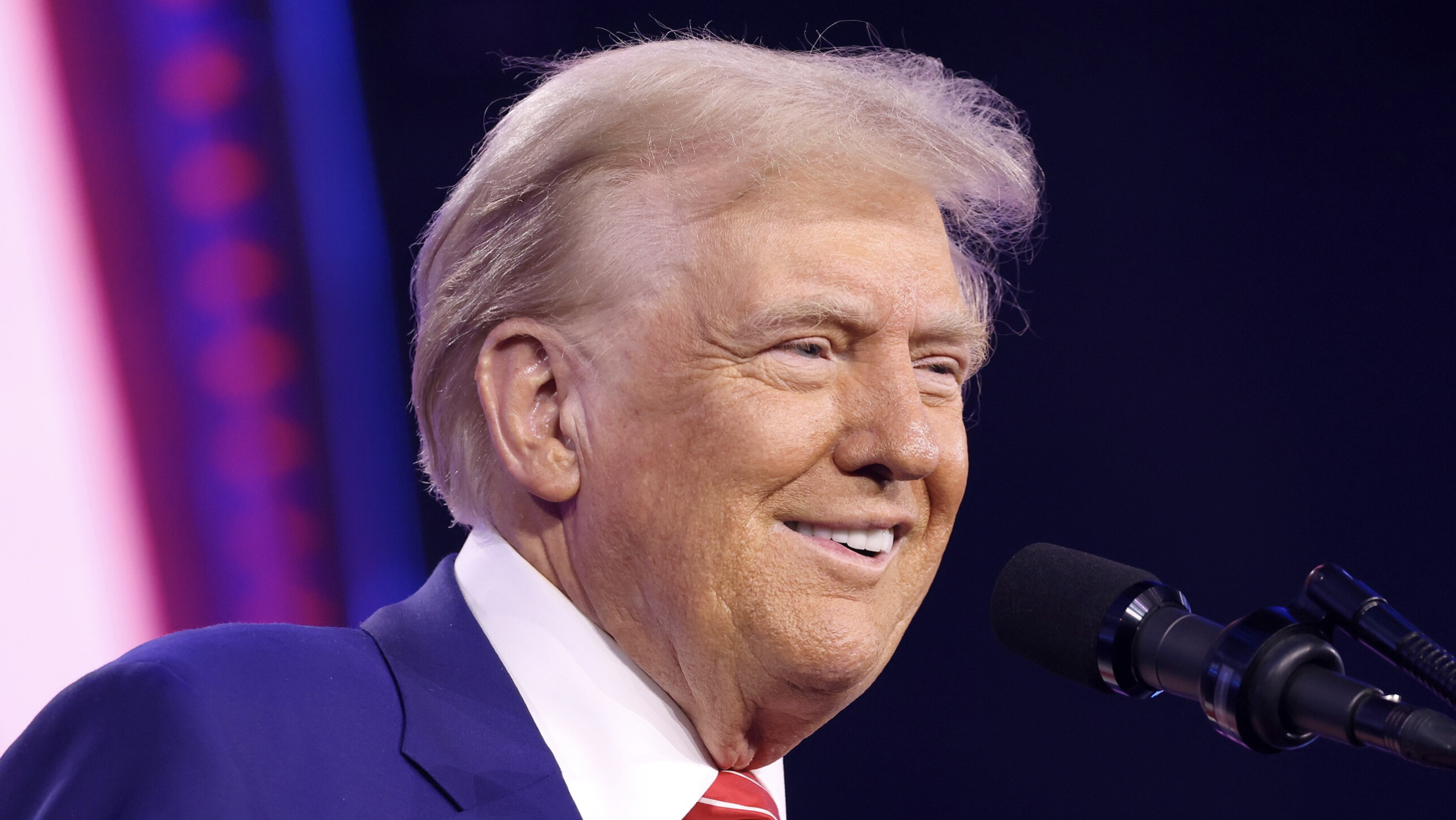
President Donald Trump pulled back the curtain on an American intelligence operation Friday night, revealing that U.S. sources had been secretly monitoring the movements of ISIS’s second-in-command for months before a joint U.S.-Nigerian strike killed him. Trump made the announcement in a Truth Social post on May 15, 2026, disclosing not just the death of the terrorist leader but the covert surveillance effort that made his elimination possible.
“Tonight, at my direction, brave American forces and the Armed Forces of Nigeria flawlessly executed a meticulously planned and very complex mission to eliminate the most active terrorist in the world from the battlefield,” Trump wrote. “Abu-Bilal al-Minuki, second in command of ISIS globally, thought he could hide in Africa, but little did he know we had sources who kept us informed on what he was doing. He will no longer terrorize the people of Africa, or help plan operations to target Americans. With his removal, ISIS’s global operation is greatly diminished. Thank you to the Government of Nigeria for your partnership on this operation. GOD BLESS AMERICA!”
The post amounted to a rare public acknowledgment by a sitting U.S. president that American intelligence assets had been actively tracking a high-value terrorist target on African soil — and that the target remained unaware he was being watched until it was too late.
Secretary of War Pete Hegseth followed Trump’s announcement with a post on X Saturday morning, confirming that U.S. Africa Command carried out the operation at Trump’s direction and in conjunction with Nigeria’s president. Hegseth detailed al-Minuki’s specific functions within the ISIS hierarchy, describing him as “the senior ISIS General Directorate of Provinces Emir — the number two for ISIS globally — responsible for overseeing the planning of attacks, directing hostage-taking and managing financial operations.” Hegseth said the operation demonstrated “the exceptional lethality, patience and skill of U.S. forces, amplified alongside willing and capable partners, to address shared threats.”
Hegseth also noted that Trump had in November “declared to the world that we will help protect Christians in Nigeria and instructed the Department of War to prepare for action,” adding that “for months, we hunted this top ISIS leader in Nigeria who was killing Christians, and we killed him — and his entire posse.” The timeline Hegseth described suggests the intelligence tracking operation Trump referenced had been underway for the better part of half a year before Friday’s strike.
Nigerian President Bola Ahmed Tinubu confirmed the details of the operation on Saturday, calling it a “significant example of effective collaboration in the fight against terrorism” and saying early assessments confirmed the death of al-Minuki — also known as Abu-Mainok — along with several of his lieutenants. The Nigerian Army said the strike was carried out in Metele in Borno State in a precision air-land operation beginning at approximately 12:01 a.m. and concluding around 4 a.m., with no casualties or loss of assets on the U.S.-Nigerian side.
Al-Minuki, a Nigerian national, had been designated a “specially designated global terrorist” by the Biden administration in 2023, according to the U.S. Federal Register. The State Department identified him at that time as a senior ISIS official based in the Sahel and a member of the organization’s General Directorate of Provinces — the administrative body responsible for providing financial and operational direction to ISIS affiliates around the world. Al-Minuki was born in Borno State, Nigeria, in 1982, according to the Office of Foreign Assets Control.
The Lake Chad Basin, where al-Minuki was killed, has long served as the operational heartland of ISIS’s West Africa branch. The group — one of ISIS’s largest and most lethal affiliates — controls broad swaths of territory and has killed or displaced thousands in Nigeria and neighboring countries, operating primarily in northeastern Nigeria and throughout the Lake Chad region bordering Cameroon, Chad, and Niger. Borno State in particular has endured insurgent violence for 17 years, with the conflict killing thousands and displacing some 2 million people.
The Islamic State has been aggressively expanding its African footprint, with over two-thirds of its global activity in the first half of 2025 recorded on the continent. ISWAP has grown increasingly sophisticated, focusing on complex attacks against Nigerian military bases in the northeastern states of Borno and Yobe using IEDs and coordinated ground operations. The group has also begun deploying weaponized drones, marking a significant escalation in its capabilities in the region.
Friday’s operation was not the first recent U.S. military engagement against ISIS in Nigeria. American forces carried out strikes targeting Islamic State-linked militants there in December, and Washington has since deployed drones and 200 troops to provide training and intelligence support to the Nigerian military as jihadist insurgencies continue spreading across West Africa.
Trump’s decision to publicly detail the intelligence dimensions of the mission — specifically that American sources had eyes on al-Minuki while he remained unaware — marked a notable departure from the more guarded language typically used when discussing covert surveillance activities. The disclosure underscored the administration’s intent to project both the reach of American intelligence capabilities and the consequences awaiting those the U.S. has placed in its sights, regardless of where in the world they attempt to operate.