
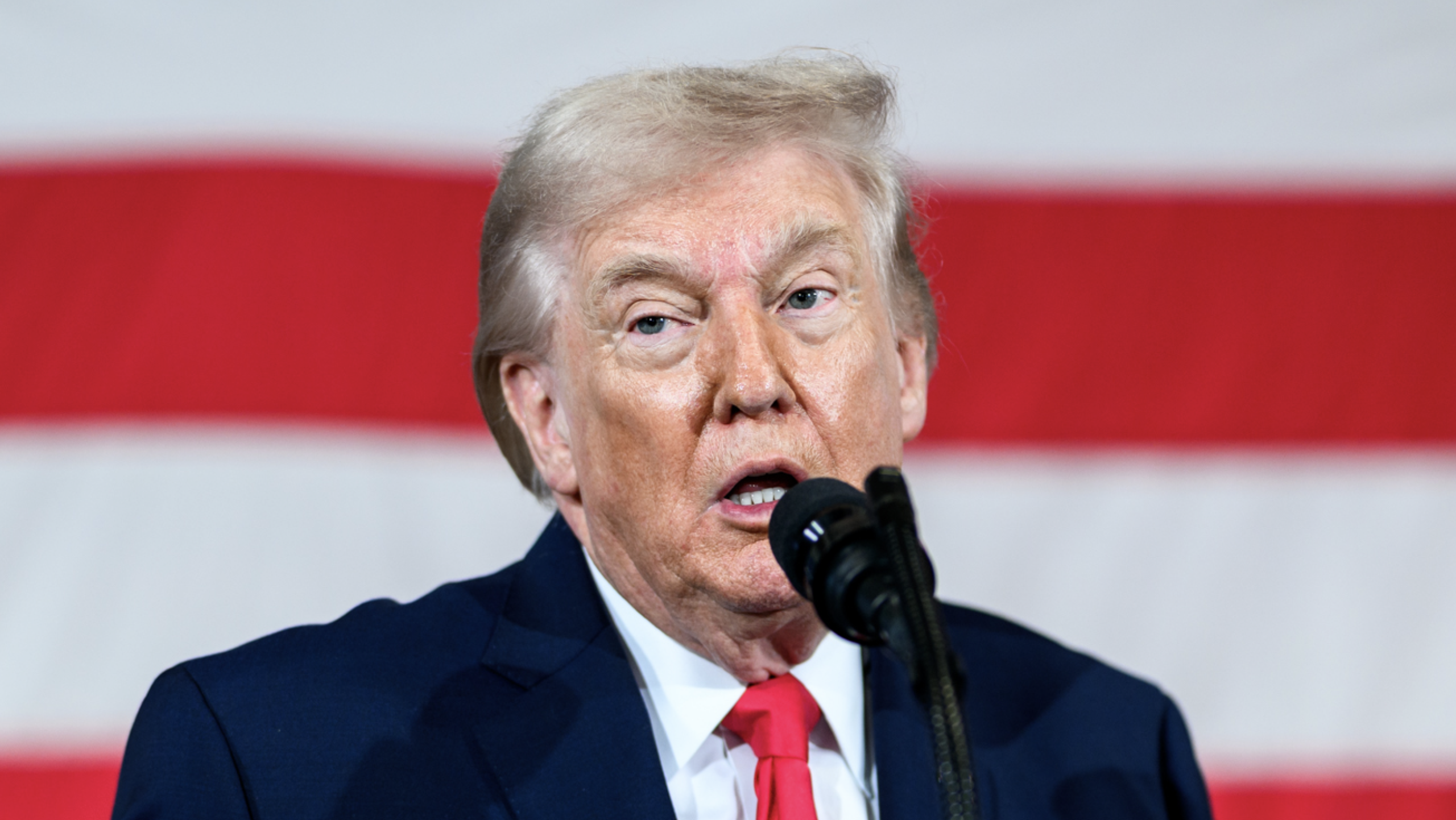
President Donald Trump declared Monday that the month-old ceasefire with Iran has just a “one percent chance of living” after he refused to finish reading what he called a “piece of garbage” peace proposal from Tehran — a stark public signal that the fragile truce is on the verge of collapse and that a return to full-scale hostilities may be imminent.
“It’s unbelievably weak, I would say,” Trump told reporters at a White House event Monday. “After reading that piece of garbage they sent us. I didn’t even finish reading it. I said, ‘I’m not gonna waste my time reading it.’ I would say the ceasefire is on massive life support, where the doctor walks in and says, ‘Sir, your loved one has approximately a one percent chance of living.'”
What Iran Sent — and What the U.S. Demanded
The exchange that brought the ceasefire to its current precipice centers on Iran’s nuclear program — specifically its stockpile of 440 kilograms of uranium enriched to 60 percent, which the U.S. wants Tehran to surrender and which Iran refuses to give up unconditionally. Under the latest U.S. 14-point peace proposal, Iran would be required to halt all uranium enrichment for at least 12 years, hand over its entire enriched uranium stockpile, and dismantle its enrichment sites. In return, the U.S. would gradually lift sanctions, release billions in frozen Iranian assets, and open the Strait of Hormuz within 30 days.
Iran’s counter — submitted to U.S. negotiators late last week and received by Trump on Sunday — fell well short of those terms. Tehran proposed having some of its highly enriched uranium diluted and the rest transferred to a third country, with a provision requiring its return if the U.S. exits any eventual deal, the Wall Street Journal reported. Iran also proposed agreeing to suspend enrichment for a shorter period than the 20-year moratorium the U.S. sought — and explicitly rejected the demand to dismantle enrichment facilities. Iran’s Foreign Ministry said Tehran asked only for “legitimate rights” and made no “concessions,” while framing Washington’s demands as a call for “surrender.”
Trump Says Iran Agreed — Then Took It Back
Trump offered a specific and pointed explanation for his rejection of Iran’s proposal: he said Tehran had verbally agreed to allow the U.S. to extract its highly enriched uranium, then reversed course when it came to putting it in writing. “They changed their mind because they didn’t put it in the paper,” Trump told reporters. “We get that, they guarantee no nuclear weapons for a very long period of time and a couple of other minor things, but they just can’t get there. So they agree with us, and then they take it back.” Iran has not publicly acknowledged agreeing to surrender its uranium and has consistently maintained that its nuclear program is peaceful and non-negotiable. The Iranian parliament’s speaker on national security, Ebrahim Rezaei, dismissed the U.S. proposal as a “wish list,” writing: “Americans will not obtain through a failed war what they failed to gain in face-to-face negotiations.”
The Ceasefire’s Fragile History
Monday’s collapse in diplomatic confidence was the latest and most severe episode in what has been a ceasefire in name only. The truce began on April 8, 48 hours after Trump threatened to wipe out Iran’s “whole civilization” if a deal wasn’t struck by his self-imposed deadline. It was originally designed to last two weeks — Trump unilaterally extended it on April 21. From its first days, both sides accused each other of violating its terms: the U.S. maintained its naval blockade of Iranian ports throughout the ceasefire, and Iran continued intercepting tankers transiting the Gulf. U.S. forces struck two Iranian tankers on Friday for attempting to breach the blockade. “I don’t like it — TOTALLY UNACCEPTABLE!” Trump posted on Truth Social on Sunday, his first reaction to Iran’s proposal, before delivering the “massive life support” assessment in person on Monday.
Iran’s Position — “We Will Never Bow”
Tehran’s public posture ahead of and following the proposal submission left little room for optimism. Iranian President Masoud Pezeshkian said Sunday — before Trump had even formally rejected the proposal — that Iran would “never bow down to the enemy” and that “if talk of dialogue or negotiation arises, it does not mean surrender or retreat.” The speaker of Iran’s parliament said Monday that Iran’s armed forces stood “ready to respond and to teach a lesson for any aggression.” Iran’s Foreign Ministry said Monday it asked only for the country’s “legitimate rights” and made no “concessions” in its response. The fundamental gap between the two sides — the U.S. demanding zero enrichment and full uranium surrender, Iran insisting on its “inalienable right” to enrich — has persisted since negotiations began and has not narrowed.
Israel’s Position — The War Is Not Over
Israeli Prime Minister Benjamin Netanyahu added a further complication Monday in a CBS News 60 Minutes interview, saying the war was not over because there was “more work to be done.” Iran had neither surrendered its enriched uranium nor dismantled enrichment sites, and continues to support regional proxies and advance its ballistic missile program. “We’ve degraded a lot of it. But all that is still there, and there’s work to be done,” Netanyahu said. Israel’s position — that the war’s military objectives remain unfinished regardless of any ceasefire — creates a potential second vector for the conflict to resume even if U.S.-Iran talks were to produce a breakthrough, as Israeli military planners retain the option of independent strikes on Iranian nuclear facilities.
The China Factor — Trump Heads to Beijing
Trump is expected to travel to China later this week for direct talks with President Xi Jinping — a trip the White House has said will include a push for Beijing to use its economic leverage over Tehran to pressure Iran into a more acceptable deal. Iran is China’s largest oil supplier, and Chinese “teapot” refineries have been the primary buyers of discounted Iranian crude throughout the war, providing Tehran with a revenue lifeline that partially offsets the impact of U.S. sanctions. Whether China is willing to apply meaningful pressure on Iran — its most important regional partner — in exchange for whatever Trump is offering at the summit is the central diplomatic question that the coming week will answer.
Markets React — Brent Back Above $100
Financial markets responded immediately to Trump’s “massive life support” declaration. Brent crude surged back above $100 per barrel in early Asian trading Monday — reversing several days of cautious optimism that had brought prices down from their April peak of nearly $128. West Texas Intermediate also pushed back toward $100. The 2,000 ships still stranded in the Persian Gulf, the estimated 13 million barrels per day of oil still not flowing through the Strait of Hormuz, and the prospect of resumed hostilities all contributed to the market reaction. The IEA has described the Hormuz closure as the largest supply disruption in the history of the global oil market. If the ceasefire collapses entirely and military operations resume at the intensity of March and early April, analysts have warned that the $128 April peak may prove to be a floor rather than a ceiling.
Trump ended Monday’s remarks with a message aimed at Iranian hardliners blocking a deal. “Only stupid people — or people that have a death wish — would stand in the way of what I’m offering,” he said, according to Fox News. He added that he still believed a deal was possible, that the moderates in Iran understood the stakes, and that he would use the Beijing summit to apply additional pressure. Whether the ceasefire survives the week — let alone long enough for a Beijing-brokered breakthrough — is now the central question of the Iran war’s eleventh week.