
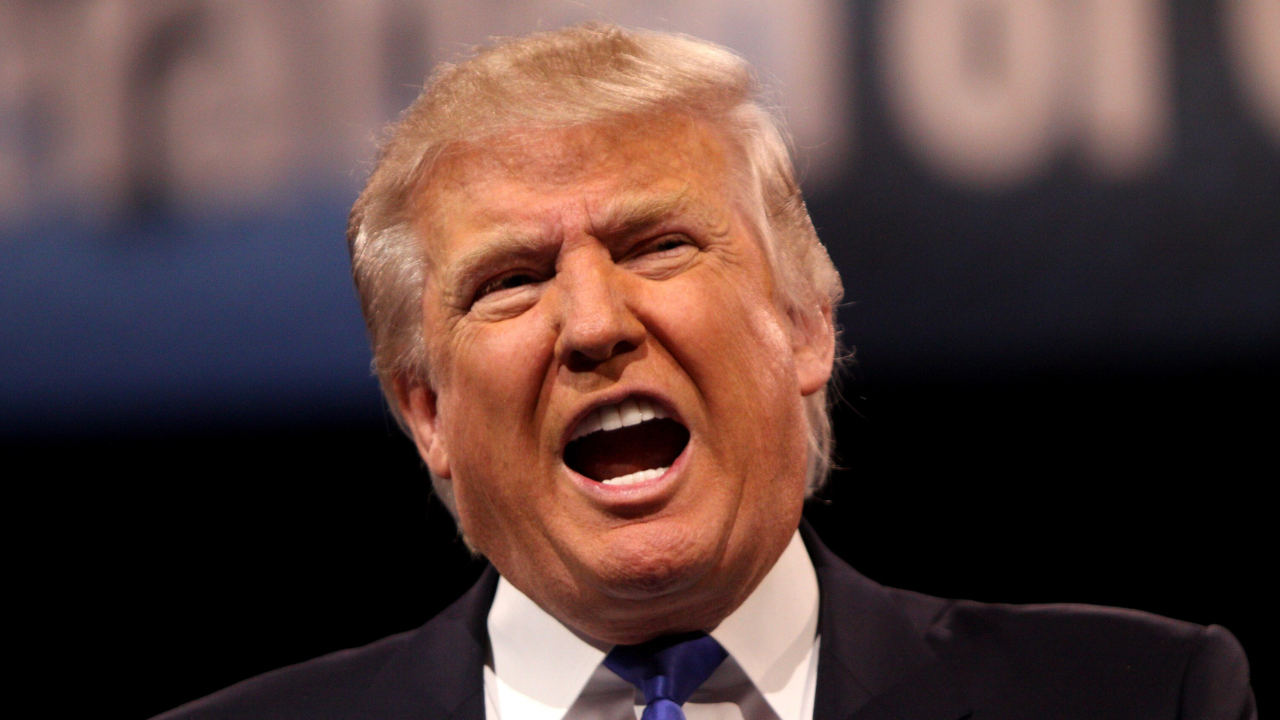
President Donald Trump lashed out at a federal appeals court on Friday, calling its decision to halt construction on his $400 million White House ballroom a “National Security Threat” and a “National Disgrace,” and insisting that no president has ever needed congressional permission to alter the executive mansion. The post, published on Truth Social at 5:55 p.m. on August 7, came just hours after a divided panel of the U.S. Court of Appeals for the District of Columbia Circuit ruled that the sweeping construction project likely required approval from Congress, an approval the administration never sought.
Trump opened his post by targeting the two judges who formed the majority in the 2-1 ruling, noting that one was appointed by former President Barack Obama and the other by former President Joe Biden. He characterized the ballroom, along with an underground complex and a rooftop droneport, as a “desperately needed SECURE Ballroom/Military Complex,” rejecting the court’s central finding that presidents occupy the White House only temporarily.
“We are not tenants, who pay rent and do all other things that a tenant must do, we are PRESIDENTS, elected by the people of the United States of America,” Trump wrote, arguing that the office itself carries the authority to “fix, renovate, secure, protect, and beautify” the White House grounds without congressional sign-off.
The president went on to argue that the mansion has been altered repeatedly since it was first built in 1792, framing the historical record of renovations as precedent for his own project. He wrote that the building has been “built and rebuilt, renovated and rerenovated, repaired and, simply, MADE BETTER, many times” over the centuries, and that none of those changes required “the permission of Congress, or anyone else.” He closed the post by calling the appeals court’s ruling “a National Security Threat at the highest level” and “a National Disgrace,” signing off with his standard “MAKE AMERICA GREAT AGAIN!” line.
The Ruling That Prompted the Outburst
The post came in direct response to a ruling handed down earlier that day by a three-judge panel of the D.C. Circuit, which voted 2-1 to uphold a lower court’s injunction blocking above-ground construction on the ballroom while permitting underground work, including a security bunker, to continue. The majority opinion, written by Circuit Judges Patricia Millett and Bradley Garcia, rejected the administration’s claim that the president could unilaterally reshape the historic building, writing that a sitting president is merely a temporary occupant of the property rather than its owner, with no independent constitutional authority over it.
The panel was blunt in describing how unusual the administration’s approach had been, noting it was aware of no instance in American history in which a president had unilaterally used privately raised funds to demolish substantial portions of a White House structure that Congress had authorized and taxpayers had paid for — until now.
The court also rejected the administration’s argument that national security concerns should shield the project from judicial review, finding that the decision of whether to build the ballroom belongs to Congress and is not something the executive branch can resolve on its own. The ruling stayed itself for 14 days, giving the administration a window to seek emergency relief from the Supreme Court before the injunction takes full effect.
Trump Reframes the Project as a “Military Center”
In his broader public response to the ruling, Trump went beyond the Truth Social post excerpted above to recast the ballroom as a matter of national defense rather than a ceremonial addition. He described the project as a “military center” in comments blaming the ruling on “liberal activist judges,” arguing that its security features would protect future presidents and guests from potential attacks on the White House. He specifically said the military and Secret Service view the ruling as a national security threat, since the complex is intended for the protection of the country and future occupants of the office.
That framing echoes arguments the Justice Department made throughout the litigation. Trump has claimed the ruling jeopardizes the safety of people who work at the White House, tying the halted above-ground work to construction of the underground bunker that is part of the same complex. Notably, the injunction upheld by the appeals court explicitly allows that underground bunker work to continue, undercutting the premise that the ruling leaves the site’s security infrastructure unfinished.
Background: How the Ballroom Fight Reached the Courts
The dispute traces back to July 2025, when the White House first announced a privately funded ballroom project, initially estimated at $200 million. The price climbed steadily as the design expanded, eventually reaching the current $400 million figure. Demolition of the East Wing, a structure dating to 1902, began in October 2025, days before the National Trust for Historic Preservation filed suit against Trump, the National Park Service, the Interior Department and the General Services Administration. The organization argued that federal law requires review by preservation and planning bodies before any president may fundamentally alter the White House, and that Congress never authorized the ballroom itself. More than 32,000 public comments were submitted on the project to the National Capital Planning Commission, with the overwhelming majority critical of the plan.
U.S. District Judge Richard Leon, a George W. Bush appointee, granted a preliminary injunction in the spring, finding the National Trust likely to succeed on its claim that the project exceeded executive authority. Leon described the president as a steward of the White House for future First Families rather than its owner. The administration’s posture toward the case hardened after an assassination attempt against Trump in late April 2026, when government lawyers asked the court to dissolve the injunction, arguing the incident demonstrated the need for a secure event space.
A Sharp Dissent, and a Reaction From Preservationists
Not every judge on the panel agreed with the majority. Circuit Judge Neomi Rao, appointed by Trump during his first term, dissented, arguing that the courts had improperly inserted themselves into supervising day-to-day construction decisions at the White House and sided with the administration’s view that the project fell within executive discretion.
The National Trust for Historic Preservation, which brought the original lawsuit, celebrated the ruling as a win for public input into decisions affecting the nation’s historic landmarks. Brent Leggs, the organization’s president, called it a victory for the public’s right to weigh in on the historic places they value, including the White House.
What Comes Next
Trump wrote that his administration would immediately appeal to the Supreme Court, setting up a high-stakes constitutional fight over the limits of presidential authority to remake federal property. The 14-day stay built into Friday’s ruling gives the administration a narrow window to file that emergency appeal before the injunction fully takes hold, though the underlying legal question — whether a sitting president can bypass Congress to fund and construct a permanent addition to the White House — is likely to take considerably longer to resolve.
The ballroom fight is not the only clash between the administration and the courts over Washington’s built landscape. A federal judge separately ruled that Trump’s name was illegally added to the exterior of the Kennedy Center for the Performing Arts and ordered its removal, part of a broader pattern of legal challenges to the administration’s efforts to reshape the capital’s most prominent government buildings and monuments.
For now, construction on the ballroom’s underground components continues even as its above-ground steel skeleton sits frozen above the cleared foundation of the East Wing, with the project’s fate resting on how quickly, and how favorably, the Supreme Court is willing to act.