
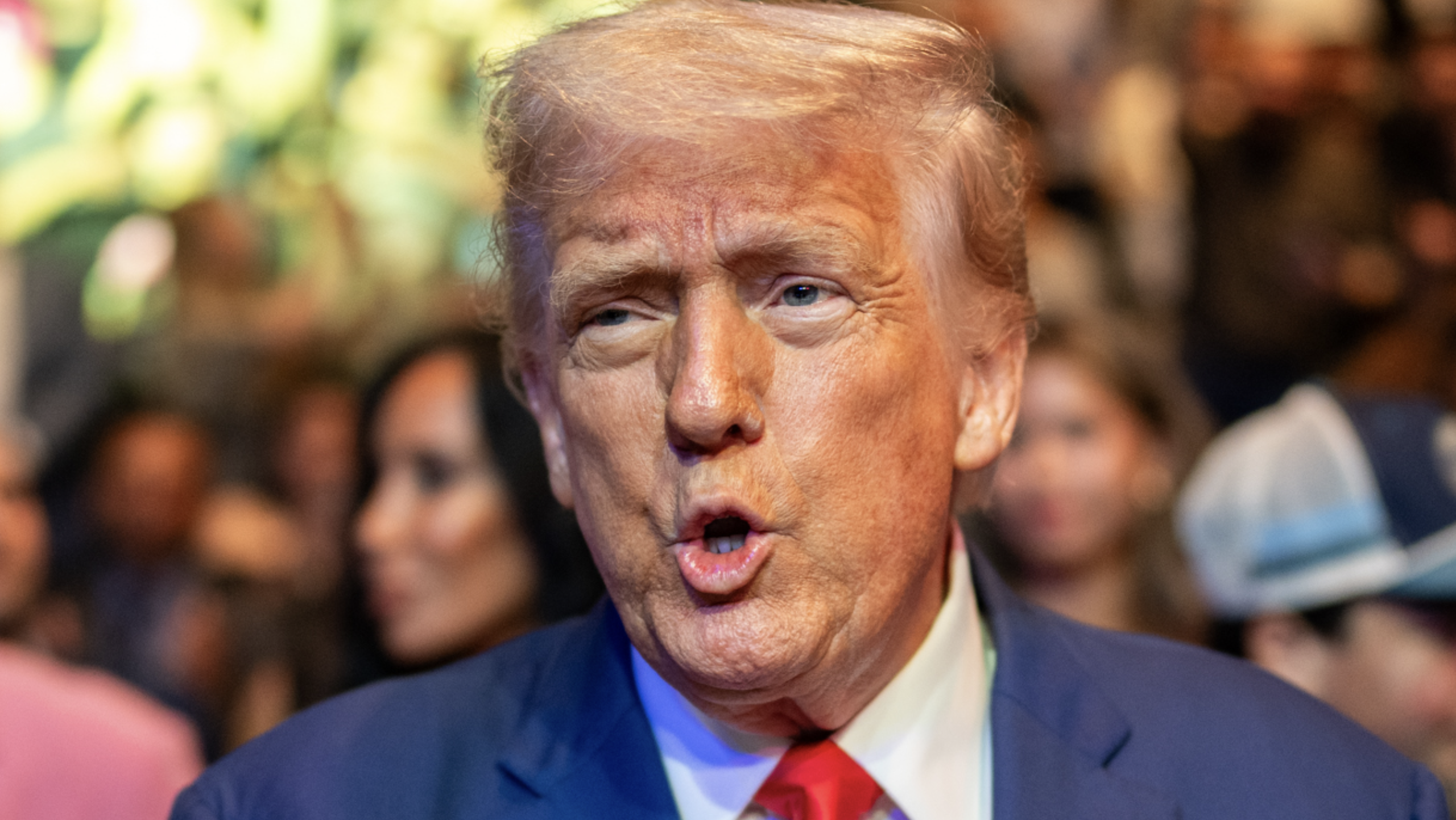
President Trump directed the Department of Justice to investigate major oil companies on June 23, 2026, accusing them of failing to lower gas prices in step with falling crude oil costs. “The big Oil Companies are not dropping their price at the pump commensurate with the sharply lower prices they are paying for Oil,” Trump wrote on Truth Social. “Those prices are dropping like a rock! In other words, customers are being ‘gouged.’ I have instructed the DOJ to immediately start looking into this. Gasoline prices better start going down a lot faster than what I’m seeing!”
The Military Conflict Behind the Price Spike
The price dynamics behind Trump’s complaint trace directly back to the nearly four-month military conflict between the U.S. and Iran. Fighting began February 28, 2026, when the U.S. and Israel launched strikes on Iranian nuclear, missile, and military targets in an operation that triggered Iranian retaliation, a U.S. naval blockade of Iranian ports, and a near-total closure of the Strait of Hormuz, the narrow waterway through which roughly a fifth of the world’s oil supply transits. The International Energy Agency described the resulting disruption as among the largest supply shocks in the history of the global oil market, and the conflict only formally concluded with a 14-point memorandum of understanding signed by Trump and Iranian President Masoud Pezeshkian in mid-June, which called for the U.S. to lift its naval blockade and for Iran to facilitate the reopening of the strait.
The Gap Between Crude and Pump Prices
Trump’s complaint reflects a real, well-documented lag between wholesale crude prices and what drivers pay at the pump, though the U.S. Energy Information Administration’s own data suggests the dynamics are more complicated than a simple failure to pass along savings. According to the EIA’s most recent Short-Term Energy Outlook, the agency assumed the Strait of Hormuz would remain effectively closed to most shipping in the near term following the outbreak of conflict between the U.S. and Iran in February, with full shipping traffic not expected to return to pre-conflict levels until early 2027. The EIA’s outlook noted that disrupted Middle East oil production, reduced by more than 11 million barrels per day in May compared with pre-conflict levels, had forced large draws on global oil inventories to meet demand even as crude prices began easing.
How Much of the Retail Price Crude Actually Represents
The EIA’s own data on gasoline price composition complicates the idea that pump prices should track crude prices one-to-one or instantaneously. According to EIA analysis, retail gasoline prices reflect not only the cost of crude oil but also refining costs and profit margins, distribution and marketing costs, and federal and state taxes, with federal gasoline taxes totaling 18.4 cents per gallon and state taxes and fees averaging about 33.5 cents per gallon as of January 2026. The EIA tracks refining profitability using what is known as the “crack spread,” the difference between the price refiners pay for crude and the price they receive for the gasoline and diesel they produce from it, which the agency describes as an indicator of short-term refinery profit margins.
Industry Warnings About Inventory, Not Excess Profit
Oil industry executives have offered a different explanation for elevated prices than the price-gouging framing in Trump’s post, pointing instead to dangerously low fuel inventories built up during the conflict. American Petroleum Institute CEO Mike Sommers told Fox Business earlier in June that the industry was “sounding the alarm on these inventories going to record lows,” warning that commercial and government reserves which had supplemented consumption throughout the war could be drawn down within weeks. “We have to solve this problem in the Strait of Hormuz,” Sommers said.
How Much Prices Have Actually Moved
Gasoline price tracking firm GasBuddy has published data showing only modest week-to-week movement in pump prices even as crude prices have fluctuated more sharply. GasBuddy petroleum analyst Patrick De Haan told CBS News that even under the most optimistic scenario for resolving the underlying conflict, it would be “a very long, multi-month to multi-year process for things to fully normalize,” with pre-war fuel prices unlikely to return until “potentially mid-to-late 2027.” University of Houston energy economist Ed Hirs offered a similarly cautious timeline to Texas Public Radio, saying that even with a lasting peace, “it would probably be eight months before we could see production and throughput from the strait restored and inventories restored, so that we could get back to a prewar equilibrium.”
State-Level Price Tracking
California’s state government has published its own detailed accounting of how much the conflict has cost drivers. According to data published by the Office of the Governor of California, retail gas prices rose by $1.10 per gallon in California between February 28 and June 15, 2026, almost exactly in line with the national average increase of $1.08 per gallon over the same period. The state noted that California’s increase ranked 32nd among U.S. states and the District of Columbia, with Utah recording the largest increase at $1.53 per gallon. California maintains its own petroleum market oversight under a state gas price gouging and transparency law, which the governor’s office said provides the state earlier visibility into supply conditions than is available to most other states.
The California governor’s office also cited financial analysts forecasting continued strain on household budgets from energy costs more broadly. Goldman Sachs has projected that higher energy prices would “erode” consumer spending power through the remainder of 2026, with the effect expected to hit lower-income households hardest, since those households spend a comparatively larger share of their budgets on food and energy costs.
The Strait’s Fragile Reopening
The reopening of the Strait of Hormuz that underpins Trump’s expectation of falling gas prices has itself been contested on military and security grounds in the days surrounding his gouging accusation. Iran threatened over the weekend before Trump’s post to close the strait again, citing what it described as Israeli violations of the broader regional ceasefire in Lebanon, even though U.S. Central Command maintained that vessel traffic through the waterway continued. U.S. officials have said that mines and other hazards left over from the conflict could still complicate safe passage even as the strait nominally reopens, meaning the military and security situation in the strait, not solely refiner behavior, remains a live variable in how quickly oil supply — and by extension pump prices — can fully normalize.
Trump’s Recent Statements on Oil Flows
Trump’s gouging accusation followed a string of optimistic posts about falling crude prices and rising flows through the Strait of Hormuz in the days prior. On June 23, Trump wrote that “19 Million Barrels of Oil flowed out of the Hormuz Strait yesterday, an all time RECORD,” adding that “Oil prices are tumbling down, and the World is a much safer place.” Earlier in the month, following the announcement of the U.S.-Iran memorandum of understanding, Trump wrote that “OIL IS FLOWING… THE STOCK MARKETS ARE ROARING, JOBS ARE AT RECORDS, AND PRICES ARE DROPPING,” framing falling energy costs as a direct benefit of the agreement.
The EIA’s most recent outlook offers a more measured account of the strait’s reopening than Trump’s social media posts. The agency’s forecast assumes shipments through the strait would resume more fully in the third quarter of 2026, but cautioned that it would likely take several months to ramp shipping back up to pre-conflict traffic levels, which the agency does not expect to occur until early 2027.
What Federal Investigation Would Actually Involve
Trump’s directive to the Justice Department did not specify the legal basis or scope of any investigation. Federal price-gouging enforcement of the kind Trump’s post describes is not a clearly defined area of existing federal law in the way state gouging statutes, such as California’s, are; antitrust enforcement against price collusion among oil companies would more typically fall under the Justice Department’s Antitrust Division or the Federal Trade Commission, both of which assess whether companies are coordinating prices unlawfully rather than whether prices are simply high. As of Trump’s post, neither the Justice Department nor the Federal Trade Commission had publicly announced the launch of a specific investigation in response to his directive.
The dynamic Trump described, retail prices declining more slowly than crude costs, is a pattern that has recurred during past periods of oil price volatility under multiple administrations, and is one the EIA’s own published data attributes in significant part to the time lag inherent in how refiners purchase crude weeks before processing and distributing it as finished gasoline, rather than necessarily reflecting deliberate withholding of price relief by individual companies.
Neither the major oil companies referenced in Trump’s post nor industry trade groups such as the American Petroleum Institute had issued a public response to the gouging accusation as of publication.