
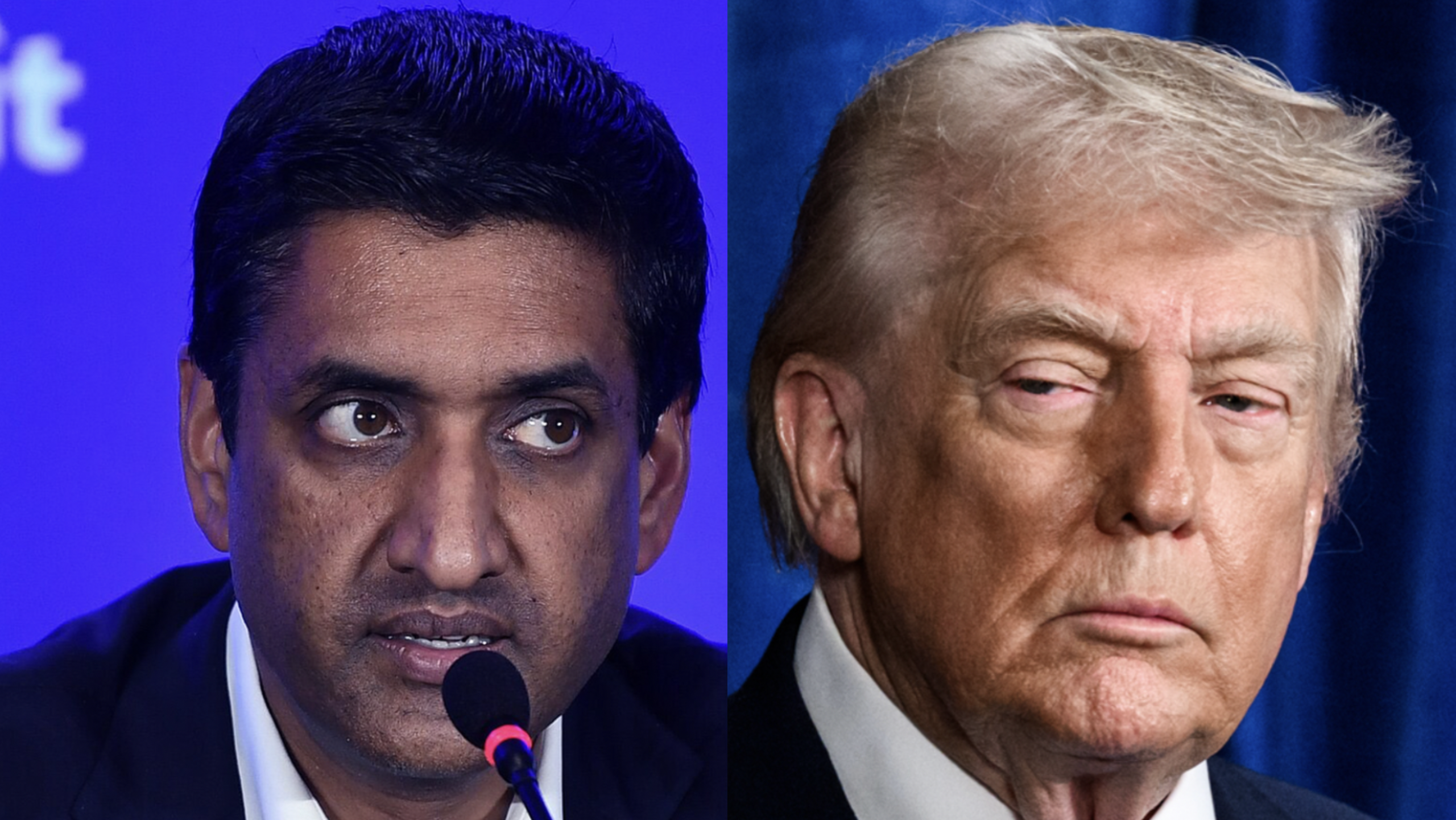
Rep. Ro Khanna (D-Calif.) on Saturday issued a direct legal threat against President Donald Trump after the United States launched a new round of airstrikes against Iran, accusing the administration of openly defying the War Powers Resolution and warning that Congress would haul the president into federal court if the strikes did not stop — even as the ceasefire between Washington and Tehran appeared to be unraveling in real time.
New Strikes Prompt Immediate Condemnation from Khanna
Khanna posted his warning on Saturday, June 27, 2026, after reports emerged — flagged by Fox News footage marked “unclassified” — that U.S. military aircraft were conducting a new wave of strikes inside Iran. The California Democrat wasted little time in responding.
“These strikes are a blatant violation of the War Powers Resolution that we passed,” Khanna wrote on X. “Trump must stop this war now — or we will take him to court to compel him to do so.”
The post came in response to a report: “Fox reporting the US is carrying out a new round of air strikes against Iran right now: This seems to be escalating and throwing into question whether this ceasefire is going to hold.”
Trump Defends Strikes, Warns Iran of Total Destruction
Shortly after the strikes began, President Trump confirmed the military action in a post on Truth Social on Saturday evening, defending the strikes as a direct response to Iranian ceasefire violations and issuing a stark warning to Tehran.
“United States aircraft just struck Iranian missile and drone storage locations, and coastal radar sites, for violating the Cease Fire Agreement, AGAIN!” Trump wrote. “It is very possible that they will never learn! There may come a point when we are no longer able to be reasonable, and will be forced to militarily complete the job that we very successfully started. If that happens, the Islamic Republic of Iran will no longer exist! President DJT”
CENTCOM Details the Strike — and What Triggered It
U.S. Central Command confirmed the military action in a public release issued from its Tampa, Florida headquarters. According to CENTCOM, after the previous day’s U.S. strikes in response to an Iranian attack on the commercial vessel M/V Ever Lovely, Iran was given an opportunity to honor the ceasefire but elected not to — instead launching a one-way attack drone that struck the Panama-flagged tanker M/T Kiku at 4:30 a.m. ET. The vessel was transiting near the Strait of Hormuz carrying more than two million barrels of crude oil.
In response, CENTCOM said its forces targeted Iranian military surveillance infrastructure, communication systems, air defense sites, drone storage facilities, and minelayer capabilities. “Commercial vessel transits through the Strait of Hormuz continue,” the release stated. “U.S. forces remain vigilant, lethal, and ready.”
A Legal Clash Months in the Making
Khanna’s threat sets up a potential legal clash over the scope of presidential war powers — an area where courts have historically been reluctant to intervene in disputes between the executive and legislative branches. But the confrontation did not materialize overnight. Khanna has been one of the most vocal critics of the Iran conflict since before the first bombs fell.
In February 2026, Khanna joined Republican Rep. Thomas Massie of Kentucky in announcing plans to introduce and force a vote on a war powers resolution that would block military action against Iran without congressional authorization. “Like the votes before the Iraq war, this could be one of the most consequential votes in the history of Congress,” Khanna said at the time. “Are we going to stop another endless dumb foreign war? Or will the neoconservatives mislead us once again?”
Khanna described a war with Iran as potentially catastrophic, noting that Iran is a complex society of 90 million people with significant air defenses and military capabilities, and warning that U.S. troops in the region could be at risk of retaliation.
“Illegal, Unconstitutional” — Khanna’s Language Since Day One
When airstrikes began in late February 2026, Khanna called the conflict an “illegal, unconstitutional war in Iran” and accused Trump of betraying his fundamental promise to the American people — a promise, Khanna argued, not to get into more overseas wars but instead to build manufacturing, jobs, and support the needs of healthcare, childcare, and education for American families.
Writing in an opinion piece in early March 2026, Khanna called on Congress to build a new bipartisan majority, declaring the conflict “illegal and unconstitutional” and urging House Concurrent Resolution 38 as the vehicle to reclaim war powers from what he described as an “out-of-control Executive Branch.”
Brief Ceasefire Support — Then a Reversal
Despite his sustained opposition to the conflict, Khanna broke with many fellow Democrats in April 2026 and voiced support for Trump’s ceasefire deal. In a post on X, Khanna wrote that the ceasefire agreement, which included the opening of the Strait of Hormuz, was “welcome news” and that Democrats should support it. He expressed relief that no more American or civilian lives would be lost and noted that gas and food costs would start coming down for Americans.
At the same time, Khanna did not hold back on the broader verdict of the conflict, writing that the war had been a costly lesson for the United States, that Trump had failed to bring about regime change, and that the terms of the deal appeared no better than what the Obama administration had secured under the JCPOA nearly a decade earlier — at the cost of 14 American service members and billions of dollars.
The Ceasefire Deteriorates
The ceasefire, initially brokered with U.S. and Iranian presidents signing a memorandum of understanding on June 17 to establish a 60-day extension for negotiations, has since been violated by both sides on multiple occasions. By Saturday, June 27, the situation had escalated sharply, with Iran’s attack on a commercial tanker in the Strait of Hormuz triggering the new U.S. military response that Khanna condemned.
As Ranking Member of the House Select Committee on Strategic Competition Between the United States and the Chinese Communist Party, Khanna had also framed the Iran conflict as a strategic liability, arguing that the war — costing taxpayers nearly $1 billion per day and burning through critical munitions — was stretching U.S. armed forces thin and undermining American deterrence against China.
What Comes Next
Khanna’s threat to pursue legal action against Trump faces steep hurdles. The House and Senate have collectively rejected nine war powers measures since early March 2026, and courts have historically declined to insert themselves into disputes between Congress and the executive branch over military action. Even if such a resolution passed both chambers, the president could veto it absent a two-thirds majority.
Still, Khanna’s willingness to invoke litigation as a tool of last resort signals a deepening constitutional confrontation over who holds the authority to wage war — a fight that, as of Saturday night, showed no sign of slowing down alongside the bombs still falling over Iran.