
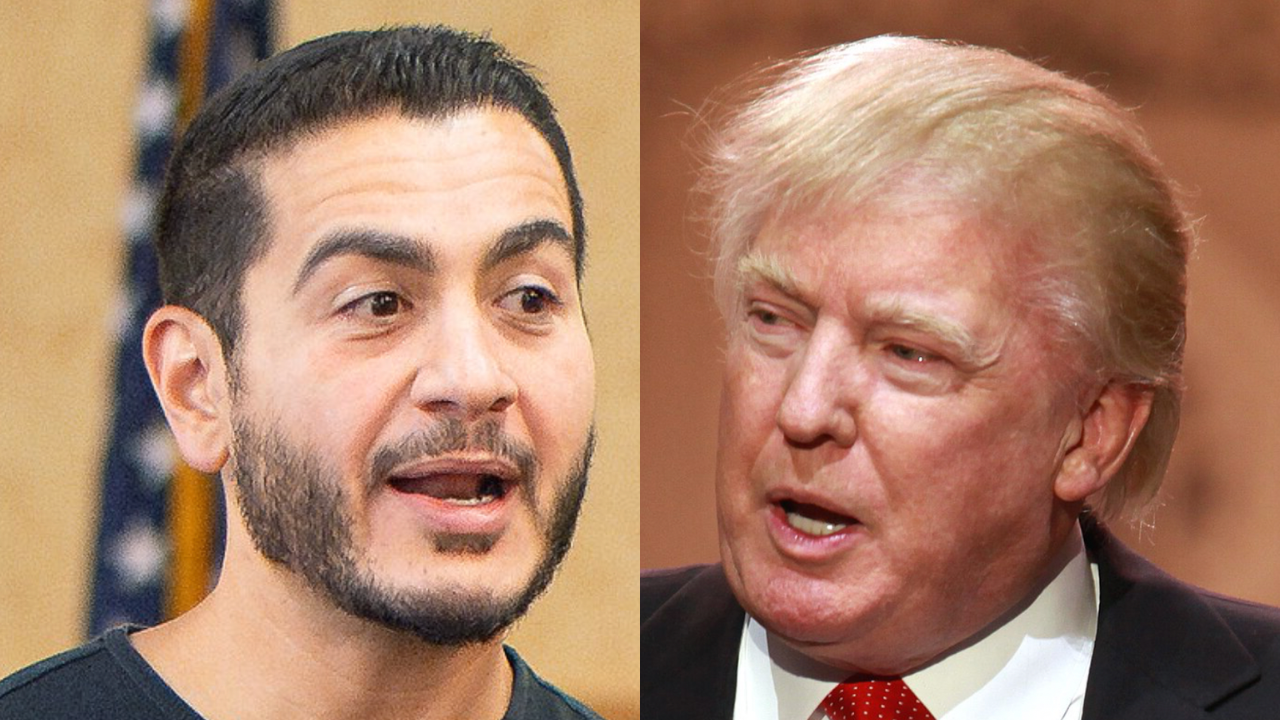
Michigan Democratic Senate nominee Abdul El-Sayed said Sunday that President Donald Trump is not the root cause of dysfunction in American politics but rather a byproduct of a corrupt system that allows corporate money to control elected officials, escalating a message that has become a centerpiece of his campaign against Republican Mike Rogers ahead of the November general election.
El-Sayed posted the remarks to X at 11:15 a.m. on September 27, 2026, writing:
“Donald Trump is not himself the disease of our politics. He’s just the worst symptom.
The disease is the system that allows corporations to buy and sell politicians so they can rig it against the rest of us.
Money out of politics. Money in your pocket. Medicare for All.”
A Recurring Campaign Theme
Sunday’s post was not the first time El-Sayed has used the “disease” and “symptom” framing to describe Trump’s role in what he characterizes as a corrupted political system. At a July 18 campaign rally at the Detroit Opera House featuring Sen. Bernie Sanders and Rep. Alexandria Ocasio-Cortez, El-Sayed told the crowd, “Donald Trump is not, himself, the disease of our politics. He’s just the worst symptom of the disease of our politics,” before naming corporations, billionaires and “special interests like AIPAC” as the forces he says “rig the system against us.”
The candidate repeated a version of the line again at a Dearborn rally last month, telling supporters that “the disease is this system that allows billionaires and corporations and special interests like AIPAC to buy and sell politicians to rig the system against us,” a message he has paired throughout the race with attacks on his rivals’ acceptance of corporate donations.
Campaign Finance as a Core Issue
Money in politics has functioned as a defining fault line of El-Sayed’s Senate campaign since its earliest days. During an August 4 appearance, he said “the real disease is the system that allows big corporations, billionaires, special interest, to buy and sell politicians,” pairing the line with his campaign refrain to “get money out of politics, put money in your pocket, pass Medicare for all.”
That posture was on display earlier in the primary as well. At a Democratic primary forum hosted by the United Auto Workers, El-Sayed and state Sen. Mallory McMorrow both told attendees their campaigns do not accept corporate political action committee donations, contrasting themselves with then-rival Rep. Haley Stevens, whose campaign had accepted funding from corporate PACs tied to Ford, General Motors and Walmart.
The Race for Michigan’s Open Senate Seat
El-Sayed, a physician and former director of Wayne County’s Department of Health, Human and Veteran Services, is the Democratic nominee for the Senate seat being vacated by retiring Sen. Gary Peters. He faces Republican nominee Mike Rogers, a former congressman who lost narrowly to Sen. Elissa Slotkin in Michigan’s 2024 Senate race, in a contest both parties consider pivotal to control of the chamber.
As of Sunday, September 27, prediction market Polymarket showed El-Sayed favored to win the seat, with traders assigning him a 71 percent chance of victory compared with 30 percent for Rogers, reflecting a modest narrowing from the 75 percent figure the market had shown him earlier in the month.
Trump’s Financial Ties Under Scrutiny
El-Sayed’s Sunday post did not name any specific instance of alleged corporate influence over Trump, but it arrived amid sustained scrutiny of the Trump family’s business dealings during his second term. A financial disclosure filed this year showed Trump and his family earned more than $1 billion in the past year through cryptocurrency ventures and other businesses, including more than $500 million from the World Liberty Financial venture co-founded by Trump family members and more than $600 million from sales of a Trump-branded meme coin.
Forbes estimated in March that Trump’s unrealized crypto holdings alone, including World Liberty Financial governance tokens and his meme coin, carried a combined value of roughly $570 million, contributing to an overall fortune the magazine pegged at $6.3 billion — nearly three times his estimated net worth at the start of 2024.
Separately, a Wall Street Journal report disclosed that an Abu Dhabi investment vehicle backed by a senior United Arab Emirates official purchased a 49 percent stake in World Liberty Financial for $500 million just before Trump’s inauguration, a deal that sent an estimated $187 million to entities controlled by the Trump family.
Former White House ethics lawyer Richard Painter has said Trump “stands alone” among executive branch officials in the scale of his financial conflicts of interest, arguing that similar arrangements would constitute violations for any other federal official.
Democrats Escalate Corruption Claims
House Judiciary Committee Democrats released a report this year alleging that the Trump family’s crypto ventures have drawn investment from foreign nationals and state-linked entities seeking favor with the administration, asserting that Trump’s crypto holdings have been valued at as much as $11.6 billion and that the family earned more than $800 million from crypto asset sales in the first half of 2025 alone.
The report further alleged that the administration has intervened to halt or terminate federal investigations involving cryptocurrency firms that made donations or business deals benefiting the Trump family, a claim the White House has denied. A spokesperson for the administration has instead credited the president with positioning the United States as “the crypto capital of the world.”
Background on El-Sayed’s Political Career
El-Sayed, 41, is a Rhodes Scholar who earned a doctorate from Oxford University and a medical degree from Columbia University before serving as Detroit’s health department director following the city’s 2013 bankruptcy. He previously ran for Michigan governor in 2018, finishing second to now-Gov. Gretchen Whitmer in the Democratic primary after securing an endorsement from Sen. Bernie Sanders, before launching a state political action committee focused on grassroots organizing over corporate fundraising.
His anti-corporate-money message has remained consistent across both campaigns. During the 2018 gubernatorial primary, El-Sayed accused Whitmer of “corporate corruption” over a health insurer’s fundraiser held on her behalf, telling reporters at the time, “we don’t know what was said. We don’t know what kind of deals were cut. That’s the kind of corporate corruption we cannot sustain.”
Outlook Ahead of November
With early voting approaching and both parties treating Michigan as a top-tier battleground in the fight for Senate control, El-Sayed’s Sunday statement signals that the “disease versus symptom” framing — and the broader argument that corporate money, rather than Trump personally, is driving dysfunction in Washington — will remain a central plank of his closing message to voters through Election Day on November 3.