
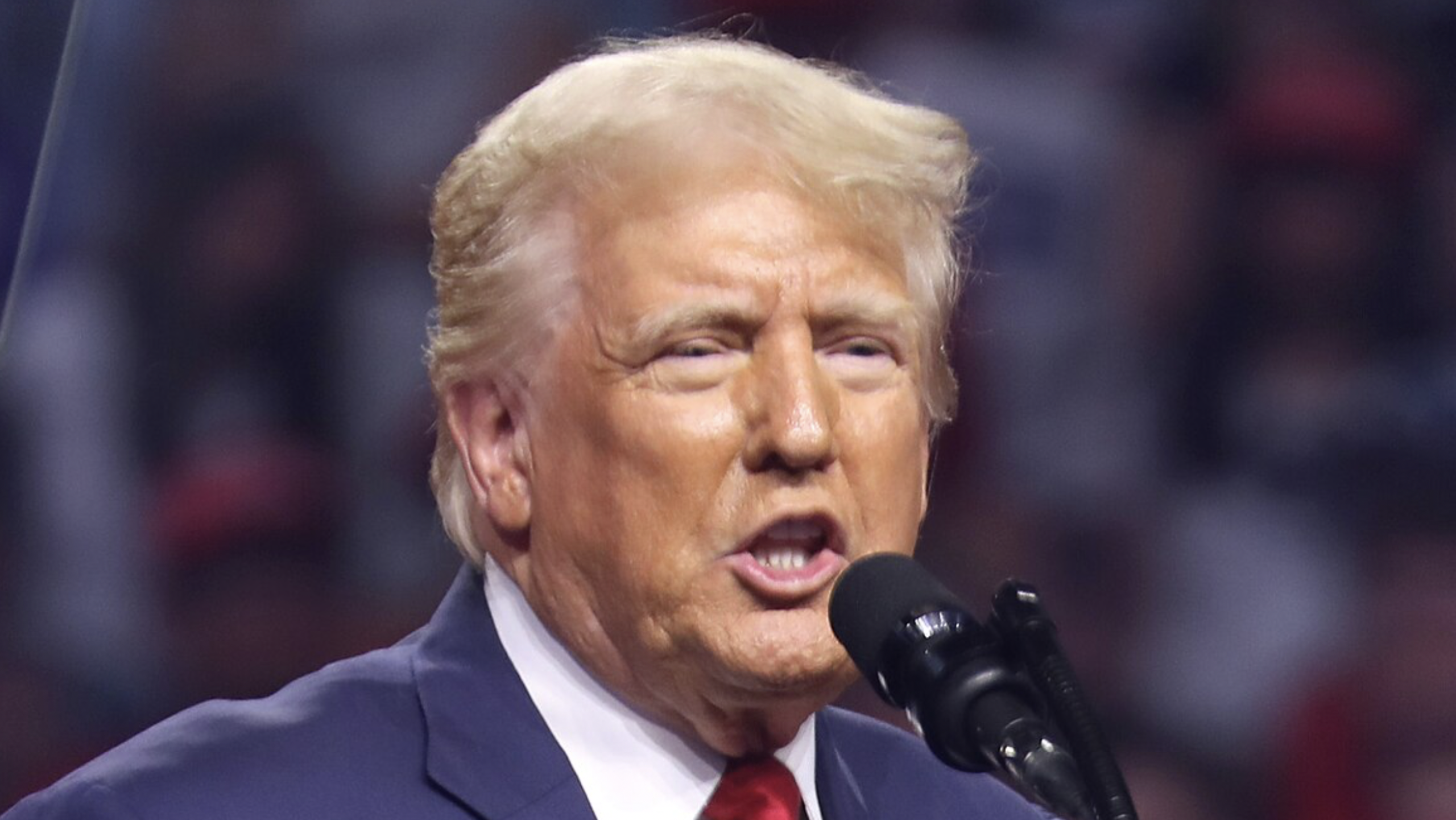
WASHINGTON — President Donald Trump on Wednesday publicly disclosed a covert U.S. military operation that he said has shepherded more than 200 commercial ships and over 100 million barrels of oil through the Strait of Hormuz since last month, declaring that the United States — not Iran — now controls the strategically vital waterway. The announcement marked one of the most significant public claims of American dominance over the strait since Iran moved to effectively close it in March following the outbreak of the U.S.-Israel war against Tehran.
Trump first alluded to the operation Wednesday morning during remarks to reporters from behind the Resolute Desk in the Oval Office, framing it as intelligence that had been deliberately withheld from Iran. “I can say it now. Something you didn’t know,” Trump told reporters. “Do you know we’ve been taking out millions of barrels of oil? Nobody knows it. You know who doesn’t know about it? Iran — until right now.”
“We took out, the other night, 22 ships, late at night, with no lights, because they don’t have any radar, because we blasted the crap out of it,” he continued.
Hours later, Trump formalized the announcement in a post on his Truth Social platform, providing the first official figures attributed to the operation. “Last month, I directed our Great U.S. Military to execute a secret mission to support Oil Tankers and other Commercial Ships through the Strait of Hormuz,” Trump wrote. “Today, I am pleased to announce that this effort has resulted in more than 100 MILLION Barrels of Oil making its way through the Strait, and into the Open Market. More than 200 Commercial Ships have safely traveled through the Strait.”
“It’s Over for Iran”
Trump used the announcement to assert sweeping American control over one of the world’s most contested maritime corridors. “This wildly successful effort is because the UNITED STATES of AMERICA CONTROLS the Strait of Hormuz — NOT Iran,” he wrote. “Their military is defeated, and their economy is lost. It’s over for Iran!”
Trump also credited the clandestine oil flows with keeping crude prices from surging dramatically higher, claiming they had helped hold prices around $90 per barrel rather than allowing them to spike above $200. The 100 million barrel figure cited in his post could not be immediately and independently verified.
The Operation’s Roots: From “Project Freedom” to Covert Passage
The broader effort to reopen the strait traces back to early May. On May 3, Trump announced what he called “Project Freedom,” describing it as the most significant step by his administration to try and reopen the key strait since Iran shut it down early in the war. U.S. Central Command confirmed that American forces were actively assisting efforts to restore commercial shipping through the Strait of Hormuz, with CENTCOM announcing on May 4 that two U.S.-flagged merchant vessels had successfully transited the strait. CENTCOM said its support included guided-missile destroyers, over 100 land and sea-based aircraft, and multi-domain unmanned platforms operating under the Project Freedom directive.
The declared escort operation was suspended just one day after it began, on May 5, amid talks with Iran on a broader agreement. What followed, according to Trump’s Wednesday disclosure, was a quieter, less publicized effort — vessels transiting clandestinely, with U.S. military support operating in the background.
How the Operation Worked
According to a senior U.S. military official who spoke on condition of anonymity, the vessels involved in the operation have been turning off their transponders to avoid detection when crossing the narrow waterway. The official said at least one route used in the operation did not run close to the Iranian coastline — a critical consideration given that ships passing near Iran without Iranian approval face an elevated threat of attack by Iranian drones or missiles. Shipping analysts have indicated the U.S.-guided crossings appear to follow routes closer to Oman.
JPMorgan had estimated as recently as last week that more oil might be moving through Hormuz than publicly visible tracking data indicated, with the bank suggesting approximately 2 million barrels per day might be moving on tankers that had switched off their transponders. Energy Secretary Chris Wright had offered a similar signal Tuesday, saying oil exports through Hormuz were “rising very meaningfully” without elaborating further.
The Scale of the Hormuz Disruption
The backdrop against which Trump’s announcement lands is one of historic disruption to global energy markets. Prior to the conflict, roughly 20% of global seaborne oil trade — or approximately 20 million barrels per day — passed through the Strait of Hormuz, primarily from Saudi Arabia, the United Arab Emirates, Iraq, and Qatar. Following the outbreak of the U.S.-Israel war against Iran in late February, the Iranian Revolutionary Guard Corps issued warnings forbidding passage through the strait, boarding and attacking merchant ships and laying sea mines in the waterway. Shipping firms suspended operations in the strait.
The effective closure of the Hormuz corridor has been described as the largest oil supply disruption in history, accounting for the loss of more than 1 billion barrels of oil from global markets. Dozens of ships that had been stranded in the Persian Gulf have been among those to exit through the strait in recent weeks amid the quiet U.S. coordination effort.
Escalation on the Strait’s Shores
Trump’s disclosure came just one day after a fresh escalation in the immediate vicinity of the strait. A U.S. Army helicopter went down over the Strait of Hormuz on June 9, with its two pilots rescued safely by drone boat. U.S. Central Command responded by launching what it described as “self-defense strikes” against Iranian air defense systems, ground control stations, and surveillance radar facilities near the strait. CENTCOM said the strikes constituted a “proportional response” ordered by President Trump, with approximately 20 targets inside Iran hit during the operation. Iran launched missiles and drones in response, but a U.S. official said nearly all of the incoming projectiles were intercepted, with no reported U.S. casualties or damage to American facilities.
Against that backdrop, Trump’s Truth Social post Wednesday presented the strait not as an active zone of escalating conflict but as a waterway already under American control — a framing that underscored the administration’s broader strategic narrative heading into ongoing diplomatic discussions over a potential end to the war.
“Thank you for your attention to this matter,” Trump concluded his post. “President DONALD J. TRUMP.”