
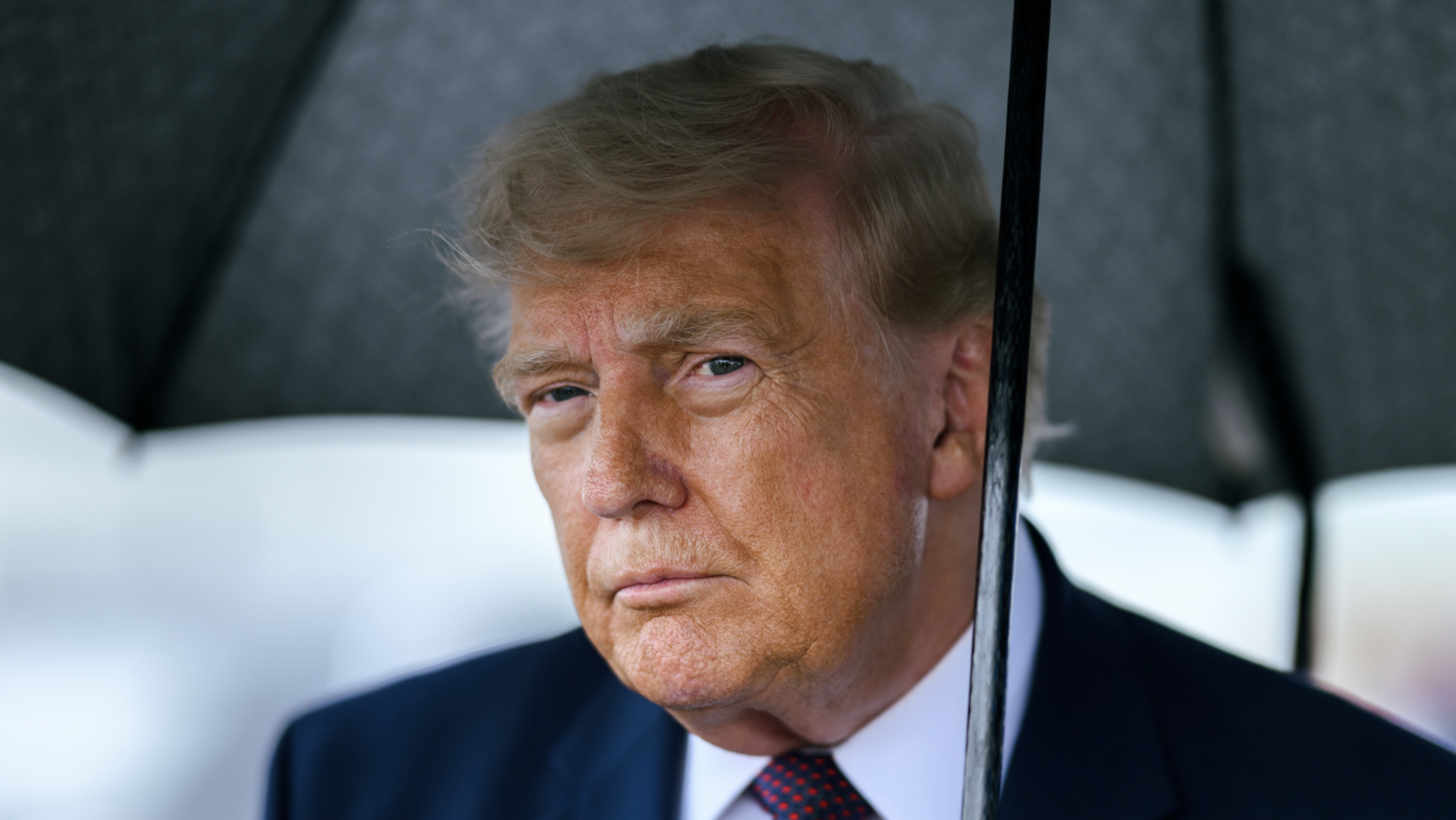
Before boarding Air Force One for Dover Air Force Base on Wednesday, President Donald Trump was asked what he planned to say to the families of four U.S. service members whose remains were being returned home from the war in Iran. His answer was brief.
“All I’m going to say is we love you. We love your child,” Trump told reporters. “And that’s what they are to them. They’re their children. There’s no games, no nothing. That’s their child. And all you can do is throw out your heart. Thank you. Thank you very much.”
The remarks came ahead of the dignified transfer ceremony for four service members: 1st Lt. Tyler James Feehan, 25, of Ewa Beach, Hawaii; Pvt. Isabella Gonzales, 19, of Carrollton, Texas; and Sgt. Angel S. Rampersad, 28, of Ozone Park, New York, all killed in a July 17 Iranian missile and drone attack on Muwaffaq Salti Air Base in Jordan, along with Sgt. Michael Emmanuel Swinton, 30, of Spring Lake, North Carolina, killed a day later in northern Iraq during the detonation of unexploded ordnance from a downed Iranian drone.
A Ceremony Repeated
Wednesday marked the third dignified transfer Trump has personally attended since Operation Epic Fury began on February 28. The ceremony, held at Dover’s Charles C. Carson Center for Mortuary Affairs, is regarded as one of the most solemn responsibilities of a sitting president, bringing the commander-in-chief face to face with the families of those killed in combat.
Gonzales, at 19, was among the youngest American service members to die since the war began. She had been assigned to the 1st Battalion, 57th Air Defense Artillery Regiment, based in Ansbach, Germany. Feehan was assigned to the 2nd Battalion, 55th Air Defense Artillery Regiment, based at Fort Bragg, North Carolina.
The Human Cost of the Campaign
The four deaths brought the total number of American service members killed in the Iran war to 18 since February. CENTCOM has said that nearly 100 U.S. service members have been wounded in the conflict, most suffering minor injuries such as concussions from drone and missile strikes.
Trump has previously described the toll of the war in personal terms when speaking about the fallen. Days before Wednesday’s ceremony, he told reporters that the service members killed had been fighting “so that Iran cannot have a nuclear weapon,” and said the continued military campaign was being carried out “in honor” of the fallen troops.
A Recurring Message
Wednesday’s remarks were not the first time Trump has framed his message to military families in similarly simple terms. Presidents across administrations have historically approached the Dover ceremony as a moment largely stripped of politics, focused instead on personal condolence rather than policy discussion.
Trump’s comments Wednesday reflected that same framing, emphasizing the emotional rather than strategic dimension of the ceremony even as questions about the broader war — including the ongoing investigation into the Jordan attack and mounting criticism of the conflict’s toll — continued to surround his visit to Dover.
Families Left to Grieve
As the four fallen service members’ families gathered to receive their remains Wednesday, the ceremony underscored the widening circle of American families now touched by the war. With the death toll climbing to 18 in less than five months, the number of families receiving the kind of message Trump described — a simple expression of love and grief, with no political explanation attached — continues to grow.
Officials have not indicated whether additional dignified transfers are expected in the near term, though the ongoing nature of the conflict and continued Iranian retaliatory strikes suggest the ceremony Trump described Wednesday may not be his last.