
WASHINGTON — President Donald Trump declared Monday that the United States is winning militarily against Iran and that a final resolution on Tehran’s nuclear program is nearly at hand — a sweeping assertion made at a moment when the two countries spent the weekend exchanging strikes in the Strait of Hormuz, no binding final deal has been signed, and the interim agreement already in place commits the United States to help facilitate a reconstruction fund worth at least $300 billion for Iran.
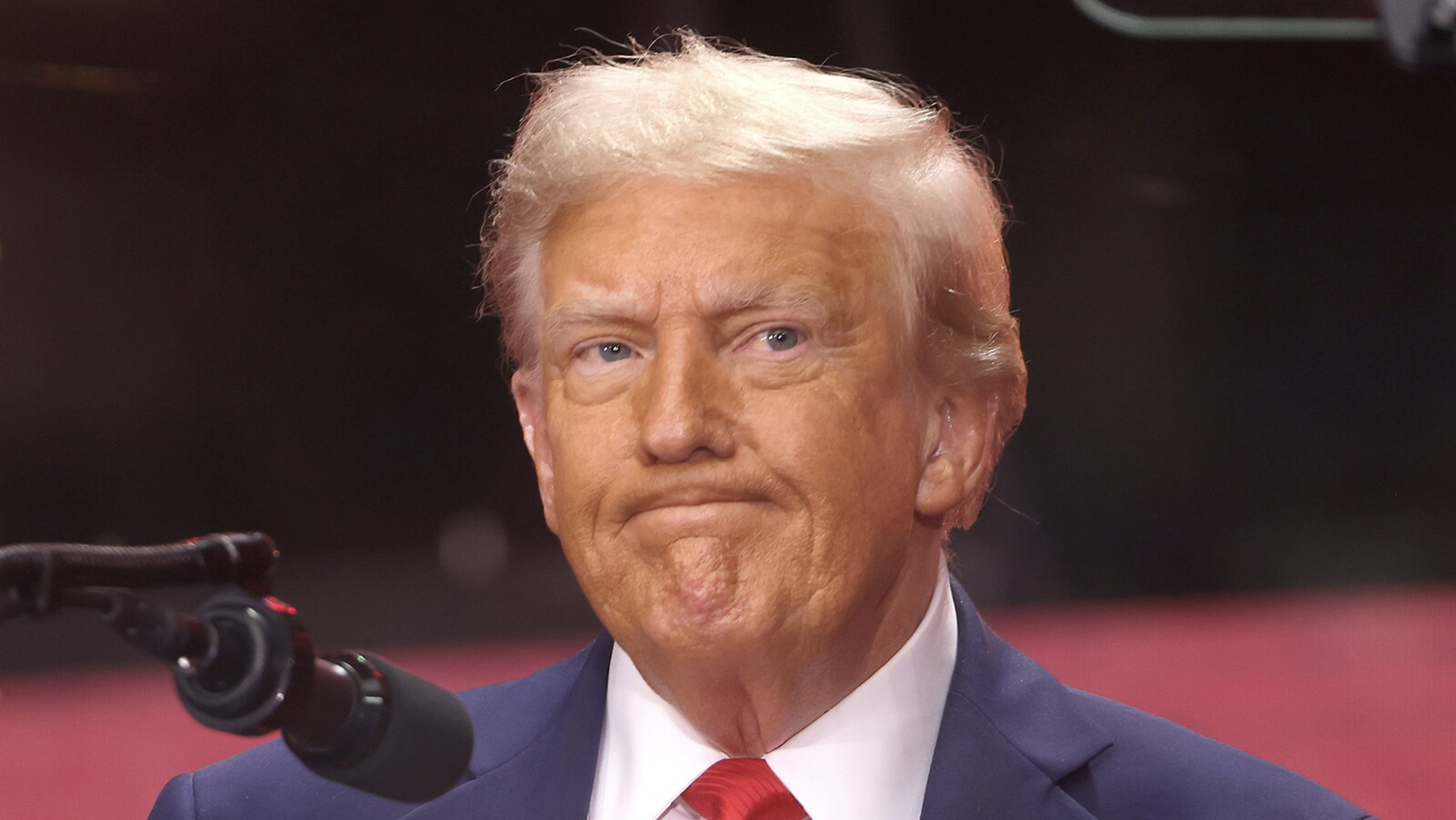
Speaking at the White House during an executive order signing on vehicle repair rights, Trump offered a confident assessment of where the confrontation with Iran stands. “We’re winning militarily,” Trump said. “It’s almost won militarily, I would say.” He added that the objective was simple — ensuring Iran does not obtain a nuclear weapon — and said Tehran had already agreed to that condition.
The remarks came just hours after both sides agreed to stand down following days of back-and-forth military strikes that had frayed the fragile ceasefire. This weekend’s exchange of fire tested the U.S.-Iran agreement signed earlier this month. President Trump threatened more military action if Iranian strikes continue, while Iran warned that ceasefire violations would “result in the complete halt of all diplomatic processes.”
According to U.S. Central Command, Iran was given an opportunity to honor the ceasefire agreement after U.S. strikes on Friday but instead launched a one-way attack drone that struck the Panama-flagged tanker M/T Kiku early Saturday. The Islamic Revolutionary Guard Corps confirmed it then launched ballistic missiles and drones at the U.S. Ali Al Salem airbase in Kuwait and the U.S. Fifth Naval Fleet at Port Salman in Bahrain. Both Bahrain and Kuwait condemned the attacks as violations of their sovereignty.
The gap between Trump’s claim of near-military victory and the facts on the ground is significant. The Islamabad Memorandum of Understanding, signed by Trump and Iranian President Masoud Pezeshkian on June 17, is not a final peace agreement. It is a preliminary framework that launched a 60-day window for the two sides to negotiate the terms of a permanent deal. The MOU itself states that both parties commit “to negotiating and achieving the final deal in maximum 60 days.” Critical questions — including the final status of Iran’s nuclear enrichment program — remain unresolved.
Key issues including the final status of Iran’s nuclear program remain unresolved and are expected to be discussed in later negotiations during the ceasefire period. The MOU stipulates that Iran reaffirms it “shall not procure or develop nuclear weapons” and commits both sides to discussing the disposition of Iran’s enriched uranium stockpile under International Atomic Energy Agency oversight — but these are commitments to negotiate, not a finalized nuclear agreement.
The MOU also contains a provision that has drawn scrutiny from both parties in Congress: a commitment by the United States to work with regional partners on a reconstruction and economic development fund for Iran of at least $300 billion. Trump and Vice President JD Vance both sought to reassure critics that the commitment would not be funded by U.S. taxpayers, with Vance saying “not a cent of American money goes to Iran.” Still, lawmakers on both sides of the aisle sounded alarms, including Sen. Roger Wicker, who said the fund “would make Iran’s payoff under President Obama’s 2015 deal look like a pittance by comparison.”
Trump himself pushed back on characterizations of the fund as a U.S. payout. On Truth Social, Trump wrote: “There is no 300 Billion Dollar payment to Iran by the U.S. That’s Fake News! All there is for the U.S. is Success, Lower Oil Prices, and Victory.” The administration has said the fund envisions private-sector investment from Gulf states and other regional actors, and will only materialize if Iran fulfills all of its commitments under a final deal.
U.S. officials acknowledged that at least some benefits will flow to Iran upfront, including temporary sanctions waivers allowing Iran to sell oil as long as talks continue — a potentially significant revenue stream as the U.S. naval blockade is lifted. The MOU further commits the United States to making Iran’s frozen assets “fully available for use” upon the document’s implementation and to lifting all categories of sanctions against Iran as part of a final agreement.
Trump noted Monday that oil prices had declined sharply — pointing to a price of $69 per barrel — and attributed the drop to the Iran situation. Oil markets have indeed reacted to the prospect of Iranian crude returning to global circulation under the MOU’s waiver provisions, though the Strait of Hormuz remains a volatile chokepoint. Shipping traffic through the Strait, a major maritime choke point for world energy trade, has been largely blocked by Iran since February 28, 2026, when the United States and Israel launched an air war against Iran.
The claim of near-military victory also runs against the backdrop of a conflict that has been costly and complex. After acknowledging that the United States and Israel had inflicted at least $1 trillion of damage on Iran since launching their attacks, Trump said during a news conference at the G7 summit in France that the U.S. would not be one of the investors in the $300 billion fund. The war began February 28, 2026, with U.S. and Israeli airstrikes on Iran, and has left thousands dead, millions displaced, and global energy markets severely disrupted.
White House press secretary Karoline Leavitt confirmed that Trump special envoy Steve Witkoff and Jared Kushner would be flying to Doha for high-level meetings, with technical talks planned on the sidelines, as both sides continue to discuss the memorandum of understanding. Iran’s position on whether its delegation will meet directly with U.S. counterparts remains unclear.
Whether the United States is “almost” militarily victorious, as Trump contends, or whether that framing obscures the significant unresolved terrain between the two nations, Tuesday’s meeting in Doha — if it materializes — may offer a clearer signal of just how close, or how far, the two sides actually are.