
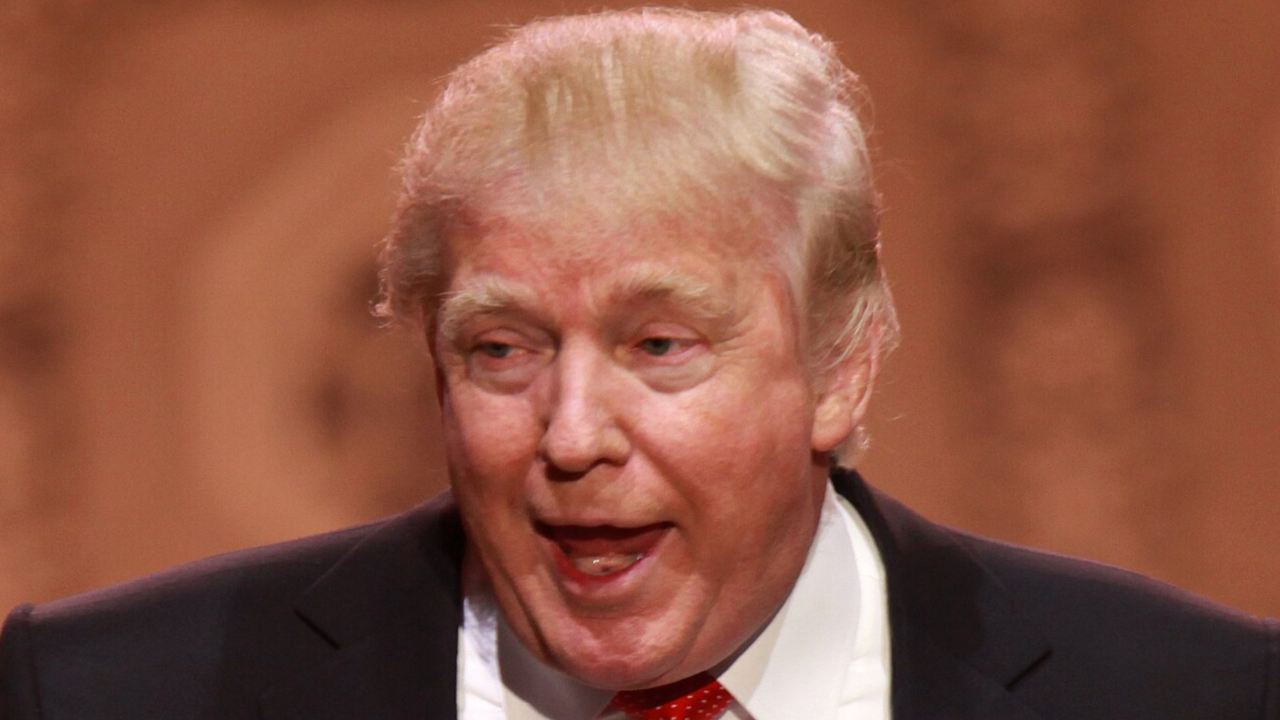
President Donald Trump accused Iran’s leadership of lying about the state of nuclear negotiations on Monday, writing in a Truth Social post that Tehran had privately sought talks with Washington while publicly denying any were taking place. The post, published August 3, 2026, escalated a diplomatic standoff that has repeatedly threatened to reignite direct military conflict between the two nations.
“Iranian Leadership is unbelievably duplicitous!” Trump wrote, adding that Iran had asked for a meeting, “some would say ‘beg,'” and that talks had begun with more scheduled in the immediate future, even as Tehran insisted otherwise.
— Rapid Response 47 (@RapidResponse47) August 3, 2026
The post came directly in response to statements from Iran’s Foreign Ministry, which flatly denied that any negotiations with the United States were underway. Foreign Ministry spokesman Esmail Baghaei said no meetings were scheduled and that Iran had no plans to host foreign delegations or send negotiators abroad in the coming days.
Baghaei said all of Iran’s negotiators remained in the country, with the exception of Foreign Minister Abbas Araqchi, who was on a religious pilgrimage in Iraq. The only discussions actually taking place, according to Baghaei, involved Oman and centered on management of the Strait of Hormuz, not the United States. A senior Iranian source separately told Reuters that Araqchi would remain unavailable at least through the end of the week.
Trump rejected that account outright in his post, describing Iran’s public denials as part of a broader pattern of dishonesty. “They then go on to give their usual blather in saying, the Strait of Hormuz will be operated powerfully by them, when it is already completely controlled by the United States Navy and our ‘Blockade,'” he wrote, referring to the waterway as “The United States Wall of Steel.”
He went on to warn that nothing would pass through the strait without American approval. “Nothing gets through to Iran, unless we want it to, and nothing will get through, unless a Deal, or Total Surrender, is accomplished,” Trump wrote, before stating plainly that Iran would not be permitted to acquire a nuclear weapon.
A Pattern of Threats and Reversals
Monday’s exchange followed a now-familiar sequence that has defined the standoff for months. On Sunday, Trump told reporters aboard Air Force One that negotiations with Iran would begin “tomorrow afternoon,” without naming a venue or identifying participants. He credited the shift to requests from Iran itself, as well as from Saudi Arabia, the United Arab Emirates and Qatar, saying the strikes he had been preparing would have been “the biggest attack since World War II.”
That claim followed Trump’s decision on Saturday to call off a planned “massive attack” on Iran at the last minute, citing what he described as the outlines of a deal that would reopen the Strait of Hormuz and address Tehran’s nuclear program. It marked at least the second time this year Trump has paused a threatened strike over stated progress in talks; in late March, he delayed a threatened attack on Iranian energy infrastructure by ten days, saying discussions were “going very well” despite what he called false reporting to the contrary.
Iranian state media disputed Trump’s version of events on Sunday, denying that Tehran had asked him to hold off on the strikes.
The reversal has played out against the backdrop of “Operation Epic Fury,” the military campaign Trump launched alongside Israel more than five months ago with the stated goals of dismantling Iran’s nuclear program, curbing its capacity to strike regional rivals and creating conditions for Iranians to overthrow their clerical government. None of those objectives has been achieved. Iran has publicly rejected renewed negotiations with Washington since a June memorandum of understanding aimed at ending the conflict collapsed in early July.
Strait of Hormuz Remains the Flashpoint
The dispute over the Strait of Hormuz sits at the center of the impasse. Washington maintains that the June memorandum required Iran to reopen the strategically vital waterway, through which roughly a fifth of global oil and liquefied natural gas flowed before the conflict began. Tehran counters that the agreement explicitly preserved its authority over shipping traffic through the strait.
Shipping through the waterway remains sharply reduced from prewar levels, undercutting Trump’s repeated assertions that the U.S. Navy holds total control over the passage. If Iran’s interpretation prevails, it would leave Tehran with greater leverage over the strait than it held before the war began, a outcome that would likely be viewed as a significant setback for the administration.
Repeated U.S. escalations have so far been met by escalating Iranian retaliation against American forces in the region, Gulf Arab allies and commercial shipping, with each cycle ending in Trump stepping back from military action.
Markets React to the Whiplash
Financial markets moved sharply in response to the on-again, off-again threat of strikes. Brent crude fell roughly 5% to around $83.52 a barrel on Monday following Trump’s decision to hold back from military action, after climbing toward $90 a barrel during the prior week of escalating threats. Other reporting on the swing showed Brent dropping more than 7% at the open in Asian trading and West Texas Intermediate falling 6.7% to $78.98 a barrel, before U.S. stock-index futures rose as traders priced in reduced risk to Gulf energy supplies.
The sustained conflict has already pushed global oil prices higher over recent months and driven up politically sensitive gasoline prices within the United States, adding economic pressure to a war that has yet to deliver the outcomes Trump laid out when it began.
Broader Fallout From the Standoff
The dispute has produced ripple effects beyond the negotiating table. Reporting from CNN indicated that U.S. military leadership has asked troops stationed in the region for “creative and unconventional” ideas to pressure Iran, amid separate reports that American forces were drawing down from bases in Kuwait and Bahrain due to increased Iranian ballistic missile strikes. Trump declined to comment directly on the withdrawal reports when asked by reporters.
Notably, Monday’s Truth Social post also came the same day Trump Media & Technology Group launched “Truth API,” a paid service giving institutional Wall Street clients millisecond-fast, machine-readable access to posts from influential Truth Social accounts, including the president’s own — a development that places renewed financial significance on the timing and content of Trump’s statements on the platform.
As of Monday afternoon, no independently confirmed talks between U.S. and Iranian officials had taken place, and Tehran’s public position remained unchanged: the only active discussions involved Oman, not Washington, and centered narrowly on the Strait of Hormuz rather than a broader nuclear agreement.