
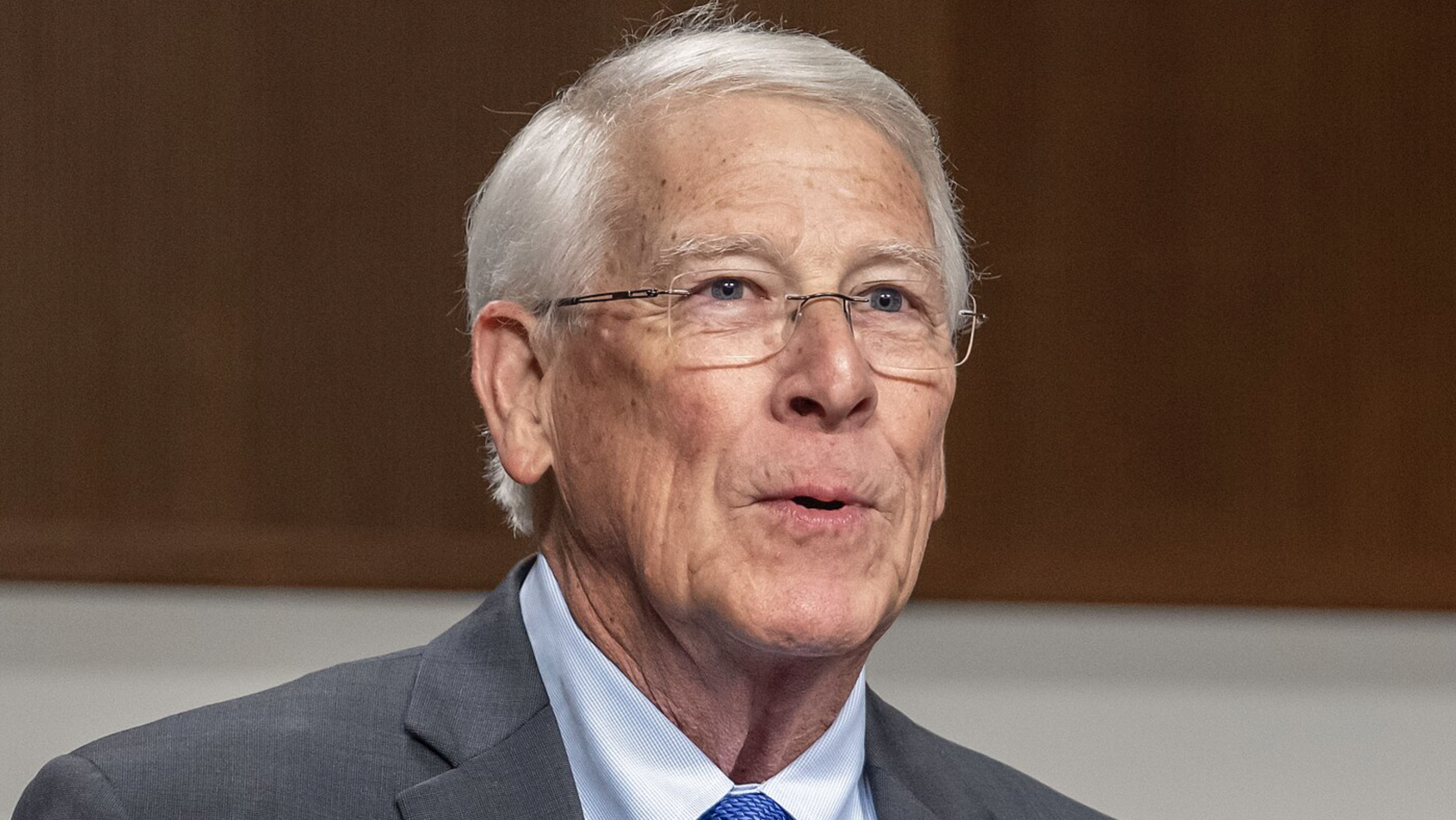
WASHINGTON — The chairman of the Senate Armed Services Committee issued a sharp rebuke of the newly announced United States-Iran memorandum of understanding on Thursday, warning that the diplomatic framework surrenders the military gains of Operation Epic Fury, rewards a regime that has never abandoned its stated goal of destroying America and Israel, and risks undermining President Donald Trump’s foundational doctrine of peace through strength.
Sen. Roger Wicker, R-Miss., released the statement on June 18, 2026, the same week the administration formally detailed the 14-point agreement to Congress and the public. The memorandum, signed digitally and set for an official ceremony in Geneva on June 19, establishes a 60-day ceasefire during which the United States and Iran are expected to negotiate the terms of a final settlement on nuclear weapons and related military matters.
Wicker’s Full Statement
In his official statement, Wicker drew a direct line between his longstanding support for Trump’s Iran policy and his present concerns about the path the deal is taking. The full text of his statement reads:
“Since day one, I have supported President Trump’s efforts to end Iran’s 47-year threat to the United States and our partners. I am concerned that the memorandum of understanding negotiates away the victories of Operation Epic Fury in ways that are completely out of step with the President’s goals.
Specifically, the $300 billion fund for the reconstruction and economic development of Iran – though not funded by U.S. taxpayers – would make Iran’s payoff under President Obama’s 2015 deal look like a pittance by comparison. I believe it would be an error to force Israel to stand down against Hezbollah, an Iranian-backed terrorist organization that continues to attack Israel on its northern border. I also oppose the U.S. lifting any sanctions on Iran, or unfreezing Iranian funds, in exchange for Iran’s mere agreement to negotiate for another 60 days. The Iranian regime has not renounced its ultimate goal — ‘Death to America, Death to Israel.’ The regime will invest every penny it receives to further that aim.
President Trump has pursued peace through strength. I hope the intermediaries working on this deal are not undermining that objective.”
“Negotiates Away the Victories”
The most striking line in Wicker’s statement was his charge that the memorandum of understanding actively dismantles what the United States military achieved during Operation Epic Fury, the military campaign that began on February 28, 2026. The senator, who chairs the committee with primary oversight jurisdiction over the Department of Defense, argued the terms being accepted in diplomacy stand in direct contradiction to the goals Trump himself articulated when he ordered the operation.
Wicker has been consistent on this point throughout the conflict. When Operation Epic Fury was launched in late February, he issued a statement calling it “a pivotal and necessary operation to protect Americans and American interests,” and listed Trump’s declared objectives as permanently thwarting Iran’s nuclear ambitions, degrading its ballistic missile force and production capacity, and destroying its naval and terrorism capabilities. The chairman’s concern now is that the MOU appears to stop well short of achieving those ends in exchange for a process rather than a result.
The $300 Billion Fund
Wicker reserved some of his sharpest language for the international reconstruction and economic development fund for Iran included in the agreement. While he acknowledged the fund is not financed by U.S. taxpayers, he argued its scale renders the Obama administration’s 2015 nuclear agreement — which unfroze roughly $150 billion in Iranian assets — insignificant by comparison.
The senator’s framing of the fund as a potential resource Iran would redirect toward hostile ends reflects a broader concern about the reliability of the Iranian regime as a negotiating partner. Wicker argued the Iranian government has given no indication it has walked back its foundational hostility toward the United States and Israel, making any large-scale financial relief a de facto subsidy for continued aggression.
Israel and the Hezbollah Problem
Wicker also voiced strong opposition to provisions in the agreement that would require Israel to halt military operations against Hezbollah along its northern border. He described any arrangement forcing Israel to stand down as an error, characterizing Hezbollah as an Iranian-backed terrorist organization that has continued to attack Israel even amid the broader conflict. The memorandum’s terms, as detailed by U.S. officials, include a termination of military operations on all fronts, including in Lebanon — a provision Wicker believes benefits Tehran and its proxies at Israel’s expense.
Sanctions and the 60-Day Negotiating Clock
The chairman also took direct aim at the MOU’s framework for sanctions relief, calling it a poor trade for what amounts to a limited diplomatic commitment. Under the agreement’s structure, the United States would lift sanctions on Iran and unfreeze Iranian funds in exchange for Iran’s agreement to negotiate for an additional 60 days — a provision Wicker characterized as giving significant economic concessions for minimal strategic assurances.
That critique aligns with concerns expressed across a range of Senate voices in recent days. Senate Majority Leader John Thune, while defending the agreement as beneficial overall, acknowledged publicly that long-term issues remain unresolved and that the goal of fully disarming Iran’s nuclear program was not achieved in the memorandum.
A Warning About the Intermediaries
Perhaps the most pointed dimension of Wicker’s statement was its implicit criticism not of Trump himself, but of the deal’s architects and intermediaries. The chairman carefully separated Trump’s instincts — which he credited as consistent with peace through strength — from the specific terms negotiated on his behalf, suggesting that those working the deal may not be faithfully executing the president’s strategic vision.
That framing echoes a statement Wicker issued on May 22, 2026, when negotiations were still ongoing, in which he warned that Trump “is being ill-advised to pursue a deal that would not be worth the paper it is written on.” At that point, he called on the commander-in-chief to allow the military to finish destroying Iran’s conventional capabilities before reopening the Strait of Hormuz. The June 18 statement represents a continuation of that argument, now applied to a signed agreement rather than an ongoing negotiation.
Wicker’s Role and Record on Iran
Wicker has been among the most vocal Senate Republicans on Iran policy throughout the conflict. As chairman of the Senate Armed Services Committee — the upper chamber’s premier oversight body for military operations — his assessments carry institutional weight beyond his personal position. He has convened or announced plans for public oversight hearings on the war featuring senior Department of Defense officials, and has used his platform to consistently press for a policy of military completion over diplomatic accommodation.
When the conflict was still escalating in March 2026, Wicker delivered a Senate floor speech defending the operation and expressing grief both for the American service members killed in combat and for what he called the thousands of Americans who had died over 47 years at Iranian hands. That speech framed the military campaign as a generational reckoning with a regime the senator described as apocalyptic and implacable.
The Larger Congressional Picture
Congressional scrutiny of the MOU has not been limited to Wicker or to Republicans. Democratic House leaders — including the ranking members of the House Foreign Affairs Committee, House Armed Services Committee, and House Permanent Select Committee on Intelligence — sent a letter to Secretary of State Marco Rubio demanding a full congressional briefing on the agreement’s details. Those members described the war as a “strategic failure” and raised concerns about what they characterized as the administration keeping Congress in the dark for more than 15 weeks.
As of Thursday, Majority Leader Thune indicated that administration officials were expected to begin briefing lawmakers on the deal in the coming days. The official signing ceremony for the memorandum is scheduled to take place in Geneva on Friday, June 19.
What Comes Next
For Wicker, the signing of the memorandum does not appear to close the debate — it reopens it. The 60-day negotiating period built into the MOU means that the fundamental questions the chairman has raised, about sanctions, about Iran’s nuclear and military capabilities, and about the security of Israel, remain live issues that will require continued congressional engagement. His warning that intermediaries may be working against Trump’s stated objectives signals that he intends to use his committee chairmanship to maintain pressure on how those negotiations proceed.
The senator’s bottom line, as stated Thursday, is that the Iranian regime’s own declared ideology — a chant of “Death to America, Death to Israel” that he argues has never been formally renounced — means that any financial or diplomatic concession will be redirected toward those ends. In Wicker’s view, the memorandum of understanding does not resolve that threat. It defers it, and may fund it.