
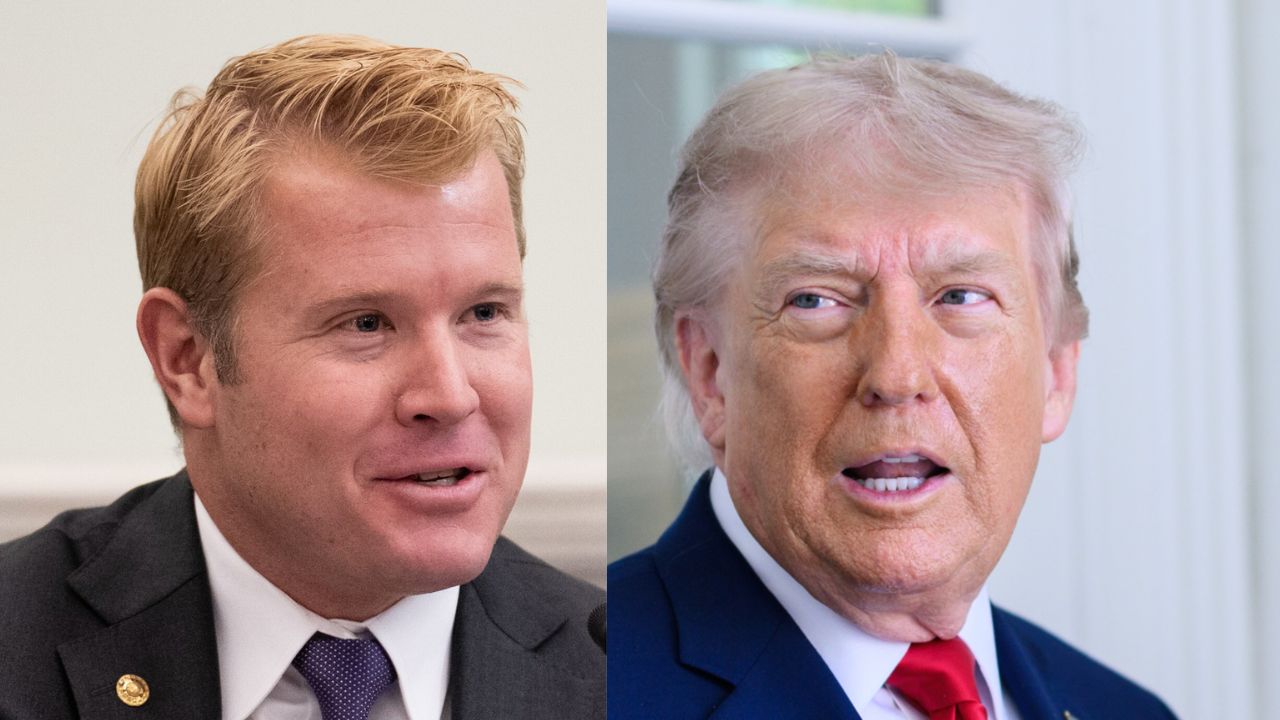
Sen. Tim Sheehy (R-Mont.) publicly broke with President Donald Trump on Friday, August 21, 2026, over the administration’s newly announced plan to temporarily surge foreign beef imports into the United States, warning that the move will undercut the very ranchers the president has pledged to protect. In a post on X, Sheehy said he had privately urged Trump against the decision for an entire year, arguing that America’s cattle producers — the majority of whom he described as MAGA Republicans — will bear the brunt of a policy intended to ease consumer prices.
Sheehy’s statement, posted at 10:00 AM ET, came just hours after Trump announced the administration would allow up to 300,000 metric tons of ground beef to enter the country over the next 90 days without triggering higher tariff rates. The senator’s full post read as follows:
“I’ve advised President Trump against this course of action for a year because American ranchers have been struggling against the packer monopoly for decades, and this will further harm them – most of whom are MAGA Republicans.
The President’s heart is in the right place on wanting lower prices for the American people, and beef prices have been impacted by the Mexican screwworm.
But the reality is this action will make it more difficult for American ranchers to rebuild our herd and bring prices down for the American people. And most importantly, this will harm our ranching families who feed the nation.”
Trump’s Announcement And The Terms Of The Deal
Trump revealed the import expansion in a social media post Friday morning, framing it as a direct response to record-high beef prices that have squeezed American grocery shoppers for more than a year. Under the plan, foreign beef exporters agreed to sell the imported product at a 25 percent discount below current market prices, a concession the president said would be passed directly on to consumers. The administration intends to formalize the policy through an executive order within the next two weeks, according to a White House official.
Sheehy’s Core Argument: Herd Rebuilding Takes Time, Not Imports
Sheehy’s objection centers on a distinction the senator has drawn repeatedly throughout the year: that the beef price crisis stems from a historically small national cattle herd, not simply from insufficient supply that can be solved by importing foreign product. He argued that flooding the market with cheaper foreign beef removes the financial incentive ranchers currently have to expand their herds, since elevated cattle prices have been one of the only forces encouraging producers to hold back cattle for breeding rather than sending them to slaughter. In his view, undercutting those prices now will only prolong the shortage rather than resolve it.
A Yearlong Pattern Of Warnings From Sheehy
Friday’s post was not the first time Sheehy has raised alarms about proposals to increase foreign beef access to the U.S. market. In October 2025, Sheehy hosted a “Common Ground Summit” alongside the Livestock Marketing Association specifically to address the threat of foreign beef flooding domestic markets. Following that event, he said Montana ranchers had made clear they would oppose any plan that imported large volumes of foreign beef, and he called for breaking what he described as a monopoly held by foreign-owned meatpackers over the American food supply.
“For too long, foreign-owned meat packers have controlled our food supply. We must break that monopoly, offer American alternatives to increase our national food security, and advocate for a path forward that ensures American ranchers and cattle are placed at the center of our livestock policy framework,” Sheehy said at the time.
The Packer Monopoly Sheehy Has Long Targeted
Sheehy’s reference to a “packer monopoly” reflects a bipartisan concern in Congress over consolidation in the meatpacking industry. Just four companies currently control roughly 85 percent of the U.S. beef market, according to figures cited by other lawmakers who have pushed legislation on the issue, a dramatic rise in concentration compared to decades past. Sheehy has aligned himself with senators from both parties, including Montana Democrat Jon Tester in earlier years, in arguing that this concentration — not a shortage of imported beef — is what has squeezed ranchers and inflated prices for consumers at the same time.
Cattlemen’s Group Echoes Sheehy’s Concerns
Sheehy was not alone in criticizing the administration’s move. The National Cattlemen’s Beef Association, the nation’s largest trade group representing cattle producers, issued its own statement Friday expressing disappointment with the president’s decision. NCBA CEO Colin Woodall said the plan runs counter to the administration’s stated goal of rebuilding the domestic herd.
“While America’s cattle producers share the goal of keeping groceries affordable for consumers, flooding the market with government-subsidized, below-market beef is not the way to rebuild the American cattle herd,” Woodall said.
Montana’s Congressional Delegation Unified In Opposition
Sheehy was joined by fellow Montana Republican Rep. Troy Downing in criticizing the plan Friday. Both lawmakers argued that Montana’s cattle producers, who make up a significant share of the state’s economy, could be forced to absorb the financial fallout and face even greater difficulty rebuilding their herds as cheaper imported beef enters the market.
The Screwworm Factor Sheehy Acknowledged
In his post, Sheehy specifically pointed to the Mexican screwworm outbreak as a legitimate contributor to elevated beef prices, distinguishing that factor from the herd-rebuilding challenge he says imports will worsen. The New World screwworm, a flesh-eating parasite, had prompted the U.S. Department of Agriculture to close ports along the southern border to Mexican cattle earlier in the year over fears the parasite would spread into American herds. The Agriculture Department reopened those ports last month, a move meatpacking executives said was among the fastest available options for easing price pressure, since Mexican cattle imports account for roughly 5 percent of all cattle processed in the United States.
The Scale Of America’s Cattle Shortage
The backdrop to Friday’s dispute is a national cattle herd that has shrunk to its smallest size since the 1950s. The United States began 2026 with approximately 86.2 million cattle and calves, according to USDA data, a decline driven by years of drought and difficult financial conditions for ranchers following the Covid-19 pandemic. That shortage has pushed consumer beef prices to record levels, with ground beef selling for an average of $6.89 per pound in July, a 10 percent increase from the previous year, according to Labor Department figures.
Meatpacking Plant Closures Compound The Pressure
The cattle shortage has also strained meatpacking companies such as Tyson Foods and JBS, which have faced rising costs to process a shrinking supply of livestock. Tyson announced last week that it was closing a major beef processing plant in Illinois, marking the second such closure by the company so far this year.
Trump’s Broader Push On Beef Prices
Friday’s import announcement is the latest in a series of steps the Trump administration has taken over the past year to address beef price inflation. The Justice Department launched an antitrust investigation into the nation’s largest meatpackers after Trump called for a probe into what he described as illegal price manipulation. In a social media post announcing that investigation, Trump wrote that meatpackers were “driving up the price of Beef through Illicit Collusion, Price Fixing, and Price Manipulation,” and said the administration would “always protect our American Ranchers.”
The administration also unveiled plans to fund smaller meatpacking operations in an effort to increase competition in a sector long dominated by a handful of large firms, and an Agriculture Department official reportedly contacted executives at some of the nation’s top supermarket chains before the July 4 holiday to press for lower retail beef prices.
A Delayed Predecessor To Friday’s Plan
Friday’s announcement was not the administration’s first attempt to expand foreign beef access. Officials had planned in May to suspend the annual tariff-rate quota — the mechanism that imposes higher tariffs once a certain volume of beef imports is reached — for all beef-exporting nations. Those plans were shelved at the time after backlash from congressional Republicans and cattle rancher organizations, a group that now appears to include Sheehy once again.
Consumer Demand Remains High Despite Record Prices
Even as prices have climbed, American demand for beef has shown no signs of slowing. The federal government projects Americans will consume roughly 29 billion pounds of beef this year. Trump’s planned import expansion, at 300,000 metric tons, would represent approximately 2 percent of total U.S. beef consumption for the year.
Market Reaction And What Comes Next
Live cattle futures, which reflect the price meatpackers pay for cattle processed at their facilities, fell roughly 2 percent Friday following the announcement. Industry data released in July showed only a 0.2 percent increase in the national cattle herd compared to the previous year, a figure some officials say points to early stabilization rather than the kind of significant rebuilding Sheehy and other ranching advocates say is still urgently needed. The White House has not yet formally issued the executive order needed to implement the 90-day tariff exemption, leaving the final scope and timeline of the plan still to be determined in the weeks ahead.