
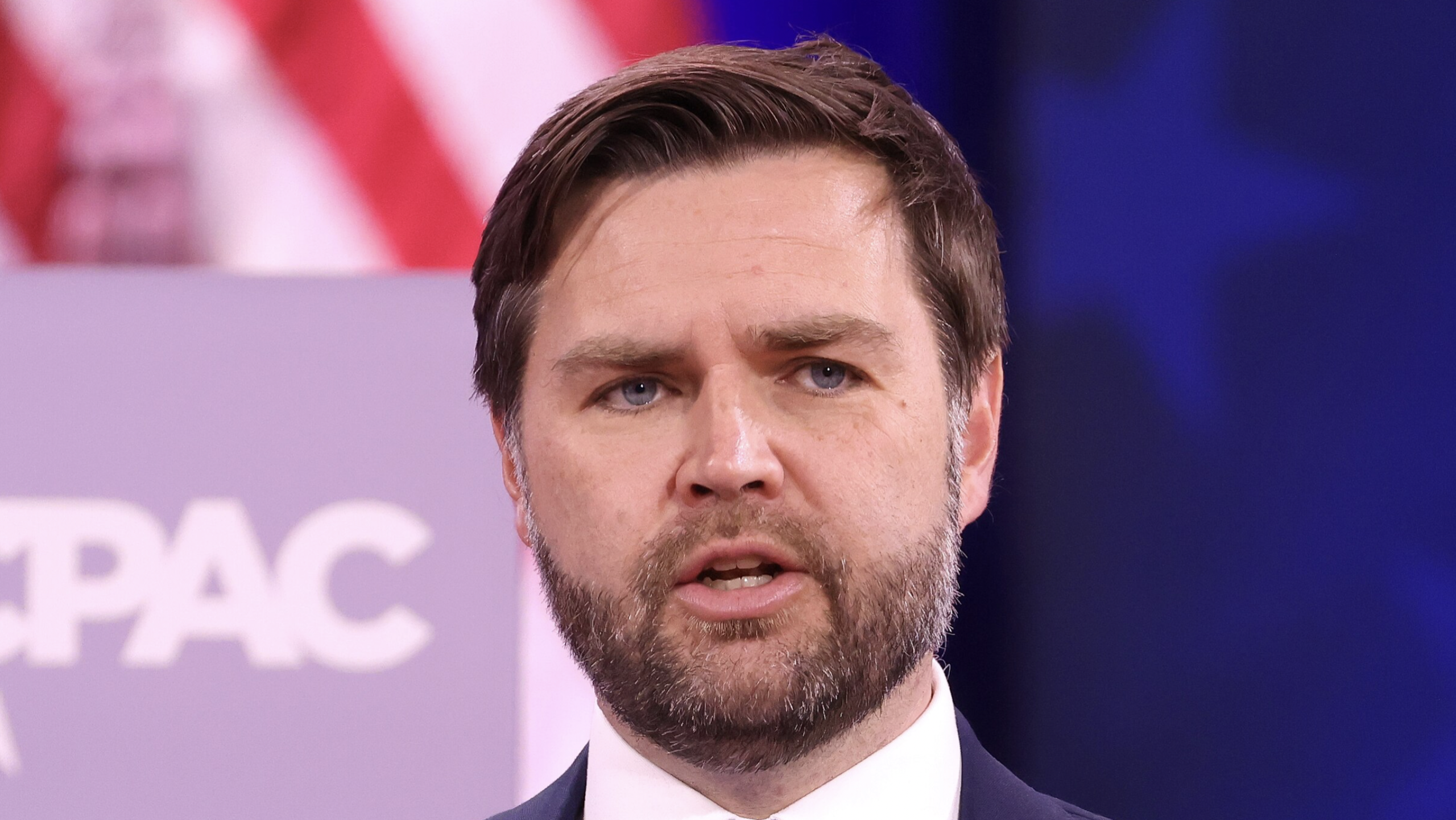
Vice President JD Vance appeared on Fox News’ “The Five” on Tuesday, June 16, 2026, offering the most detailed public explanation yet of the framework deal reached between the United States and Iran — a memorandum of understanding set for formal signing this Friday in Geneva, Switzerland. Sitting alongside hosts Dana Perino, Jesse Watters, Jessica Tarlov, and Greg Gutfeld, Vance addressed why the full text of the agreement has not yet been released, what its three core terms actually require of Iran, and why he believes the United States is positioned to win regardless of whether Tehran complies.
The Document Is Coming — But Diplomacy Has a Sequence
The first question put to Vance was one on the minds of lawmakers and commentators across the political spectrum: why hasn’t the administration released the text of the deal? Vance explained that the delay is not Washington’s preference, but a procedural ask from the nations who brokered the talks.
“There’s some diplomatic procedure at work here where the Qataris and the Pakistanis have been mediating this entire negotiation with the Iranians,” Vance said. “They have asked us to sequence the way they roll it out. I don’t understand it. We would release it today or tomorrow. We may release it as late as Friday.”
Friday is set to be the formal signing ceremony for the memorandum of understanding, with the event expected to take place in Geneva, Switzerland. Vance made clear that the administration is actively pushing to accelerate that timeline. “Fundamentally, it doesn’t matter,” he said, “because whether it’s tomorrow or Friday, people will see what’s in this agreement very soon.”
Three Terms, One Framework
With the document still under wraps, Vance took it upon himself to spell out what the agreement actually says — and he kept it simple. “The agreement is very simple,” he told the panel. “It says, one, Iran can’t have a nuclear weapon. Two, the Strait of Hormuz is open. And number three, there are all of these benefits contemplated that the Iranians can get if they behave.”
That third term is where Vance said most of the public confusion has originated. Benefits tied to the agreement — which could include access to foreign investment and economic relief — are not automatic. They are conditional. “If they stop funding terrorism, stop rebuilding the nuclear arms program, they can get benefits,” Vance said. “If they don’t do that, they don’t get anything.”
Under the framework, the United States would lift its blockade on Iranian ports and issue certain sanctions waivers in exchange for Iran clearing mines from the Strait of Hormuz and allowing shipping to resume — with relief tied directly to performance.
Pushing Back on “Iranian Propagandists”
Vance took direct aim at what he called a deliberate mischaracterization of the deal’s financial terms, comparing critics making those claims to Iranian state propagandists. “You have Iranian propagandists out there saying ‘we get all of these things,'” he said. “They leave out the fact that they only get them if they transform themselves as a country.”
When co-host Jessica Tarlov pressed him on reports — including from The Wall Street Journal — suggesting Iran could immediately sell oil and receive Gulf nation investment funds upon signing, Vance drew a sharp distinction between what the deal permits and what it gives away. “Not a single cent of American money under any circumstance no matter what the Iranians do goes to Iran,” he said. “Not a single cent of American money.”
He then explained what the third-party investment provisions actually allow: “Let’s say the United Arab Emirates — they want to invest in a power plant in Iran. What the deal provides is that if the Iranians had done everything we require them to do, then we will allow the United Arab Emirates to do that. They can’t do that without American approval.” In other words, Vance argued, even foreign investment in Iran remains gated behind U.S. approval and conditioned on Iranian compliance.
“The United States Wins Either Way”
The vice president’s most sweeping argument was not about what Iran gets — it was about what the United States has already secured, regardless of how Tehran behaves going forward. Operation Midnight Hammer obliterated Iran’s nuclear facilities and significantly set back Tehran’s nuclear ambitions, according to a White House fact sheet, with Iran subsequently attempting to rebuild its program at a different location before the current diplomatic process began.
Vance argued that those military facts on the ground mean the U.S. holds all the leverage. “As the president said, either they get nothing, we destroy their nuclear program and the Strait of Hormuz are open — or they fundamentally transform themselves, and that’s a big win, too,” Vance said. “It’s up to them.”
President Trump himself has been explicit on the core outcome: “Most importantly, we have a deal that Iran will never have a nuclear weapon.”
A 60-Day Clock and a Question of Photographs
Tarlov also raised a question about optics: why allow a photo alongside Iranian officials before the 60-day compliance window has closed and before it is known whether Iran has actually followed through? Vance pushed back on the premise. “He doesn’t see a photo opportunity as rewarding them,” Vance said of President Trump. “They have to do serious compliance for the Americans in order to get any of the benefits of the bargain.”
The vice president framed his own travel — including a trip to Pakistan as part of the mediation process — as a signal of American seriousness. “I’m trying to send a signal that the entire American government is oriented towards getting a good outcome for the American people,” he said. “I want to figure out how real or fake are they. They make a lot of promises.”
Bipartisan Skepticism, and Vance’s Answer to It
Tarlov noted that skepticism about the deal has not been limited to Democrats — she cited reporting that CIA Director John Ratcliffe, Secretary of State Marco Rubio, and Defense Secretary Pete Hegseth had all expressed doubts about the results achievable through the agreement. From the outset of military operations, Vance himself had stated publicly that preventing Iran from building a nuclear bomb was the president’s “primary objective,” regardless of what happened to the regime itself.
On Tuesday, he doubled down on that framing while dismissing the broader chorus of opposition. “Some of the criticism comes from the fact that if Donald Trump were elected the Supreme Leader of Iran, the Democrats would still say the United States had lost this,” he said. “There’s a refusal to acknowledge how much has changed in the Middle East the last few months.”
Vance closed his case with the same argument he opened it with: the transformation of the region is already underway, deal or no deal. “If this deal actually comes to fruition, meaning if the Iranians comply with it, we have transformed the Middle East in a way that is amazingly beneficial for both the American people, but also the people of the Gulf,” he said. “If they don’t do any of that stuff, they don’t get any of these benefits. Their nuclear program is still destroyed. Their military is still destroyed. We have transformed the Middle East whether they comply or not. This is just icing on the cake.”