
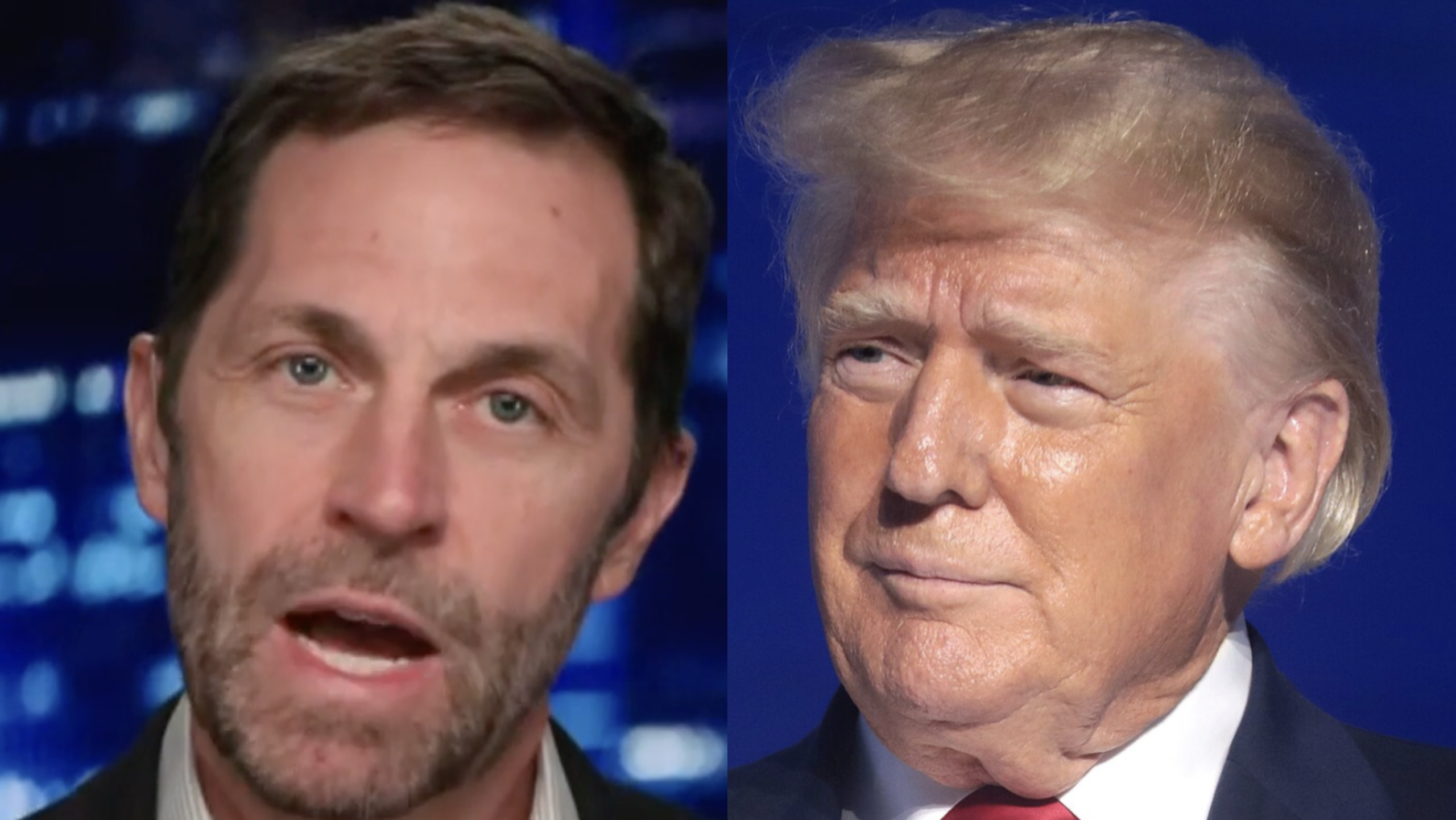
Rep. Jason Crow Calls Out Administration’s Lack of Exit Strategy, Says Working Class Troops Know the War Isn’t Over
Colorado Democratic Representative Jason Crow, a decorated Army Ranger veteran and member of the House Armed Services Committee, posted a pointed rebuke of the Trump administration’s handling of the Iran war to X on May 13, 2026, arguing that the conflict was launched without a viable plan to end it and that working class Americans are bearing the consequences. Crow’s post — accompanied by a video statement — drew directly on his personal combat history to challenge what he characterized as the administration’s premature declarations of success.
Crow’s Full Post and Statement
Crow’s written message on X was blunt and direct: “The Trump administration started a war with no plan on how to end it. Working class Americans are paying the cost.”
In the accompanying video, Crow expanded on that charge, leaning heavily on the parallel between what he witnessed across two decades of war in Iraq and Afghanistan and what he sees unfolding now with Iran. His full statement in the video was as follows:
“You know, they just like to claim things are over, yet the reality is starkly different. You know, Americans, you know, working class Americans like I fought with and who served and died during the 20 years in Iraq and Afghanistan that, you know, served those three combat tours with me, you know, they know better. They’re the ones that actually have to still be on the line. So no, it’s not over. The adversary always has a vote when something is over. And we have unfortunately started something without a plan for finishing it.”
A Combat Record Behind the Criticism
Crow’s remarks carry weight shaped by a military biography that is difficult to dismiss. A former Army Ranger, Crow completed three tours of duty in Iraq and Afghanistan as part of the 82nd Airborne Division and the 75th Ranger Regiment. In 2003, he led an 82nd Airborne platoon into combat during the Battle of Samawah and was awarded the Bronze Star Medal for his service in Iraq. After returning from Iraq, Crow was recruited to join the Army’s elite 75th Ranger Regiment, serving two additional tours in Afghanistan as part of the Joint Special Operations Task Force assigned to capturing Osama Bin Laden, fighting the Haqqani Network along the southeastern border with Pakistan.
That biography forms the backbone of his credibility when invoking the phrase “working class Americans” in this context. Crow has spoken previously about how the burden of America’s long wars fell disproportionately on enlisted soldiers who cycled through repeated deployments while the broader public remained largely insulated from the costs.
“The Adversary Always Has a Vote”
The central argument in Crow’s video is a foundational principle of military strategy: that a conflict ends when both sides decide it is over, not when one side announces it. His line — “the adversary always has a vote when something is over” — reflects a doctrine familiar to anyone who has served in a prolonged counterinsurgency or conventional war, and it points directly at what Crow sees as a credibility gap in how the Trump administration has been characterizing the current state of the war.
That criticism lands against a backdrop of a conflict now entering its third month with no clear resolution in sight. On April 8, 2026, the United States and Iran agreed to a two-week ceasefire mediated by Pakistan. Since its declaration, the ceasefire has been violated by both sides. The United States and Iran have traded attacks in the Strait of Hormuz in recent days, with the escalating action threatening to upend the already shaky truce, which the president described on Monday as being on “life support” despite maintaining it is still intact.
Congress Presses for Answers — and Gets Few
Crow’s post comes one day after a bruising round of congressional hearings that exposed just how thin the administration’s end-game planning has appeared to lawmakers on both sides of the aisle. Defense Secretary Pete Hegseth faced intense scrutiny from members of Congress on Tuesday over the Trump administration’s handling of the Iran war, as lawmakers from both parties pressed him to clarify the Pentagon’s plan to cover the conflict’s rising costs and reopen the Strait of Hormuz.
The Pentagon’s top budget official told Congress the cost of the war has climbed to nearly $29 billion, up $4 billion from the price provided nearly two weeks ago. Democratic senators repeatedly pressed Hegseth for a clear strategy to reopen the Strait of Hormuz. Sen. Chris Coons told Hegseth that “your average American is seeing this at the gas pump every single day as the cost of gas continues to rise,” and warned that the administration may have “achieved a series of tactical successes but are on the verge of a strategic loss.”
The question of congressional war authorization has added another layer of tension. The Trump administration surpassed the 60-day mark required by the War Powers Resolution of 1973 to seek congressional authorization for the use of military force. The administration said earlier in May that hostilities had ceased with Iran, so it was not seeking authorization. Hegseth, however, said under questioning that Trump would have the authority to restart strikes if he deemed it necessary.
The Costs Crow Is Pointing To
When Crow says working class Americans are “paying the cost,” the phrase operates on more than one level. There is the human cost — service members and military families who would bear the burden of any escalation or extended engagement. And there is the economic cost that is hitting consumers directly. The war, now well into its third month, has caused gas prices to spike in the U.S. and oil to soar globally as Iran continues to lock down the Strait of Hormuz, which carried 20 percent of the world’s oil before the conflict began.
Crow has been consistent on this point. In a prior statement on the floor of Congress, Crow declared: “I served three combat tours in Iraq and Afghanistan, was sent to war to help enrich oil companies and oil executives, saw Americans give their lives, and saw people have to go on tour after tour after tour, while people in this building failed to take the votes, failed to debate, failed to take votes to pay for it, so it added to our debt.” His May 13 post extends that same argument into the current conflict.
A Pattern of Holding the Line on War Powers
Crow’s challenge to the administration’s Iran war conduct fits a sustained pattern. He currently serves on the House Armed Services Committee in the 119th Congress, and has used that platform to push for accountability on military authorizations. He has previously introduced War Powers Act resolutions in response to unauthorized military action by the Trump administration in other theaters, arguing that Congress must reassert its constitutional role in decisions to go to war.
His invocation of the soldiers he served with — those who “served and died during the 20 years in Iraq and Afghanistan” — is a deliberate framing designed to redirect the debate away from geopolitical abstraction and back to the human reality of extended military conflict. The argument is familiar from the post-Iraq and post-Afghanistan reckonings: that wars without defined exit strategies tend to cost far more than anticipated, in lives, in dollars, and in strategic credibility.
The Broader Debate It Feeds Into
Crow’s May 13 post arrives at a moment when the question of how this war ends has become one of the most pressing — and least answered — questions in Washington. The ceasefire has been repeatedly strained, nuclear negotiations remain deadlocked, the Strait of Hormuz remains effectively closed, and the administration continues to assert it holds sufficient authority to act without congressional approval. For a congressman who has led troops in combat, watched the long wars of Iraq and Afghanistan consume a generation of soldiers, and now sits on the committees charged with overseeing the nation’s military, those conditions form the backdrop against which his eight-word post carries its full weight: a war started, and no plan to end it.