
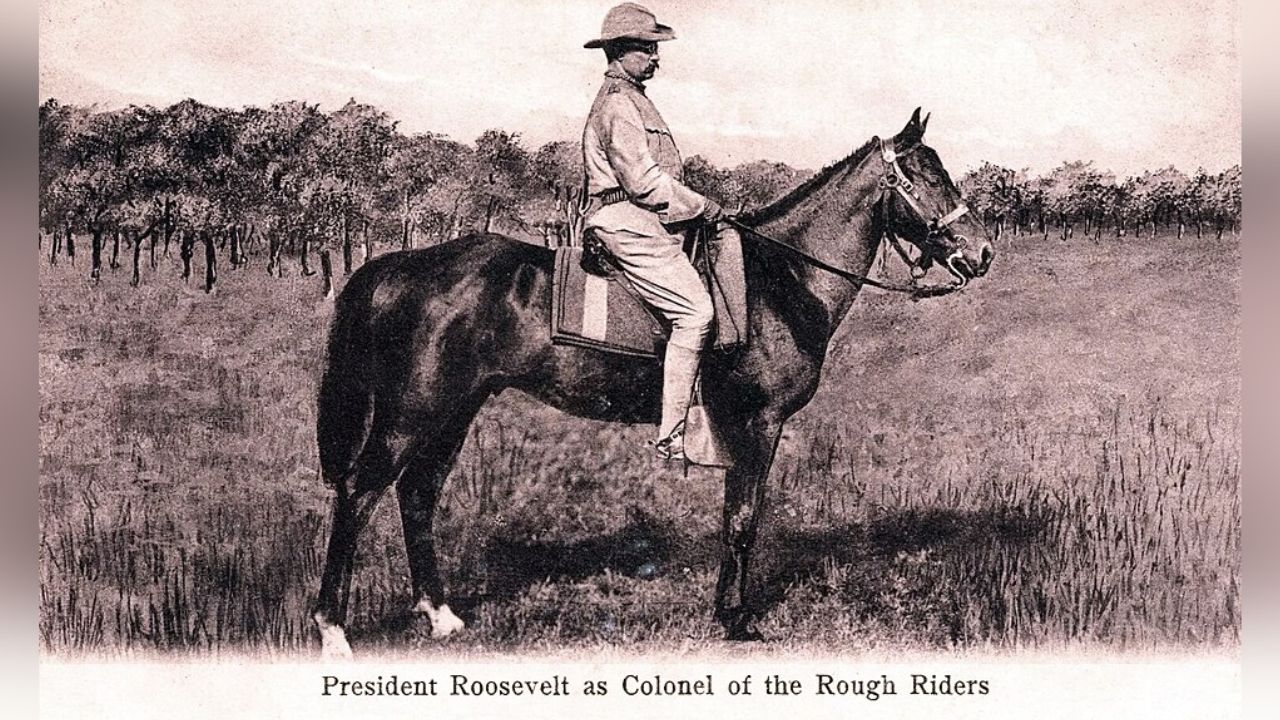
When Theodore Roosevelt stepped into the presidency in 1901, he didn’t arrive as some quiet caretaker of the office. He came in like a gust of fresh air—part cowboy, part scholar, part reformer—still carrying the swagger of a former Rough Rider and the restless energy of a man who hated sitting still. Americans weren’t just getting a new president; they were getting a whole new kind of political personality.
Roosevelt’s time in the White House wasn’t especially long by modern standards, but it was loud in the best way. He treated the presidency like a bully pulpit, meaning he used it to shape public opinion and shove big issues into the spotlight. If politics felt like a distant club for wealthy insiders before, Roosevelt helped make it feel like something that could actually answer to regular people.
From sickly kid to Rough Rider (and yes, it mattered)
Roosevelt’s story starts with a twist: as a child he was often ill, struggling with asthma and frailty. Instead of accepting that as his destiny, he basically willed himself into toughness through exercise, discipline, and sheer stubbornness. That self-made grit became part of his appeal—he wasn’t born the toughest guy in the room, but he worked like crazy to become one.
His legend really caught fire during the Spanish–American War in 1898, when he led the Rough Riders, a volunteer cavalry unit with a surprisingly mixed cast of cowboys, Ivy Leaguers, and adventurers. The charge up San Juan Hill made him a national hero and cemented his image as a leader who didn’t just talk big—he acted. That reputation followed him into politics and helped him command attention when he eventually reached the White House.
A president by accident, then president on purpose
Roosevelt became vice president in 1901, a role some party leaders thought would keep him safely out of the way. Then President William McKinley was assassinated, and Roosevelt suddenly inherited the presidency at just 42 years old—the youngest person to ever do it. If anyone expected him to tread carefully, they were in for a surprise.
He didn’t treat the office like a temporary assignment. Roosevelt pushed forward with a clear idea: the federal government should step in when powerful interests—especially giant corporations—ran roughshod over workers and consumers. In a time when “big business” could feel like an untouchable force of nature, Roosevelt insisted it could be challenged.
The “Square Deal” and the birth of modern reform politics
Roosevelt’s domestic agenda became known as the Square Deal, built around fairness for workers, consumers, and businesses that played by the rules. He wasn’t anti-business; he was anti-abuse. His point was simple: capitalism works better when it has guardrails, and the government should help install them.
One of the clearest examples came in 1902, during a major coal strike that threatened heating supplies as winter approached. Instead of automatically siding with owners, Roosevelt invited both labor and management to the table and pushed for a compromise. That may sound normal now, but at the time it was a pretty radical signal that the federal government could act as a referee, not just a megaphone for the powerful.
“Trust-busting” and the idea that no one’s too big to answer the law
Roosevelt is often called a trust-buster, and while the nickname can oversimplify things, it points to something real. He used the Sherman Antitrust Act to go after monopolistic companies that were crushing competition and manipulating markets. The message wasn’t “business is bad,” but “the rules apply to you, too.”
Some companies he targeted were genuinely abusive; others were more complicated cases, which is why historians still debate how consistent his approach was. But politically, Roosevelt changed the expectations of what presidents could do. He made it normal for the White House to challenge concentrated economic power, setting the stage for later reforms in the Progressive Era and beyond.
Food, drugs, and the moment America got serious about consumer protection
If you’ve ever looked at an ingredient label and felt mildly reassured, Roosevelt’s era helped start that habit. In 1906, public pressure surged after reports of horrifying conditions in meatpacking plants and widespread consumer fraud. Upton Sinclair’s novel The Jungle famously shocked readers—Sinclair said he aimed for America’s heart and hit its stomach instead.
Roosevelt responded with the Pure Food and Drug Act and the Meat Inspection Act, major steps toward federal oversight of what people ate and bought. It wasn’t glamorous work, but it was hugely important. These laws helped build the foundation for what would become modern food safety and consumer protection standards.
The conservation president who made nature a national priority
Roosevelt loved the outdoors in a way that feels almost modern—like he’d be the guy texting you trail photos and telling you to drink water. But his appreciation wasn’t just personal; it became policy. He expanded the national park system, created national forests and wildlife refuges, and protected massive stretches of land from development.
Working with conservationists like Gifford Pinchot, he championed the idea that natural resources should be managed wisely so they’d last. In total, his administration placed about 230 million acres under federal protection. That’s not a small legacy—it’s the reason many Americans can still visit protected landscapes that might’ve otherwise become timber, mines, or subdivisions.
Big Stick diplomacy, the Panama Canal, and America’s growing global role
Roosevelt’s foreign policy is often summed up with his phrase: “Speak softly and carry a big stick.” He believed the U.S. should be prepared to use force if necessary, especially in the Western Hemisphere. This approach made America’s intentions very clear—and sometimes made other countries understandably uneasy.
The most lasting symbol of his global impact is the Panama Canal. Roosevelt supported Panama’s independence from Colombia and helped secure the canal zone, allowing the U.S. to build the canal and dramatically reshape global trade and naval strategy. Love it or hate the tactics, the canal changed shipping routes, military planning, and America’s sense of itself as a world power.
A complicated legacy, and a bigger idea of what a president can be
Roosevelt wasn’t perfect, and his era carried deep injustices that weren’t solved in his lifetime. His views on race and empire reflected many of the biases of his time, and some of his policies abroad leaned hard into American dominance. Still, even critics often admit he expanded the boundaries of presidential leadership in ways that stuck.
More than any single law, Roosevelt left behind a new expectation: that the president should actively shape national life, confront major problems, and use the platform of the office to push for change. He made the presidency feel energetic and immediate, like it belonged to the whole country and not just a distant government building. For better and worse, the “Rough Rider” turned the White House into a place where big battles could be fought—and where the nation’s future could be argued out loud.