
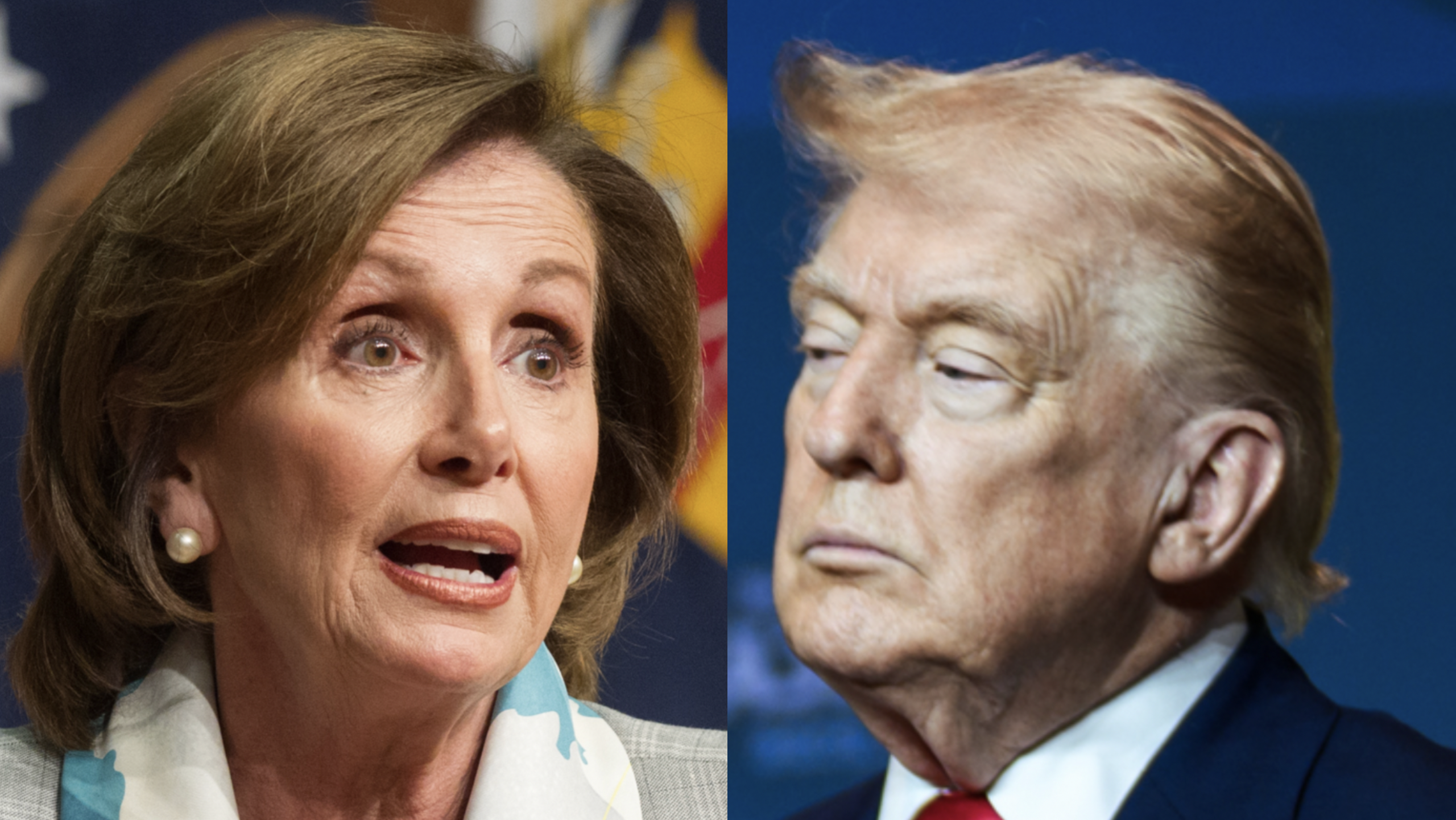
United States Representative and former Speaker of the House Nancy Pelosi launched a sharp public rebuke of President Donald Trump on Monday, accusing him of sacrificing affordable housing relief for millions of Americans in exchange for greater political control. Her broadside came as Trump, during an Oval Office appearance, once again dismissed the bipartisan 21st Century Road to Housing Act and made clear that his signature election overhaul legislation — the SAVE America Act — remains his true priority.
Pelosi’s Accusation
In a post published Monday afternoon on X, Pelosi did not mince words about what she believes is driving the president’s refusal to sign legislation that passed both chambers of Congress by overwhelming, bipartisan margins.
“The President is willing to cruelly hold the American Dream hostage if it means giving himself more power,” Pelosi wrote. “As always, when Donald Trump wins, working families lose.”
The post was a direct response to video of Trump speaking from the Oval Office, where he made clear that the housing bill — despite his own long-stated claims of expertise in real estate — registers as an afterthought compared to his election overhaul ambitions.
Trump’s Own Words
Responding to a reporter’s question about the housing bill during the Monday appearance, Trump offered a revealing answer about his true priorities.
“I don’t know. I think it’s so unimportant by compared to the Save America Act,” Trump said. “I think the Save America Act is exactly what it says. It’s saving America from crooked elections. And the housing bill is a bill that can get approved. They worked on it long and hard. It’s very bipartisan. That means the Democrats like it. I think it’s maybe even more that way. They’re getting things that I wouldn’t necessarily agree to. Nobody knows more than housing in the history of the presidency. Nobody did well like me in housing. I made a lot of money. I made a lot of money. I made a lot of money with housing. But when I look at that bill, it’s a bill. But when I look at the Save America Act, it’s about saving America and I’d like to have the Save America Act added.”
A Week of Standoffs
Monday’s exchange is the latest chapter in what has become a week-long standoff. Trump was originally scheduled to sign the housing legislation on June 24 at a ceremony in Statuary Hall, but he abruptly canceled the event just hours before it was set to begin, announcing his ultimatum on social media. “Today’s Housing News Conference and Signing is hereby cancelled until such time as we pass the desperately needed SAVE AMERICA ACT, which I consider to be a National Emergency,” the president wrote.
It was the second time in a single week that Trump had thwarted congressional Republican priorities at the last minute by demanding passage of the SAVE America Act. The move left a literal signing desk sitting empty in Statuary Hall, a visual that quickly became a symbol of the impasse.
What the Housing Bill Does
The 21st Century Road to Housing Act passed 358-32 in the House, and passed the Senate 85-5 — vote totals that represent some of the most lopsided bipartisan support for major legislation in the current Congress. The measure aims to increase housing supply, make homes more affordable, and cap the amount of single-family homes private equity can purchase. It is a measure that members of both parties are eager to campaign on ahead of the 2026 midterms, in which affordability and cost-of-living issues are playing a key role.
By Monday, Speaker Mike Johnson said he would be sending the bill formally to Trump’s desk, though the president’s intentions — sign, veto, or allow it to lapse — remain publicly unclear.
What the SAVE America Act Does
At the center of the standoff is the SAVE America Act, a sweeping election overhaul bill that has sharply divided Washington. The SAVE America Act would make significant election and voting reforms, including requiring photo ID at polling places and proof of citizenship before a person could register to vote. Its stated goal is to make sure only U.S. citizens vote in federal elections — that is already the law, and it is already being enforced.
Critics argue the legislation could prevent 21 million eligible voters from being able to vote, according to an estimate by the Brennan Center for Justice, since only half of all Americans have a passport and millions more either don’t have or can’t readily access their birth certificates. Democrats have unanimously refused to provide the votes needed to advance it through the Senate, where it has been rejected and has not garnered the 60 votes needed to overcome a filibuster.
Democrats Draw the Line
The Congressional Black Caucus was among the loudest Democratic voices in condemning the legislation that Trump is using as leverage. “The SAVE Act is not an election security bill — it is a voter suppression bill, full stop,” the group said in a statement.
Sen. Elizabeth Warren, who co-led the housing bill in the Senate, said Trump’s decision to punt on the housing bill is evidence he doesn’t care about the cost of living for average Americans. “This just doesn’t make any sense, other than whatever it is he wants to do is a complete indifference to the cost squeeze on American families and to genuine efforts to do something about it,” Warren said.
Pelosi’s Long Record on Housing and Voting Rights
Pelosi’s response Monday is consistent with a pattern of aggressive public opposition to the Trump administration’s housing and voting rights record. Late in 2025, Pelosi joined fellow House Democrats in supporting three major Congressional efforts opposing the Trump administration’s harmful changes to the Continuum of Care programs — changes that could force more than 170,000 people back into homelessness and disrupt services in communities across the country.
Earlier this year, Pelosi also defended Ukraine’s right to sovereignty before the full House. Speaking on the House Floor in support of the Ukraine Support Act in June, Pelosi reaffirmed America’s commitment to stand with the Ukrainian people as they defend their democracy, emphasizing that support for Ukraine is about deterring authoritarian aggression and upholding American values on the world stage.
The Standoff Continues
Trump, speaking Monday, made it plain he views the housing bill as a political instrument more than a policy priority — and that his own history in real estate gives him license to treat it as such. Meanwhile, the president dismissed the housing legislation as a “yawn,” arguing it was less impactful than his SAVE America Act, which would significantly retool federal elections in the months leading up to the midterms — including implementing new restrictions on voter registration and mail-in ballots.
The bill now sits on Trump’s desk, with several possible outcomes: he could sign it, veto it, allow it to become law without his signature, or attempt a pocket veto if Congress adjourns before his 10-day constitutional window expires — a legal question that remains contested.
For Pelosi and congressional Democrats, the answer to what happens next is beside the point. In their view, the damage is already done — and Monday’s events simply reaffirmed a pattern they have argued defines this administration. As Pelosi put it plainly: when Trump wins, working families lose.