
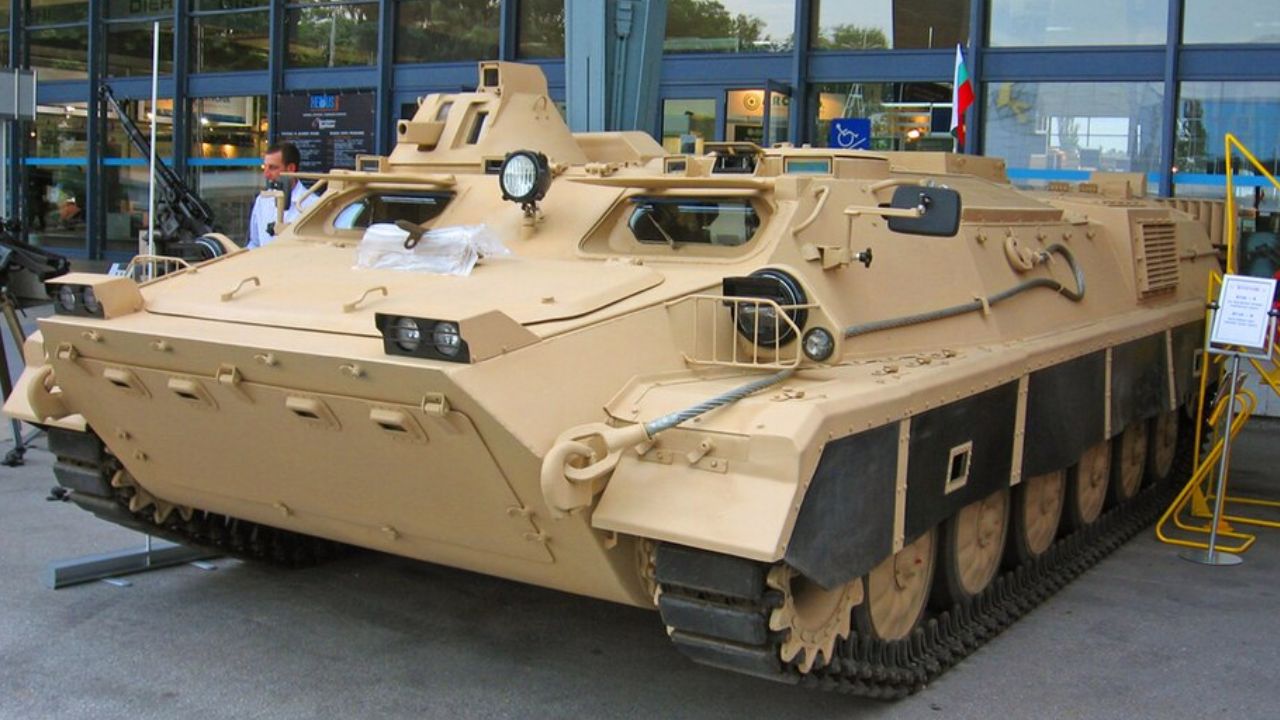
Some military vehicles get remembered for flashy tech, sharp angles, or a movie cameo. The Soviet-era MT-LB earned its reputation the unglamorous way: by showing up, starting up, and doing the job for decade after decade. It’s the kind of machine that makes engineers nod quietly, because it’s not trying to impress anyone—it’s trying to work.
Originally built as a multipurpose tracked carrier, the MT-LB has become one of those “if it exists, someone has mounted it on an MT-LB” platforms. From hauling troops to towing artillery to acting as an impromptu weapons carrier, it’s been asked to do just about everything short of making tea. And somehow, it keeps hanging around.
A vehicle born from practical problems
The MT-LB (often described as a light armored tractor/transport) was designed during the Cold War with a simple idea at its core: armies need a reliable tracked workhorse more than they need a boutique fighting machine. It wasn’t meant to be a front-line tank killer. It was meant to move people and gear across rough terrain, in ugly weather, without demanding a priest, an engineer, and a rare spare part to do it.
That mindset shaped the entire vehicle. You’re looking at functional armor, a straightforward layout, and a design that prioritizes mobility and utility over drama. If you’ve ever loved an old pickup truck because it “just runs,” you already understand the MT-LB’s appeal.
Simple engineering, big consequences
The MT-LB’s longevity isn’t magic; it’s the payoff of design choices that favor ease of use and ease of repair. Simple doesn’t mean crude—it means fewer fragile dependencies and more tolerance for the real world. When equipment is expected to be maintained far from factory conditions, “good enough” can be smarter than “perfect on paper.”
That practicality matters even more in the messy reality of modern conflicts, where maintenance can be intermittent and parts supplies unpredictable. A vehicle that can be patched, swapped, or jury-rigged has a kind of resilience that doesn’t show up on glossy spec sheets. The MT-LB is basically a rolling argument for repairability.
Why armies keep dragging it back into service
There are obvious reasons the MT-LB keeps returning: many were built, many were exported, and many were stored for years. But the more interesting reason is that the platform stays useful even when its original mission changes. If you can move supplies, tow a gun, evacuate wounded, or ferry a team to a muddy tree line, you’ve still got a role.
It also helps that operators and mechanics often already know the vehicle. Training time matters, especially when you’re trying to scale up quickly. When people can recognize the quirks, common failure points, and “this is how we fix it in the field” tricks, an older vehicle can become a predictable tool rather than a risky surprise.
A chassis that invites improvisation
The MT-LB is famous for being adapted into an almost comical variety of configurations. Command posts, mortar carriers, air-defense variants, ambulances, engineering support vehicles—if a unit had a need and an MT-LB nearby, it was a natural candidate. Its roomy interior and workable weight capacity made it a kind of blank canvas for military logistics.
That adaptability has only increased as wars have pushed forces to repurpose whatever they can. You’ll hear stories and see images of MT-LBs fitted with different weapons and equipment, sometimes in planned upgrades and sometimes in quick field modifications. It’s not always elegant, but it’s often effective enough, and “enough” is a powerful word in wartime.
Not a tank, not trying to be
It’s important to be clear about what the MT-LB isn’t. It’s not designed to trade blows with modern armored fighting vehicles, and its protection is limited compared to heavier platforms. When people see it used in high-threat environments, it can look like a mismatch, and sometimes it is.
But its survival as a concept comes from not pretending it’s something else. The MT-LB’s strength is that it’s a mover, a carrier, a helper—often operating in the unglamorous lanes of war: supply routes, towing tasks, battlefield errands that still decide whether a unit functions. It’s the difference between having a plan and having a plan that can be executed.
Mobility as a form of reliability
Tracked mobility is one of the MT-LB’s enduring advantages. In places where roads are more suggestion than reality, tracks can keep a force moving when wheeled vehicles bog down. That doesn’t mean it’s unstoppable—mud and mines don’t care about nostalgia—but it does mean it can go where softer-ground logistics still have to go.
In many armies, the workhorse vehicles quietly define operational tempo. If you can’t move ammunition, fuel, food, and people on time, everything else becomes theater. The MT-LB’s reputation is built on being the kind of platform that keeps the backstage running.
The uncomfortable reason it’s still relevant today
Part of the MT-LB’s modern visibility comes from a straightforward reality: not every military has enough newer vehicles to cover every job. Old designs get pulled forward when inventories are stretched, losses mount, or production can’t keep up. In that sense, the MT-LB isn’t just surviving—it’s being drafted into roles because it’s available, familiar, and better than nothing.
That can produce strange scenes: a Cold War carrier appearing alongside drones, digital radios, and modern precision weapons. It’s like seeing a flip phone still making calls in a world of smartphones. The MT-LB’s presence is a reminder that war often runs on whatever works, not whatever’s newest.
What the MT-LB says about engineering priorities
The vehicle’s decades-long run is a case study in trade-offs. If you aim for maximum sophistication, you often pay in complexity, cost, and maintenance demands. If you aim for robust simplicity, you might not win the spec-sheet contest, but you can win the long game of keeping equipment running across years, climates, and logistical headaches.
That lesson isn’t limited to armored vehicles. It shows up in everything from tractors to cargo ships to old aircraft that keep flying because parts are available and mechanics can actually work on them. The MT-LB just happens to be a very loud, very tracked example.
A legacy that’s still rolling
The MT-LB’s story isn’t really about a single vehicle—it’s about a design philosophy that keeps resurfacing. When planners need a dependable platform, something they can repair and adapt, “simple and sturdy” starts looking like a feature again. The MT-LB proved that if you build a machine around the realities of maintenance and use, it can outlive trends, doctrines, and sometimes even the era that created it.
It may never be glamorous, and it probably won’t be anyone’s dream ride. But as long as armies need a tracked utility vehicle that can be kept alive with basic tools and determination, the MT-LB’s reputation will keep clanking along. In the world of military hardware, that kind of staying power is its own form of fame.