
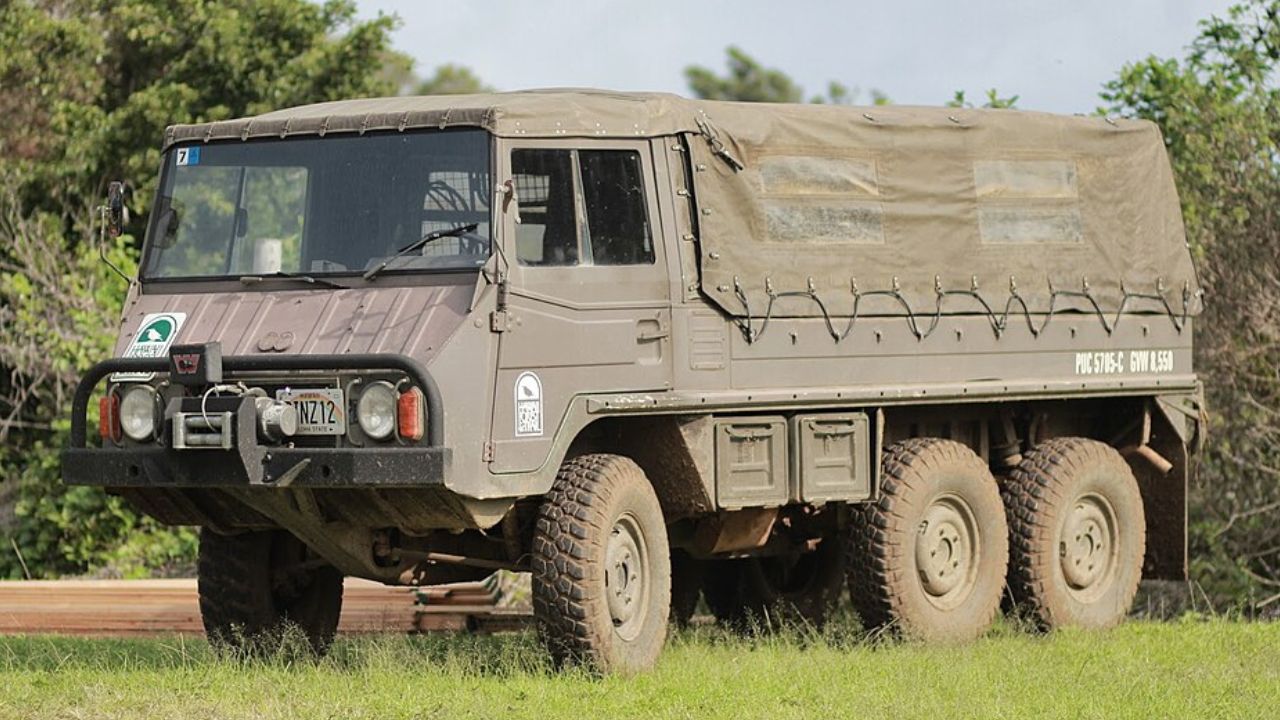
If you’ve ever seen a boxy, no-nonsense truck creeping up a slope that looks more like a hiking trail than a road, there’s a decent chance it was a Pinzgauer. Built in Austria with a very clear mission—go where normal vehicles can’t—the Pinzgauer earned a reputation as the kind of machine that just keeps moving. It wasn’t trying to be pretty; it was trying to be unstoppable.
Over the years, the Pinzgauer became a quiet favorite among military operators, especially the folks who needed reliability far from paved roads and friendly weather. It’s the kind of vehicle that gets described in the same tone people use for a trusted multitool: simple, tough, and always there when things get messy.
A vehicle born from mountain logic
The Pinzgauer was designed by Steyr-Daimler-Puch, a company with deep roots in Austrian engineering and an obvious familiarity with steep terrain. Even the name nods to the Pinzgau region in Austria—mountain country where “bad roads” are just called “roads.” The design choices make a lot more sense when you imagine engineers staring at alpine switchbacks and thinking, “Okay, now make it do that while carrying a squad.”
From the start, the vehicle was intended to be light enough to handle rough ground without sinking, but strong enough to haul people, gear, and specialized equipment. It had to be easy to maintain in the field, too, because the best repair shop in the world doesn’t help much when you’re miles from the nearest town.
Why it’s so good off-road (and why operators care)
The Pinzgauer’s off-road reputation isn’t hype—it’s the result of smart mechanical choices. Many variants use a central tube chassis and portal axles, which help boost ground clearance without making the whole vehicle absurdly tall. Translation: it can climb over things that would stop a typical truck, while keeping a relatively stable stance.
It also spread its weight well, which matters on soft ground like sand, mud, and snow. Add locking differentials and a drivetrain built for traction, and you get a vehicle that doesn’t panic when the terrain turns ugly. Operators tend to appreciate anything that reduces the odds of spending the afternoon digging tires out of a swamp.
The 4×4 and 6×6 lineup that made it versatile
Pinzgauers came in both 4×4 and 6×6 configurations, commonly known by “710” and “712” style designations in early models. The 4×4 versions were nimble, easier to maneuver, and great for scouting, transport, or general utility work. The 6×6 variants traded a bit of agility for extra payload capacity and better traction in truly nasty conditions.
This flexibility made the platform useful for all kinds of roles: troop transport, radio and communications trucks, ambulances, command vehicles, and more. If a military needed a small, rugged workhorse that could be adapted without endless redesigns, the Pinzgauer fit the bill.
Simple on purpose: field maintenance and reliability
One reason the Pinzgauer gained fans is that it wasn’t overly precious about complexity. It was engineered to be serviceable, with systems designed around the reality of field repairs. When something goes wrong in a remote area, “easy to diagnose” and “easy to access” are more than nice features—they’re mission insurance.
That practicality also influenced how the Pinzgauer felt to drive. It’s not a luxury SUV; it’s a tool. Controls are straightforward, visibility is good, and the whole vehicle communicates its intentions clearly: get in, get moving, and don’t overthink it.
A global footprint, from Europe to peacekeeping missions
The Pinzgauer didn’t stay a local secret for long. Various militaries and security forces across Europe and beyond put them to work, especially in regions where mountainous or undeveloped terrain is the norm. The vehicle’s ability to handle cold weather, steep grades, and broken ground made it a practical fit for countries that don’t get to rely on highways.
It also showed up in peacekeeping and support roles where dependable transport matters more than flashy specs. In those settings, the Pinzgauer’s strengths—mobility, durability, and adaptability—tend to shine. It’s hard to overstate how valuable “it starts every time” becomes when the schedule is tight and the environment isn’t forgiving.
Not fast, not fancy, but hard to stop
No one buys a Pinzgauer for speed records. It’s geared for control, torque, and steady progress, which is exactly what you want on rough trails or steep climbs. If you’re imagining a dramatic chase scene, this probably isn’t your star—unless the plot involves outrunning gravity and bad footing.
That said, the Pinzgauer has a kind of confidence that comes from capability. It doesn’t need to be quick when it can take the direct route over terrain that forces other vehicles to detour. In real-world operations, that difference can mean arriving earlier, safer, and with more energy left in the tank.
Modern updates and continued interest
Over time, later versions and rebuild programs brought updates in areas like engines, electrics, and mission equipment integration. Some units received improvements tailored to communications, medical evacuation, or specialized transport needs. The core idea stayed the same, though: keep the off-road strengths, and make the platform easier to support in modern fleets.
Even today, the Pinzgauer still draws interest from collectors, off-road enthusiasts, and organizations that value rugged utility. You’ll see them at events, in private collections, and occasionally in working roles where their unique blend of mobility and simplicity still makes sense.
The reputation that stuck
Ask people who’ve worked around them and you’ll often hear the same themes: dependable, capable, surprisingly clever in its design. The Pinzgauer became a favorite among military operators not because it was the newest or the loudest, but because it did the job day after day. It’s the kind of vehicle that earns trust the slow way—by not letting you down.
In a world where military hardware can get complicated fast, the Pinzgauer’s appeal is refreshingly straightforward. Give it rough terrain, a load of gear, and a reason to keep going, and it’ll usually oblige. And if you ever find yourself wondering what “built for the real world” looks like on four (or six) wheels, this is a pretty good answer.