
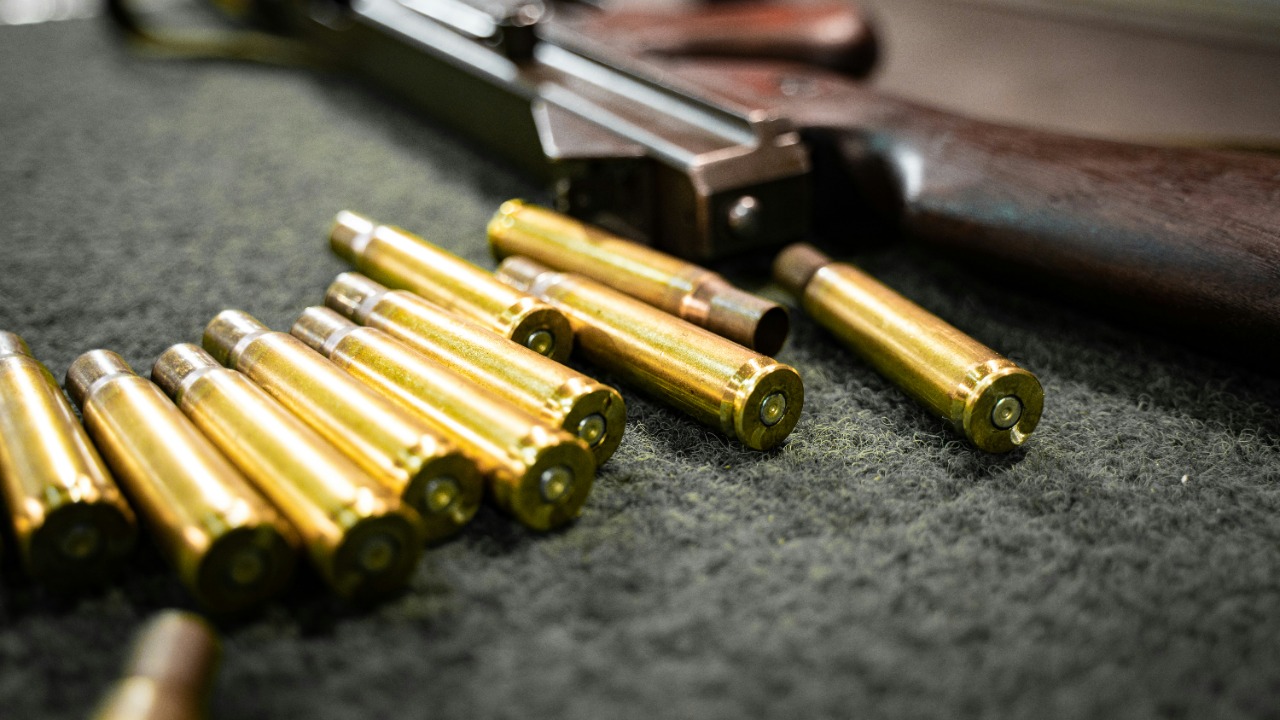
When people pick a caliber for moments that might actually decide who goes home and who gets a chalk outline, the choices get a lot less theoretical and a lot more practical. The cartridges that rise to the top tend to be the ones that balance power, control, and reliability instead of chasing internet bragging rights. I have watched that pattern repeat from patrol ranges to backcountry trailheads, and the calibers that keep showing up tell a pretty clear story about what shooters really trust when the stakes are real.
Why “caliber wars” miss the point
I learned early that nothing starts an argument at a gun counter faster than asking which caliber “hits hardest,” usually from someone who has not actually hit much of anything. The loudest voices insist that bigger is always better, but experienced shooters keep circling back to a more boring, grown up truth: the round you can place accurately, under stress, is the one that matters. One detailed breakdown of common gun myths flatly labels the idea that “Caliber Matters” as a Myth, then drives home that shot placement is key, not the number stamped on the barrel.
That logic gets even sharper once you remember how hard it is to shoot a handgun well in the first place. Detailed instruction on pistol technique points out that Handguns are the most difficult firearms to master, thanks to short barrels, compact sight radiuses, and the way They magnify every tiny mistake in grip or trigger press. Add adrenaline, low light, and moving targets, and the fantasy of perfectly managing some monster magnum starts to look optimistic at best. When I weigh calibers for serious use, I start with what I can actually control quickly and accurately, then worry about power, not the other way around.
Handgun calibers that earn trust (and the ones that do not)
In the real world, the handgun calibers that keep showing up on duty belts and in concealed holsters are the ones that balance recoil, capacity, and modern bullet design. The modern 9 mm, paired with quality defensive loads, has become the default choice for a lot of professionals for exactly that reason. One widely used example is the Personal Defense HST 9 mm Luger in 124 grain at 1150 FPS, a load trusted enough that a former tac team member carried it on the job and still carries it in retirement. That kind of long term confidence does not come from marketing; it comes from consistent performance in real shootings and training, where manageable recoil and reliable expansion matter more than internet folklore.
On the other end of the spectrum, there are handgun calibers that experienced instructors politely suggest you leave in the nostalgia drawer. A detailed rundown of weak handgun calibers highlights cartridges that struggle to deliver adequate penetration or energy, especially from short barrels. Tiny pocket rounds that look cute in a catalog often fail to meet modern performance standards once they hit ballistic gel, and that gap gets wider when you factor in heavy clothing or imperfect shot angles. I have seen more than one new shooter show up with a featherweight mouse gun, only to retire it quietly after learning that “better than nothing” is not the same as “good enough when someone is trying to hurt you.”
Home defense: when overkill becomes underthinking
Once the conversation moves indoors, the calculus changes again, and not always in the direction people expect. The temptation is to grab the biggest, loudest thing in the safe and assume that more blast equals more safety. In practice, home defense experts warn that some cartridges are a poor fit for hallways and drywall, either because of excessive recoil, blinding muzzle flash, or a tendency to punch through walls like a disgruntled freight train. A detailed list of Calibers Experts Say to Avoid for Home Defense walks through rounds that look impressive on paper but create unacceptable risks of overpenetration or painfully slow follow up shots in tight quarters.
Speed and accuracy become brutally important when you are trying to solve a life or death problem in the time it takes someone to cross a living room. Training at places like Gunsite has long hammered home that Few people dispute the importance of both speed and accuracy in defensive shooting, and While accuracy will always be the final judge, ignoring speed can be fatal. In a hallway, that means a controllable caliber that lets you deliver multiple accurate hits quickly, not a shoulder cannon that leaves you deaf, blind, and hoping the first shot did the job. I would rather have a mid powered round I can run like a sewing machine than a thumper that turns every trigger press into a coin flip.
Serious long guns: from 7.62 to laser beams on legs
Step out of the house and into the world of precision rifles, and the calibers that professionals trust look very different from the boutique wildcats that dominate social media. In both the Western world and within NATO, the 7.62×51 mm remains the primary cartridge of choice for military sniper rifles, precisely because it offers a proven balance of reach, accuracy, and logistics. That 7.62 round has decades of real world data behind it, from urban overwatch to rural counterinsurgency, and it keeps hanging on even as newer, flatter shooting options try to steal the spotlight. When people whose job description includes “do not miss” keep betting on the same cartridge, I pay attention.
For civilian long range shooters, the menu is wider, but the logic is similar. A detailed Caliber Specifications table for long range work compares options by Caliber, Avg Bullet Weight, and Max Precision Range, and the winners are not always the biggest or fastest. Instead, the standouts are cartridges that stay supersonic far enough to matter, resist wind reasonably well, and do not beat the shooter into a flinch after a single range session. Another breakdown of rifle calibers known for reliable pinpoint accuracy emphasizes What separates a cartridge that looks good on a ballistics app from one that performs in the field: consistent precision without endless adjustment or special conditions. In other words, the calibers that shooters trust are the ones that let them focus on reading wind and terrain, not babying a diva of a cartridge.
Big bore loyalty and the cult of .45

Of course, no discussion of trusted calibers is complete without the .45 crowd, who tend to speak of their chosen round with the same reverence other people reserve for vintage muscle cars. That loyalty is not entirely romantic. Elite units have leaned on the .45 ACP for serious work, including a long running relationship between Delta Force and the 1911 pattern pistol chambered in 45 ACP from Colt. When people who spend their careers in the sharpest end of the profession choose a caliber, it carries weight, and the .45’s reputation for heavy, subsonic authority is not accidental. I have watched more than one seasoned operator light up when you hand them a well tuned 1911, like they are greeting an old friend who still knows a few dangerous tricks.
That said, even the most devoted big bore fans quietly admit that the .45 is not a magic talisman. The same myth busting analysis that calls out “Caliber Matters” as a flawed obsession reminds readers that no handgun round, including the .45, can make up for poor hits or bad tactics. Modern 9 mm loads like the Personal Defense HST have closed much of the performance gap that once justified giving up capacity and controllability for a larger bullet. When I choose between calibers for daily carry, I find myself weighing whether the extra recoil and reduced magazine size of a .45 are worth it compared with a softer shooting 9 mm that lets me put more rounds on target faster. Some days the answer is yes, especially in a full size pistol; other days, practicality wins and the big bore stays in the safe, grumbling.
Matching caliber to mission (and not blowing up your gun)
Underneath all the tribal loyalty and ballistics charts, the most grown up shooters I know start with a simple question: what problem am I trying to solve, and what caliber actually fits it. That begins with the unglamorous step of making sure the ammunition matches the firearm, because using the wrong cartridge can turn a range day into a visit from the fire department. A safety guide on how to match bullets to your gun spells it out bluntly under the heading Safety: Using the wrong caliber is dangerous, and a bullet that is too big for the barrel can cause jams or even catastrophic failure. That is not a theoretical risk; I have seen the aftermath of someone trying to chamber the wrong round, and it looks like a metal flower that bloomed in entirely the wrong direction.
Once the basics are squared away, the calibers that earn long term trust tend to be the ones that line up cleanly with their intended role. For concealed carry, that often means a modern 9 mm with proven defensive loads like HST, which offer a balance of expansion, penetration, and controllable recoil. For duty or military precision work, it might be 7.62×51 mm or another cartridge with a track record of reliable accuracy at distance. For home defense, it usually means avoiding the flashy rounds that experts flag as poor choices for indoor use and instead picking something you can shoot quickly and accurately without turning your walls into Swiss cheese. I have come to see caliber choice less as a personality test and more as a gear decision, like picking the right size wrench: if it fits the job, works reliably, and does not hurt you in the process, that is the one you trust when things get real.